





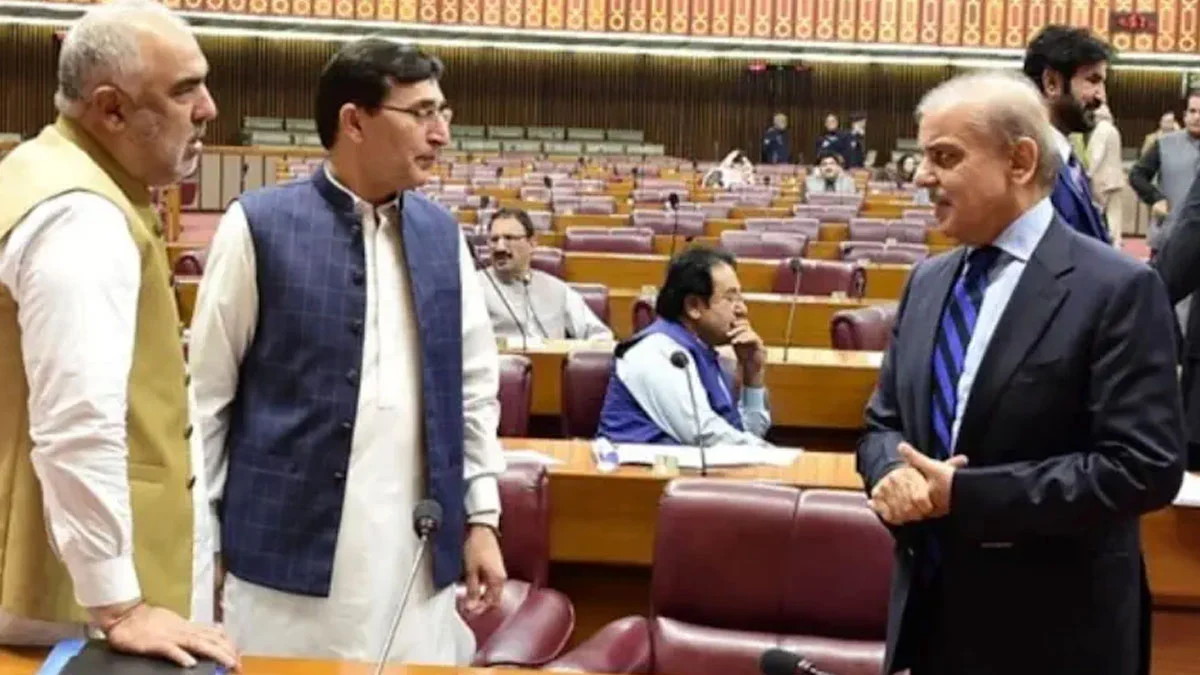
ISLAMABAD: The federal ministers and leaders of the opposition Pakistan Tehreek-e-Insaf (PTI) have been holding backchannel contacts and secret meetings despite the apparent political standoff between the two sides.
Prime Minister Shehbaz Sharif and several federal ministers last month publicly invited PTI to resume negotiations.
Speaking on ARY News’ programme Sawal Yeh Hai, senior journalist Naeem Ashraf Butt said the government has publicly expressed its willingness to engage in dialogue with the opposition, but several meetings have also taken place behind closed doors.
Butt claimed that PTI leaders have been secretly meeting government ministers, but the talks have largely focused on individual concerns rather than broader party issues.
“The government is openly calling for dialogue. Last month, the prime minister publicly invited PTI for talks, and later his adviser Rana Sanaullah met PTI leaders,” he said.
He added that internal divisions within PTI have prevented the party from presenting a unified position during the reported meetings.
PTI distances itself from Noreen Niazi’s remarks, calls them personal opinion
According to Butt, another influential federal minister also approached PTI MNAs at Parliament House and invited them to hold talks.
“He asked them to come and sit together for dialogue, but what happened to that offer afterward, nobody knows,” he said.
The senior journalist further claimed that Khyber Pakhtunkhwa Chief Minister Muhammad Sohail Afridi later held a secret meeting with the same federal minister to discuss certain legal cases.
According to Butt, after that meeting, the presence of PTI workers reduced outside Adiala Jail, while visits by family members also reportedly declined.
He also claimed that PTI Chairman Barrister Gohar Ali Khan raised his own concerns during meetings. Still, the party has not pursued its stated objective of securing the release of former prime minister Imran Khan with a unified strategy.
Butt further criticised PTI’s role as the main opposition party, saying it had recently remained silent on public issues, including the wheat and petrol crises.