






Since RSS rose to pre-eminence in India and its control of political power in 2014, the Muslim community in India has been systematically marginalised and dehumanised. Since this aspect is not discussed much in Pakistan, there is a need to analyse these trends within India and discuss the structural targeting of 250 million Muslims in India.
Professor Tanweer Fazal is a prominent Indian sociologist and has taught at Jawaharlal Nehru University as well as the Department of Sociology at the University of Hyderabad. He is the author of several key works, including Practices of the State: Muslims, Law and Violence in India and Nation-state and Minority Rights in India.
At the core of Professor Fazal’s work is his theory of ‘otherisation’ and ‘de-nationalisation’ of Muslims through a structured project of Hindutva. Fazal argues that ‘otherisation’ is primarily a deliberate project, rather than something that is inherently embedded in a culture. It involves mobilising economic, cultural, historical, and political resources to marginalise specific communities.
Fazal’s concept of “denationalisation” describes a systematic process whereby the Indian state, particularly since 2014, has actively sought to delegitimise the citizenship and belonging of a section of its Muslim population. This state-sponsored identity flattens the diverse Muslim community into a homogeneous group, portraying them as an “unruly margin” that needs to be “tamed” and “civilised”.
State actions, such as the Citizenship Amendment Act (CAA) and the National Register of Citizens (NRC), are testament to these “exclusionary mechanisms”. The process of otherisation is not fixed; it shifts and adapts to different contexts. It manifests differently for various groups, such as the violent ‘otherisation’ of Bangladeshis in Assam. The NRC’s final list excluded nearly 1.9 million people in Assam, effectively stripping them of citizenship and rendering them stateless. The CAA is an “exclusionary mechanism” which grants citizenship to non-Muslim refugees from Pakistan, Bangladesh, and Afghanistan but makes one single exception: it explicitly excludes Muslims.
The legal and political handling of cow slaughter is another mechanism of denationalisation. Anti-cow slaughter laws in several states have extended legitimacy to cow vigilantes (gau-rakshaks), who lead lynch mobs against Muslims. This state-sanctioned violence reinforces the image of Muslims as outsiders who are a threat to the “sacred” Hindu nation. The use of stringent laws like the Unlawful Activities (Prevention) Act (UAPA) to silence dissent has been widely used against Muslims. Young Muslims have been incarcerated under the UAPA merely for opposing the CAA and speaking against its enactment.
The psychological fearmongering impacts the Muslim psyche in three domains: political, neighbourhood, and market. When PM Modi makes a comment about the ‘puncture wala’ and Himanta Biswas Sarma says that ‘Miya ko tight karna hai’, it acts as a slur and stigma as well as a dog whistle. In UP, there is a patronised movement to make sure that halal food labels will not be allowed. Hindus are being sent messages that they should not buy from Muslim shops; thus, cultural otherisation is being injected into the market.
Politics itself is a very powerful instrument. After 12 years of portraying Muslims as villains and demons, the impact is visible. On top of that, hateful election speeches, Godi media discourse, and organised and unorganised social media have created a dangerous and pernicious environment.
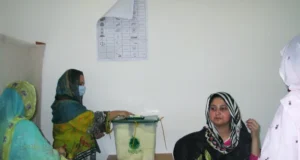
More recently, a Special Intensive Revision (SIR) has been conducted by the Election Commission of India to verify and revise electoral rolls. This resulted in 90 lakh voters in West Bengal being identified as suspects, mostly Muslims. Muslim-majority villages, one after another, were disenfranchised. This is the new structure of the de-nationalisation of Muslims, a slow-motion legal genocide.
Another trend is the celebration of anti-Muslim perpetrators; the acquittal of the assassins of Bilqees Bano is a case in point. This case exemplifies arguments about “otherisation” and “denationalisation” in the following ways:
The victims were burned alive, yet the state showed little urgency in prosecuting the case or appealing the acquittal. This is deliberate dehumanisation.
The Gujarat government’s refusal to challenge the acquittal signals that the state does not consider violence against Muslims a crime against the nation. When the state abandons justice for minorities, it effectively delegitimises their citizenship. The state was willing to grant remission to the convicts (Hindus) but has historically been harsh in prosecuting Muslims under laws like the UAPA. For ordinary Muslims, the acquittal reinforces the observation that they live in a “state of perpetual fear”, not just from mobs but from a justice system that does not guarantee their protection.
Another aspect is the breaking away of secular leaders and their joining the Hindutva gang. The Muslims have a ‘Price of Entry’. For a Muslim leader from a secular party to be accepted into the BJP, they must perform a public act of “ideological cleansing”, denounce their secular past, and aggressively embrace Hindutva symbols. This is not integration; it is co-optation.
When leaders like Himanta Biswa Sarma, who once sat in secular gatherings, begin championing the CAA and the Ram Temple, it sends a signal to the masses that even former secularists now view these as legitimate. While Hindu leaders from the Congress can join the BJP without abandoning their religious identity, Muslim leaders who join must visibly “otherise” their own community by criticising Muslims, supporting laws that exclude them, and calling for their “reform.” This is a form of internalised denationalisation, where minority leaders must prove their “nationalism” by rejecting their own community.
If the CAA, NRC and SIR were not enough, the Modi government has brought a new factor into this whole project: a ‘Demography Commission to ascertain unnatural growth in certain communities’. Initial estimates suggest that it will target Occupied Kashmir, West Bengal, Assam, the tribal belts of the North East, Telangana, Andhra Pradesh, Uttar Pradesh, Karnataka, and Kerala.
So, the Hindutva hate gang is now going to target Muslim-concentration areas to make it a crime to have more babies. Where will this hate train lead India? Most probably to the Olduvai Gorge.
Adeela Naureen and Waqar K Kauravi
The authors are freelance journalists. They can be reached at adeelanaureen@gmail.com and waqarkauravi@gmail.com