






Why Pakistan’s Geo-Economic Pivot is Paralyzed by Regional Disconnect
In modern international relations, a state’s survival depends heavily on how well it adapts its foreign policy to global economic realities. Recognizing this, Pakistan officially announced a major shift in its recent National Security Policy. The state promised to move away from traditional, security-focused geopolitics and adopt a modern doctrine of “geo-economics.”
Pakistan’s active bilateral trade and energy integration with its three immediate neighbors: India, Iran, and Afghanistan, remains almost zero.
These connections are blocked by unresolved security disputes and a long history of relying on external geopolitical alliances. Because of this, Pakistan’s proclaimed geo-economic pivot acts mostly as an illusion. True economic diplomacy cannot work on a global level until Islamabad completely changes its regional foreign policy. To succeed, the state must prioritize the normalization of border trade and regional energy connectivity over traditional security doctrines and the need to please foreign powers.
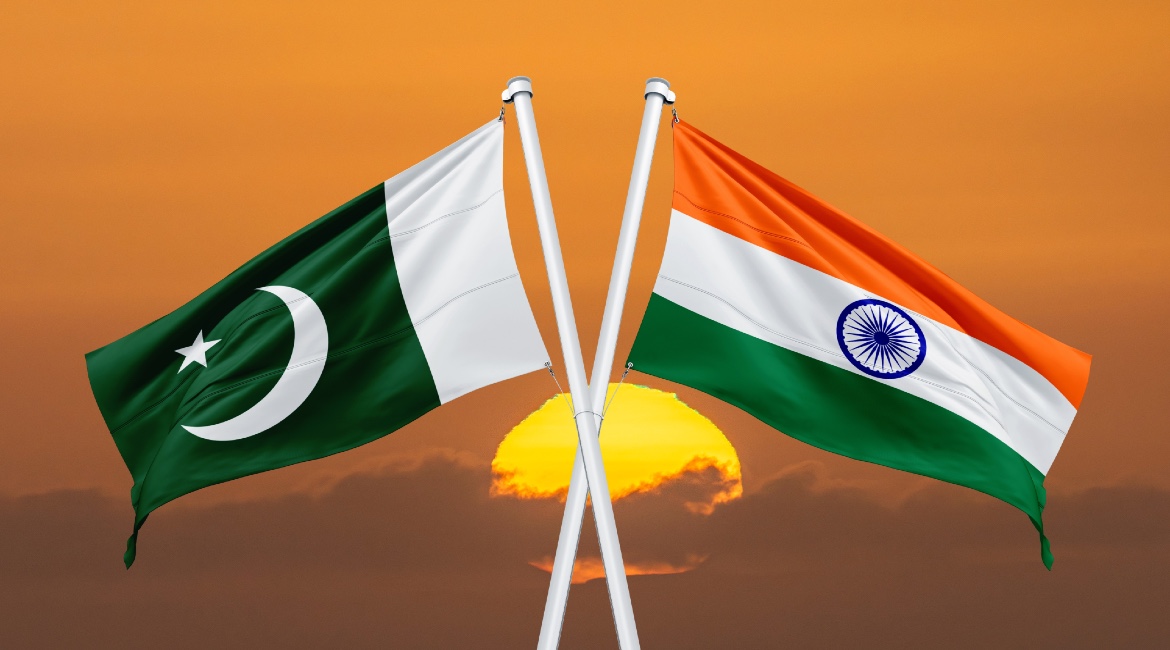
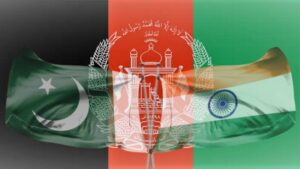 The most obvious sign of this economic illusion is on Pakistan’s eastern border, defined by a long and damaging trade freeze with India. In basic international relations theory, a nation cannot realistically become a regional economic hub while cutting off all commercial ties with the largest consumer market right next door.
After the political suspension of bilateral trade in 2019, direct economic activity between New Delhi and Islamabad essentially stopped. While political issues are deep-rooted, the economic damage is clear. Pakistani and Indian businesses are now forced to send their goods through third-party logistics centers like Dubai just to bypass the restrictions.
This artificial increase in trade costs acts as a deliberate choice of economic self-harm, kept in place only to maintain a strict political position. Putting historical conflicts above clear commercial benefits goes directly against the core idea of a geo-economic state, proving that geopolitics still controls the country’s decisions.
Moving to the southwest, the situation with Iran shows that true geo-economics is also being sacrificed to please external powers. A basic need for any developing state is to secure cheap and reliable energy to run its local industries. Yet, Pakistan continues to put the geopolitical concerns of global superpowers above its own critical energy security.
The long delays around the Iran-Pakistan (IP) gas pipeline serve as a perfect example. Even though Pakistan suffers from severe energy shortages that regularly shut down its export industries, Islamabad has waited over a decade to finish this vital regional project. Pakistan finally approved the construction of its part of the pipeline in early 2024, but this decision was mostly driven by the threat of an $18 billion penalty from the International Court of Arbitration, rather than a proactive economic strategy. The ongoing fear of using cheap Iranian gas comes directly from the risk of triggering United States sanctions. This clearly shows that external geopolitical pressures still decide Pakistan’s internal economic future.
The western border with Afghanistan offers a third clear indicator, where deep-rooted security policies have actively destroyed regional trade goals. A main part of Pakistan’s geo-economic vision was to use Afghanistan as a land bridge to reach the resource-rich markets of Central Asia. The historical strategy in Islamabad was that supporting a friendly government in Kabul would naturally create smooth and open trade routes. However, this geopolitical calculation has completely failed. Instead of an easy flow of transit trade, the Pakistan-Afghanistan border region is now defined by the violent return of the Tehrik-i-Taliban Pakistan (TTP). This has caused frequent, unpredictable border closures and fast-rising diplomatic tensions.
The state’s inability to separate its cross-border terrorism concerns from its bilateral trade agreements highlights a massive structural flaw. It proves that historical security fears continue to override and destroy any real economic integration with the western border.
Finally, the structural limits of the China-Pakistan Economic Corridor (CPEC) clearly expose the physical isolation of Pakistan’s broader economic plan. Heavily promoted as the ultimate project of the nation’s geo-economic shift, CPEC certainly brought much-needed early investments in national infrastructure and energy. However, because Pakistan’s eastern and western borders remain closed to natural, multi-country trade, CPEC is forced to operate almost entirely on a single North-South route between Beijing and Islamabad.
Since Pakistan is commercially cut off from the massive markets of India and the energy resources of Iran, CPEC cannot grow into the true regional economic network it was meant to be. As a result, instead of creating the cross-border regional trade income needed for sustainable economic growth, the corridor has mostly added to Pakistan’s growing national debt. A transit route simply cannot survive economically in the long run if it does not connect side-to-side with its immediate neighboring economies.
In the end, while the shift toward geo-economics offers a badly needed path to national stability, its current practical use in Pakistan is deeply flawed. The evidence across all borders clearly shows that traditional security priorities, historical rivalries, and external alliances constantly block pure economic logic. For a geo-economic policy to be taken seriously by the international community, it must be visible in the country’s immediate neighborhood. Until Pakistan is ready to take the difficult steps to open commercial ties with India, start vital energy integration with Iran despite external pressures, and separate transit trade from the complex Afghan security situation, the geo-economic pivot will remain just a good theory on paper. True economic security and global relevance do not start in distant Western capitals or international banks; they start right at a nation’s immediate borders.