








Country Music Festival Lights Up Nairobi
Fans gathered in Kenya to celebrate a genre born far away but that more and more Africans are coming to appreciate.
Fans gathered in Kenya to celebrate a genre born far away but that more and more Africans are coming to appreciate.
The development comes as a Senate committee prepares to vote Thursday on whether to hold Dr. Anthony S. Fauci in contempt of Congress for refusing to answer questions at a hearing.
With a protest movement in Kashmir challenging its authority in the region, Pakistan restricts independent reporting by local and foreign media.
• Smaller mines and larger copper, antimony projects under consideration
• US Embassy official says Reko Diq moving forward, but slower than expected
• Encourages Pakistan to provide level playing field to American firms
• Finance minister, US trade representative review progress on bilateral trade talks
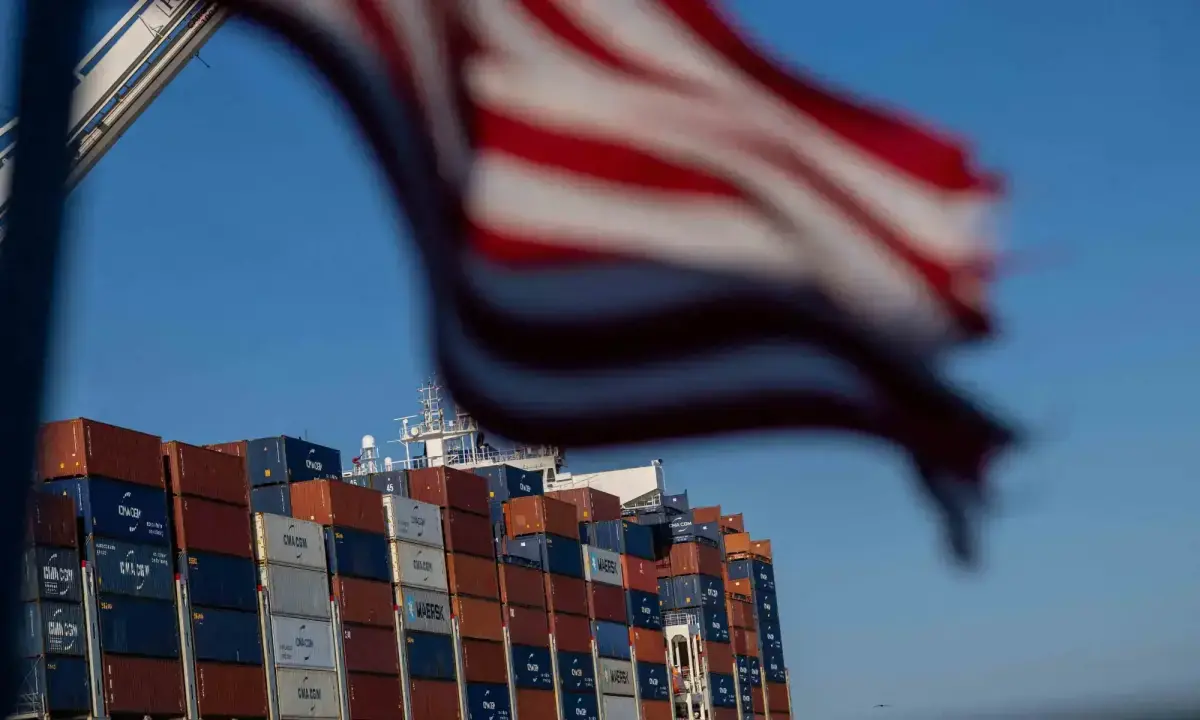
ISLAMABAD: Amid a big push from the Trump administration to secure global critical mineral supply chains, US companies are exploring opportunities to take over and develop smaller mines in Pakistan, besides looking at more significant investments in larger projects, potentially in copper and other critical minerals such as antimony.
Speaking to journalists at a background briefing, a US Embassy official said the Trump administration had been focusing on critical mineral supply chains around the world, particularly in Pakistan, through multilateral agencies, the US International Development Finance Corporation and the Export-Import Bank of the United States.
The official said the US Exim Bank had committed $1.25 billion for the Reko Diq copper-gold project in Balochistan, though financing terms were still being finalised.
The remarks coincided with Pakistan-US discussions on bilateral trade at a virtual meeting between Finance Minister Muhammad Aurangzeb and US Trade Representative Jamieson Greer to review progress on negotiations for a bilateral trade agreement.
The Ministry of Finance said Mr Aurangzeb and Mr Greer noted that negotiations on the proposed reciprocal trade framework had advanced significantly and reaffirmed their shared commitment to concluding the agreement at the earliest.
The US Embassy in Islamabad and the administration in Washington have been working with American companies to explore investment opportunities in Pakistan, including trade operations to buy offtakes from small mines in Pakistan for use or processing in the United States, the official said.
The US Embassy official said some products could also be supplied by US firms to supply chains in Germany, South Korea and elsewhere.
The official said Pakistan possessed many critical minerals, including big antimony concentrations, though not large deposits like Reko Diq. Some of the roughly 60 critical minerals were found in Pakistan and were important for aircraft manufacturing, semiconductors, defence equipment in the US and other supply chains, he said.
He said Pakistan-US cooperation in these areas could be beneficial for both sides, adding that Washington was pushing for investment and bilateral trade to process those minerals in the US.
The official said Pakistan’s mineral sector was currently contributing about 3pc to the national GDP, while Reko Diq alone could add another 0.5pc to GDP.
He said a number of US companies were currently engaged with Pakistani authorities and companies to develop critical mineral mines, as the Trump administration was focused on ensuring stronger supply chains for national defence and industry.
He avoided discussing specifics, saying the companies would make announcements themselves as agreements materialised.
Responding to a question on whether the multibillion-dollar Reko Diq project was currently on pause, the US Embassy official said the project was moving forward, though slower than originally planned.
He said financial institutions, including the International Finance Corporation and others, were currently discussing financing.
“The project is so large that it cannot be expected to move according to the original plan and not to change,” he said.
The official said the US had been encouraging Pakistan to provide a level playing field to American companies and strengthen local institutions such as the Geological Survey of Pakistan to carry out feasibility studies so that US firms could identify investment opportunities.
He acknowledged that the Pakistan government was doing whatever it could to facilitate US companies as well as other global firms. However, he stressed that investment could not flow without removing red tape.
The official said that US Strategic Metals had exported a mineral consignment supplied by the Frontier Works Organisation, which was being processed in the US, and both sides were looking at more trade and investment opportunities.
Responding to a question about US-China competition for mineral sector investments, the official said that in Pakistan’s context, it was not a matter of the US or China.
He said Pakistan was looking for investment from around the world, including in critical minerals, and this provided opportunities not only to Chinese and US firms but also to companies from Australia, Canada and other countries, which could also help train the local workforce.
Responding to a question on the security situation in Balochistan, he said security challenges were real, but opportunities also existed because of highly prospective mineral deposits.
He said people in the industry understood those challenges and knew how to navigate them, given the high returns from rich natural deposits in areas such as Chitral, which could have successful antimony operations, and Waziristan, where copper concentrations had been found. He said similar potential existed in Gilgit-Baltistan and Balochistan.
Over the past year, the Trump administration has been seeking to build secure and transparent mineral supply chains for American industry amid Washington’s growing concerns over China’s edge in global rare earth materials.
Pakistan has been trying to balance renewed momentum in Pakistan-US trade and economic ties with its long-term friendly relations with China.
US stakeholders are concerned about China’s growing control over global critical minerals, believing that Chinese dominance stems from government subsidies, vertical integration and lax regulations, in contrast to US underinvestment.
The US administration considers critical minerals foundational to the modern economy and state power, and essential for advanced technologies in energy, military and commercial applications, ranging from permanent magnets in fighter jets to batteries in electric vehicles.
Published in Dawn, August 6th, 2026
A Senate panel scheduled a vote after Dr. Anthony Fauci declined to answer questions at a hearing last week. Here are the legal issues involved.
Forecasters in the region maintain a list of typhoon names drawn from national symbols, including foods, animals and local expressions. Here is how the process works.
Jason Arday was hired by the University of Cambridge in 2023 as the youngest Black professor in its history. Doubt has since been cast on his academic qualifications and claims about his life.
Conservation experts are trying to slow the march of the viral disease in a country that is home to rare and endangered bird species.
The pilot, identified only by his initials, also tested positive for ecstasy and cocaine when he was arrested last week at the Jakarta airport, the Indonesian police said.
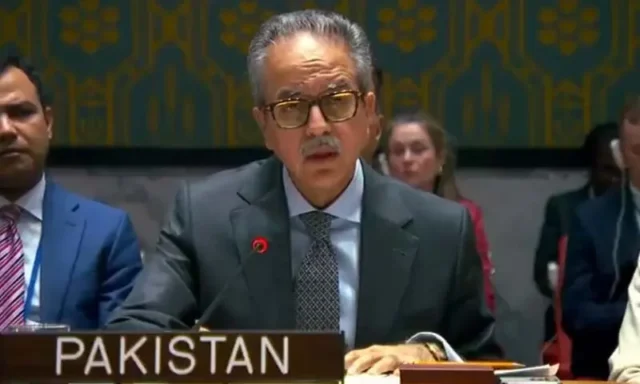
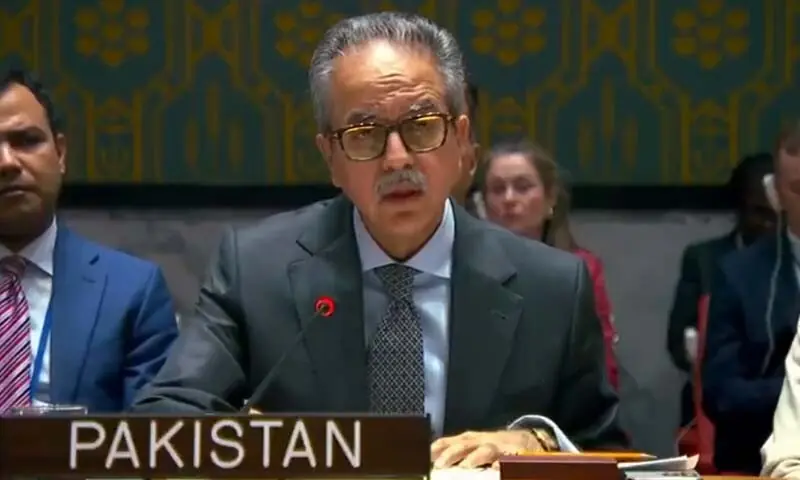
WASHINGTON: Pakistan on Wednesday informed the United Nations Security Council (UNSC) that multiple terrorist groups continued to operate from safe havens inside Afghanistan, posing a growing threat to regional security.
Speaking at a UNSC briefing on threats to international peace and security caused by terrorist acts, Pakistan’s Permanent Representative to the UN Ambassador Asim Iftikhar Ahmad also highlighted Islamabad’s concerns over Jammu and Kashmir, as the Council met on the seventh anniversary of India’s August 5, 2019, decision to revoke the region’s special constitutional status.
Ahmad described the measures imposed on that day as a new phase of repression against the Kashmiri people and accused India of committing what he called “state terrorism” in the disputed territory.
He said the international community must show “zero tolerance” for such actions and should not allow counterterrorism efforts to be used as a pretext to suppress what Pakistan describes as legitimate struggles for self-determination.
The Kashmir reference came alongside a broader discussion of terrorism and regional security, with the ambassador focusing heavily on Afghanistan-based terrorist groups — an issue that has become central to Pakistan’s security concerns and increasingly part of Washington’s regional agenda.
The UN remarks followed the fourth US-Pakistan Counterterrorism Dialogue held on Tuesday in Washington, where both countries reaffirmed their commitment to combating terrorist organisations and strengthening security cooperation.
In his address to the Council, Ahmad said that while sustained international counter-terrorism efforts had degraded the capabilities of groups such as the militant Islamic State, the terrorist threat continued to evolve, particularly in parts of Africa, the Middle East and Afghanistan.
He said Islamic State’s Khorasan chapter (IS-K) had suffered setbacks, including because of counter-terrorism operations by Pakistan, but continued to pose a significant concern, particularly in Afghanistan.
“The situation in Afghanistan remains deeply alarming,” Ambassador Ahmad told the Council.
“Since the Taliban takeover in August 2021, multiple terrorist groups continue to thrive in that country in an increasingly permissive environment.”
He specifically named the banned Tehreek-i-Taliban Pakistan (TTP), the Balochistan Liberation Army (BLA) and its Majeed Brigade, IS-K and its affiliates, the East Turkistan Islamic Movement (ETIM) and Al Qaeda affiliates as groups that, according to Pakistan, have access to safe havens inside Afghanistan.
Pakistan has repeatedly accused the TTP of using Afghan territory to plan and carry out attacks inside Pakistan, a charge that Taliban authorities have rejected. Islamabad has also accused external actors of supporting terrorist groups operating against Pakistan.
The ambassador urged the Taliban authorities to fulfil their obligation to ensure that Afghan territory is not used by any terrorist organisation to threaten other countries. He also called for international action against what he described as external sponsors of terrorism.
The US-Pakistan counter-terrorism dialogue reflected a similar focus on Afghanistan-based terrorist groups.
Counter-terrorism has emerged as one of the areas where the two countries continue to see a clear convergence of interests.
Later in his UNSC speech, Ambassador Ahmad returned to Kashmir, linking the issue to Pakistan’s broader argument that international security frameworks should address all forms of terrorism, including what Islamabad calls “state terrorism” resulting from foreign occupation.
He argued that the global response to terrorism must avoid double standards and selectivity, saying that all groups posing a threat to international peace and security should be addressed through a consistent approach.
The ambassador concluded that terrorism “knows no borders” and “has no religion,” calling for a coordinated international effort to combat the threat.
According to the Pakistan Institute for Conflict and Security Studies, an Islamabad-based think tank, violence linked to terrorist attacks and counter-terrorism operations intensified sharply in July, making it the deadliest month of 2026, with 112 security personnel among 205 people killed.