










‘They Don’t Need People’: The Workers Left Behind by China’s Robot Drive
For out-of-work factory workers in Kunshan, a region made rich by electronics manufacturing, a park is the only place to go.
For out-of-work factory workers in Kunshan, a region made rich by electronics manufacturing, a park is the only place to go.

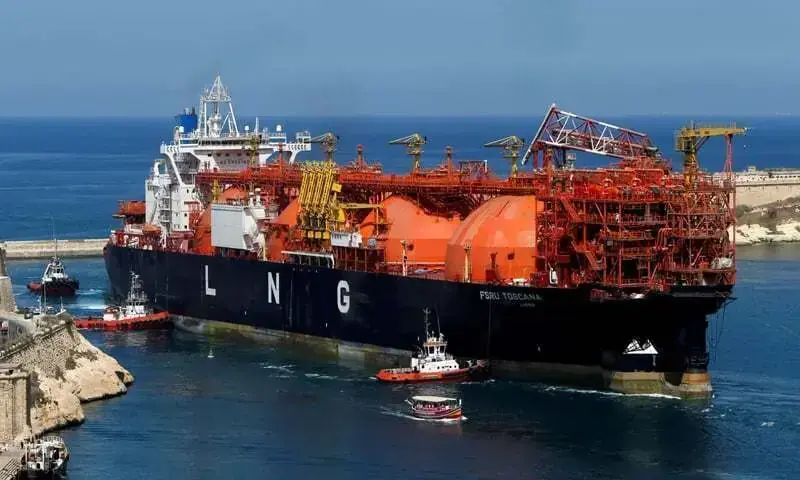
ISLAMABAD: The Oil and Gas Regulatory Authority (Ogra) has notified an around 15pc increase in the price of Regasified Liquefied Natural Gas (RLNG) for sales at the distribution stage by the two Sui gas companies for the current month, mainly because of purchases from the international spot market at short notice amid supply disruptions caused by the US-Iran war.
The latest price notification places the RLNG price for June 15pc higher than in May, almost 56pc higher than in March, and 73pc higher than in February. This has mainly resulted in a substantial increase in fuel costs for power generation, which is evident from the fact that the fuel cost for RLNG-based power generation in May worked out to Rs31 per unit, compared with Rs13.72 per unit in April.
Karachi-based Sui Southern Gas Company Limited (SSGCL) serves consumers in Sindh and Balochistan, and its distribution-stage system losses stand at 12.55pc, compared with about 10.6pc a couple of months earlier. On the other hand, Lahore-based Sui Northern Gas Pipelines Limited (SNGPL) supplies gas to consumers in Punjab and Khyber Pakhtunkhwa, and its distribution-stage system losses were also reported at almost 9pc, up from 7.47pc in October.
At the transmission stage, according to the notification, the RLNG sale price for SNGPL increased by 14.85pc to $17.94 per million British thermal units (mmBtu) in June from $15.62 per mmBtu in May. The company’s transmission-stage price had stood at $10.45 per mmBtu in February.
Inherently expensive cost additions in supply chain, unfavourable spot purchases continue to make RLNG even more expensive for end-users
At the distribution stage, the sale price for SNGPL was, therefore, increased by 14.94pc to $19.5228 per mmBtu in June from $16.9847 per mmBtu in May.
Similarly, the RLNG sale price for SSGCL at the transmission stage increased by 16pc to $16.368 per mmBtu in June from $14.093 per mmBtu in May. It had stood at $9.47 per mmBtu in December 2025. The sale price at the distribution stage for SSGCL also increased by 16.17pc to $18.64 per mmBtu in June from $16.042 per mmBtu in May. It had stood at $10.77 per mmBtu in December.
Besides the unfavourable spot purchases, the inherently expensive cost additions in the supply chain continue to make the end-user RLNG price even more expensive. This is evident from the fact that the RLNG distribution prices of $18.64 for SSGCL and $19.5228 for SNGPL are almost $3.3 and $4.2, respectively, higher than the average delivered ex-ship price, because both LNG importers — Pakistan State Oil and Pakistan LNG Limited — as well as the port authorities charge profit margins on account of retainage and other margins at the rate of 3.77pc of the DES price, in addition to distribution losses of 8.97pc for SNGPL and 12.55pc for SSGCL.
The basket RLNG price was based on a total of four cargoes each in June, May and April. Three of these cargoes were imported under two LNG contracts between PSO and QatarGas at an average price of about $13.144 per mmBtu in June, compared with $9.2 per mmBtu in May. In both June and May, the state-run PLL imported one cargo each at $19.134 per mmBtu and $18.4 per mmBtu, respectively.
PSO has a long-term contract for up to 11 cargoes per month, but part of these supplies is usually diverted to the spot market owing to the country’s economic constraints, resulting in lower domestic energy consumption. However, even the usual seven to eight monthly cargoes could not be supplied because of Qatar’s inability to transport cargoes due to the closure of the Strait of Hormuz and the suspension of gas operations at the field.
As a result, PLL, a special-purpose company created for LNG imports that had remained dormant for almost two and a half years, was reactivated by the government to procure LNG from the spot market as electricity shortages re-emerged. It has been importing, on average, one LNG cargo per month on short notice of 48 to 72 hours.
Ogra said that of PLL’s cargo of 3.2 million mmBtu, two-thirds (2.4m mmBtu) would be supplied to K-Electric, while the remaining one-third (0.8m mmBtu) would be supplied to SNGPL.
Published in Dawn, July 6th, 2026
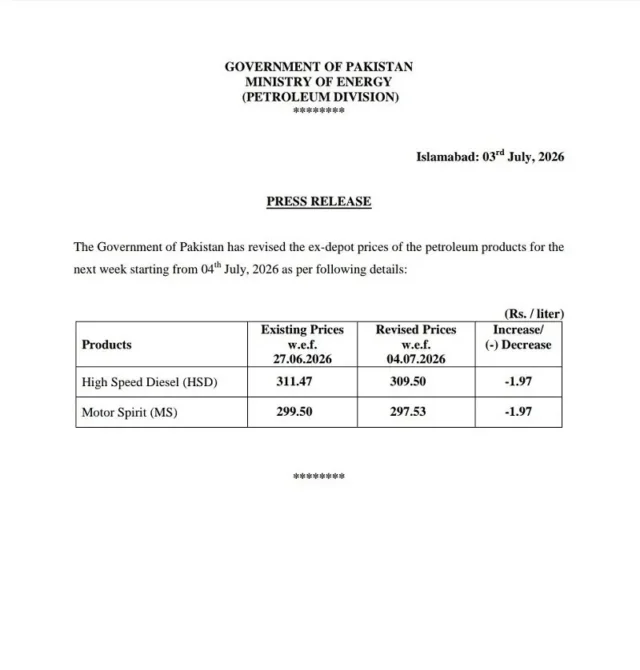
ISLAMABAD: The government on Friday cut the price of both petrol and diesel by Rs1.97 per litre, with immediate effect for the week ending July 10, to pass on part of the impact of lower global prices over the past week.
As such, the ex-depot price of high-speed diesel (HSD) was set at Rs309.50 for the next week instead of Rs311.47 at present, down Rs1.97.
The diesel price has come down from a peak of Rs520.35 recorded on April 3. Its price had started rising from Rs281 per litre after the US-Iran war broke out on February 28. HSD is considered the most inflationary fuel given its widespread use in freight transportation.
The ex-depot rate of petrol was set at Rs297.53 per litre for the next week against Rs299.50 at present, showing a decrease of Rs1.97. The petrol price had peaked at Rs458.41 on April 3 after beginning its upward trajectory from Rs266 in the first week of March.
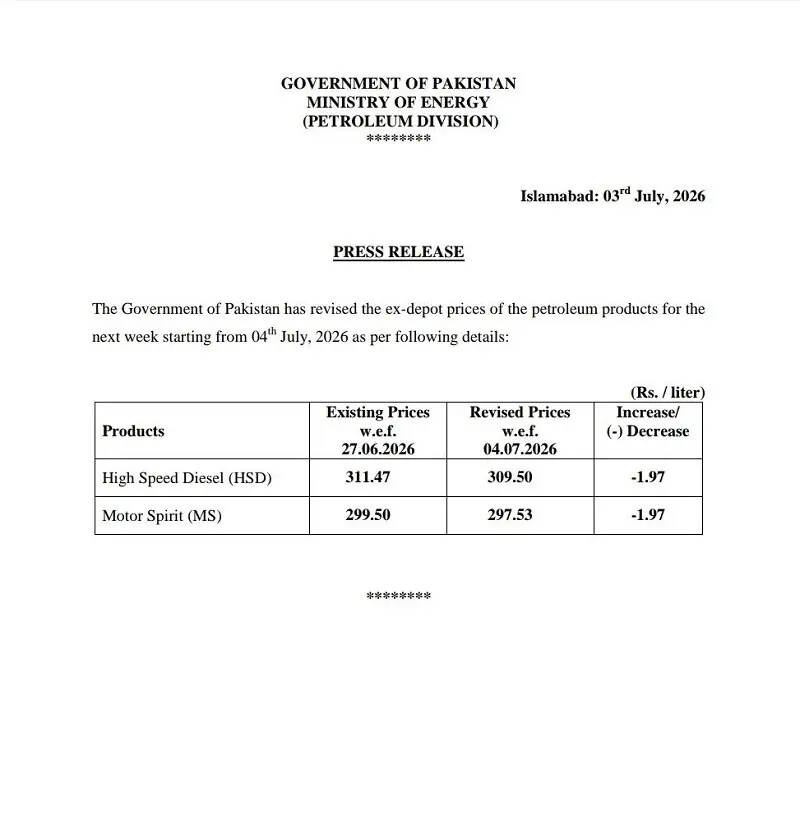
The petrol price has undergone successive downward revisions, with a cumulative reduction of about Rs109 per litre.
The government slightly increased the petroleum levy on both products; otherwise, petrol and diesel prices would have dropped by about Rs11 and Rs4 per litre, respectively.
Under IMF conditions, the government doubled the climate support levy to Rs5 per litre with effect from July 1, while correspondingly reducing the petroleum levy. As a result, the petroleum levy on diesel currently stands at about Rs80 per litre.
On the other hand, the petroleum levy on petrol now stands at about Rs70 per litre, in addition to the Rs5 climate support levy.
The government is currently charging about Rs101 per litre on high-speed diesel (HSD) in the form of Rs16 per litre customs duty, in addition to the petroleum levy and climate support levy, as well as the inland freight equalisation margin.
Meanwhile, the total tax on petrol amounts to Rs95 per litre, including Rs20 per litre customs duty in addition to the petroleum levy and climate levy.
The government is also charging about Rs21 per litre as petroleum levy on kerosene and about Rs16 per litre on light diesel oil.
Petrol and high-speed diesel (HSD) are the major revenue earners, with monthly sales of about 700,000 to 800,000 tonnes, compared to just 10,000 tonnes of monthly demand for kerosene.
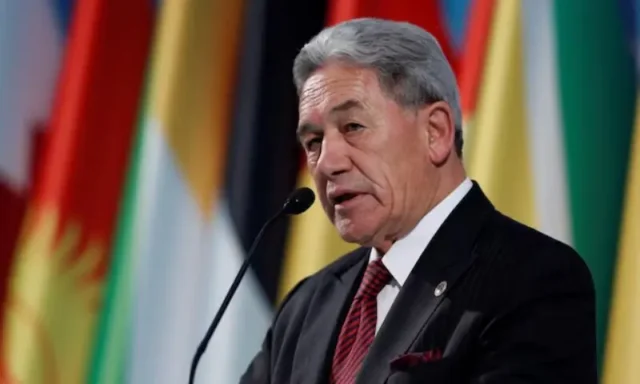
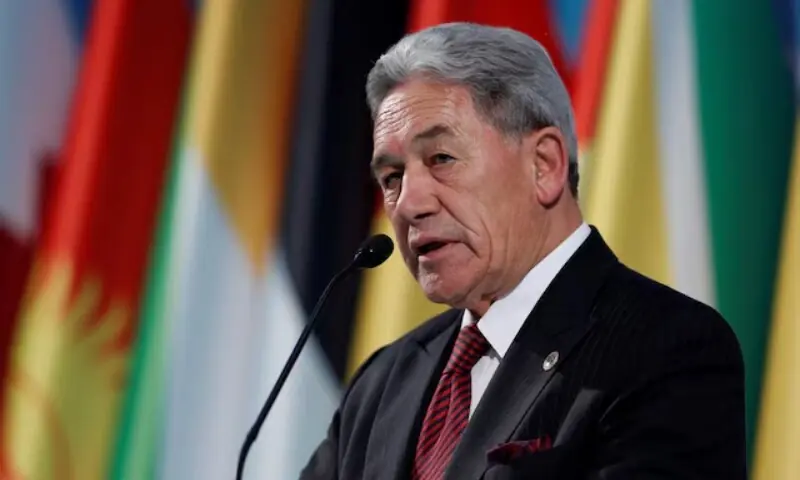
New Zealand’s top diplomat Winston Peters drew the ire of Beijing’s ambassador in Wellington on Thursday after telling a lawmaker of Chinese descent to “go back to your own country”.
During a debate about New Zealand’s response to the Covid pandemic on Wednesday, populist NZ First leader Peters was asked by China-born Green Party member Lawrence Xu-Nan: “Are you vaccinated?”
In response, Peters said the lawmaker, who was born in the Chinese city of Tianjin but grew up in Auckland, had “come here five minutes ago”.
“Go back to your own country. That’s where they lie like a flatfish, but they don’t lie like that here,” Peters said.
“This is called a democracy, unlike what you’re used to. Go back to where you’ve come from, you loudmouth.”
The comments sparked a rare intervention from Chinese ambassador to New Zealand Wang Xiaolong.
Wang said on X on Thursday that while he preferred to stay out of domestic politics, “suffice it to say, sometimes, a statement says more about the person that makes it than anything or anybody else”.
Peters fired back at Wang, saying his comments had “proven my point”.
“We live in a democracy that includes free speech and rights — those two values that other certain countries not only limit, but do so with force,” Peters said on X.
“If that offends the pearl clutchers and the communist shills labelling it as ‘dangerous’ – welcome to New Zealand”.
It’s not the first time Peters and his party — seen as kingmakers in New Zealand’s fractured political system — have received criticism for racist comments.
Earlier this year Peters’ deputy Shane Jones criticised New Zealand’s free trade deal with India as risking a “butter chicken tsunami”.
Last year Peters and Jones were forced to back down after the deputy yelled “send the Mexicans home” at MP Francisco Hernandez during a debate.
Peters had followed up that comment by telling Hernandez, who was actually born in the Philippines, and Xu-Nan to “show some gratitude” for being in New Zealand.
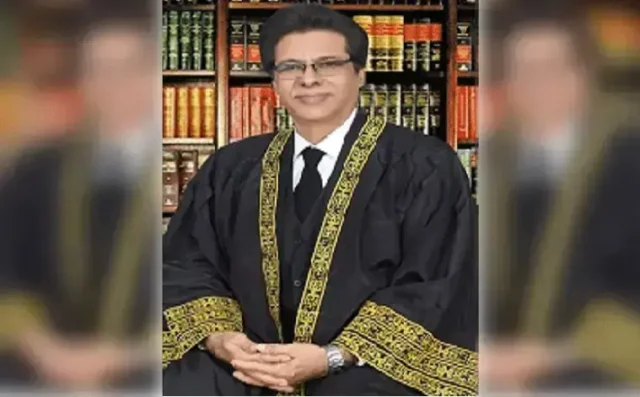
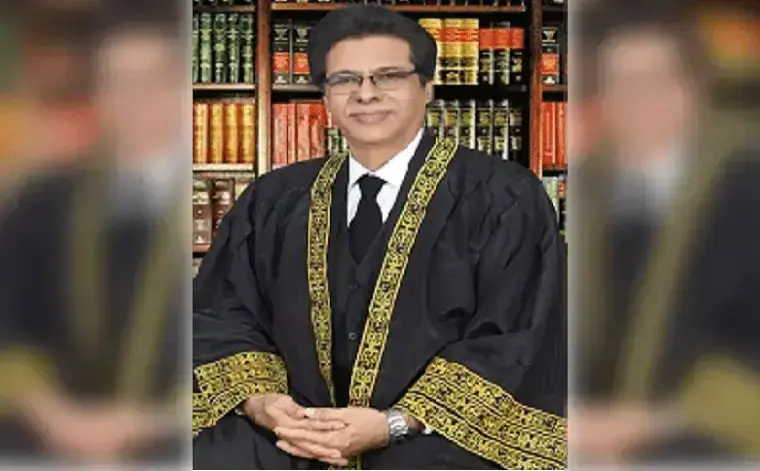
ISLAMABAD: The Supreme Court on Friday settled a jurisdictional dispute by declaring that it could not hear bail applications in pending National Accountability Bureau (NAB) appeals, and all such pending criminal appeals stood transferred to the Federal Constitutional Court (FCC).
“This court has no jurisdiction to take cognisance in the NAB cases in terms of Article 175F (a) of the Constitution, read with Section 32 and 32-A of the National Accountability Ordinance, 1999 (NAO),” stated a 30-page judgement authored by Justice Muhammad Ali Mazhar, who headed a three-member bench that took up the matter.
The ruling also referred to arguments that the Supreme Court should not surrender its jurisdiction come what may, with the judges observing that courts could “not play to the gallery” for admiration, popularity and media commendations or for public perception, instead of adhering to the law and Constitution.
The duty of the court was to follow the law and not make decisions or assume a jurisdiction motivated by media mileage or public consumption, the bench noted.
“We are fully conscious and also sanguine that neither the court should assume the jurisdiction not vested in it by law nor it should abdicate its jurisdiction so vested under the law, rather, the jurisdiction is decided by the Constitution and the law itself. It is not a matter of surrender or conquest, but it is regulated by the law,” the judgement read.
The bench further observed that “unbridled judicial overreach, including flagrant misuse of suo motu powers as might is right in the past, unremittingly harmed the institutional image and its legitimacy and ultimately resulted in many legislative changes in the Constitution and the laws of our judicial system”.
“If a court does not possess statutory jurisdiction over a matter, it must step away without any intervention. No judge is robed, crowned or sceptered as a king to do whatever suits his whim and caprice as one-man rule,” the judgement concluded.
The ruling came on two petitions taken up by the bench headed by Justice Mazhar and comprising Justice Musarrat Hilali and Justice Shahid Bilal Hassan.
One of the pleas was filed by the NAB, challenging an acquittal by the Peshawar High Court, and another by an under-trial prisoner, Aamir Mahmood, who challenged the Islamabad High Court’s refusal of his post-arrest bail.
During the hearing, NAB argued before the court that after the insertion of Section 32-A in the NAO, the Supreme Court did not have the jurisdiction to proceed and decide the criminal petitions under consideration for leave to appeal, and now, only the FCC had the jurisdiction in all NAB cases, including bail applications.
According to Section 32-A of the NAO, any convicted person, aggrieved by a decision on their appeal against their conviction by a high court, may file a second appeal before the FCC.
But, the counsel for Mahmood, Ibadur Rehman Lodhi, argued that his client’s case was distinct as he was an under-trial prisoner whose bail rejection was not a second appeal against his conviction.
The bench hearing the arguments observed in its ruling that the insertion of Section 32-A in the NAO had become a statutory remedy with retrospective effect following the establishment of the FCC under the 27th Constitutional Amendment, which was passed by Parliament in November last year.
It noted that the FCC was established in accordance with the newly inserted Article 175-F of the Constitution under the latest amendment, the provision dealing with the appellate jurisdiction of the FCC.
“An appellate jurisdiction has been conferred upon the FCC in the categories of cases providing that all petitions for leave to appeal, appeals, review applications, and every other proceeding falling within the jurisdiction of the FCC, whether instituted or pending before the Supreme Court prior to the commencement of the amendment, will stand transferred to the FCC,” the bench declared.
It further observed that at present, the right of appeal introduced under Section 32-A of the NAO had become a “statutory remedy with retrospective effect”, and all pending civil petitions for leave to appeal would be automatically converted into direct second appeals while criminal petitions in which the leave had been granted would be heard by the new appellate forum.
Making these observations, the bench termed the new provision of second appeal in the NAO “beneficial and remedial” for the accused to a large extent following the 27th Amendment, but added that this would have no impact on cases decided and closed before the constitutional tweak.
“For all intents and purposes, a vested right of second appeal has restructured or transformed a final appellate terminus or destination of accountability cases away from the Supreme Court to FCC, while disengaging a discretionary grant of leave into an automatic right of appeal,” the ruling stated.
The judgement also recalled that the counsel for Mahmood had referred to an order of the Supreme Court to show that in the recent past, despite the amendment to the NAO, one criminal petition for leave to appeal moved for bail was entertained and decided by the court on March 18, converting the criminal petition into an appeal in which no question of jurisdiction was raised by the NAB.
“The order shows that no point of jurisdiction was raised by NAB in that case and reasons of such lapses are best known to them but here they take the hardline and objected to the jurisdiction,” the judgement said.
Noting the “lapses to raise the objection to jurisdiction”, the judgement further stated that “neither the jurisdiction is conferred on the Supreme Court on the wills or whims, nor by consent of the parties, but it is always regulated by the law”.
The Supreme Court emphasised that a statute that “merely creates or enlarges a remedy for an existing right, although retrospective, does not impair vested rights. So acts providing a new remedy, or enlarging a remedy already existing retrospectively do not, per se, impair vested rights.”
More to follow
Prime Minister Narendra Modi was busy trying to put out other fires when a student movement suddenly exploded. There are no easy solutions to the problems behind it.
Nigel Farage, leader of the populist right-wing party Reform U.K., has come under increasing pressure after a series of revelations about undisclosed gifts and donations.
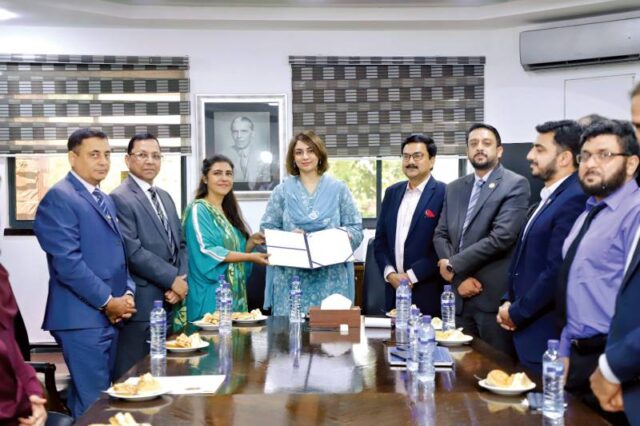

Sabahat Khan says character building has always been and will always remain responsibility of teachers
Lahore – Rashid Latif Khan University (RLKU), through its Department of Media and Communication Studies, established the Majid Nizami Chair to pay tribute to the outstanding journalistic, intellectual, and national contributions of the late Majid Nizami, one of Pakistan’s most distinguished journalists, editors, and an unwavering advocate of the Ideology of Pakistan.
The Chair was formally inaugurated by Ms Rameeza Majid Nizami, Chairperson of the Nawa-i-Waqt Group. On the occasion, she was announced as the first Chairperson of the Majid Nizami Chair and was also conferred the honorary title of Professor of Practice by the university in recognition of her valuable contributions to journalism and media.
Rameeza Majid Nizami visited Rashid Latif Khan University on the special invitation of Prof Dr Saeed-ul-Hassan Chishti, Pro Vice Chancellor. During a special interactive session held in the University’s Conference Room, she addressed the university management, faculty members, and students.
In her keynote address, Ms Nizami said that Majid Nizami’s journalistic legacy was built upon integrity, professionalism, national interest, and an unwavering commitment to press freedom. She emphasised that the establishment of academic chairs in universities would help nurture research, critical thinking, responsible journalism, and national consciousness among young people. Referring to the rapidly evolving media landscape, she remarked that truth, factual reporting, impartiality, and professional ethics have become more important than ever. She also expressed her commitment to making the Majid Nizami Chair an active platform for research, academic dialogue, and professional media education.
Speaking on the occasion, Ms Sabahat Khan, Chief Executive Officer of Rashid Latif Khan University, said that the responsibility of nurturing students’ character has always rested with teachers and will continue to do so despite the rapid advancement of technology and artificial intelligence. She stated that RLKU is committed to producing competent, responsible, and ethically grounded future leaders. She described the establishment of the Majid Nizami Chair as a continuation of the University’s vision to promote research, freedom of expression, and responsible communication. Welcoming Ms Nizami to the University, she expressed confidence that her leadership and guidance would greatly benefit students of Media and Communication Studies.
Addressing the gathering, Prof Dr Saeed-ul-Hassan Chishti, Pro Vice Chancellor, said that the true purpose of higher education is to promote research, critical inquiry, and social responsibility. He noted that the Majid Nizami Chair would create new opportunities for research, academic discourse, policy dialogue, and professional development in Media Studies and the Social Sciences. He expressed optimism that the Chair would emerge as a leading national platform for excellence in journalism and communication studies.
Earlier, Captain (Retd) Faisal Khalid, General Manager Human Resources and Professor of Practice, briefed the audience on the objectives and significance of the upcoming Health & Education Summit and Expo 2026, being organized by the RLK Group.
The event was attended by Registrar Dr Ayaz Qaiser, COO Brigadier (Retd.) Asim Imran, Nawa-i-Waqt Group COO Colonel (retired) Ahmad Nadeem Qadri, Dean Faculty of Social Sciences Prof Dr Mubashar Nadeem, Head of Student Affairs Dr Pinkesh Zahra, directors, heads of departments, faculty members, and a large number of students.
Participants described the establishment of the Majid Nizami Chair as a significant milestone for journalism, academic research, and higher education in Pakistan. During the ceremony, Prof Dr Muhammad Tahir Mustafa of the Department of Religious Studies presented Ms. Rameeza Majid Nizami with a copy of the non-dotted Urdu translation of the Holy Qur’an as a commemorative gift.
Following the ceremony, Ms Rameeza Majid Nizami visited the state-of-the-art TV Studio of the Department of Media and Communication Studies, where she appeared as a special guest on the University’s official podcast, “Uraan.” During the podcast, she shared her views on the future of journalism, emerging trends in the media industry, youth leadership, and the evolving role of responsible journalism in contemporary society.
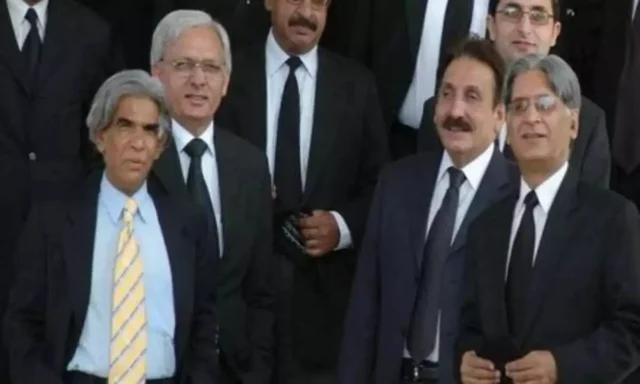
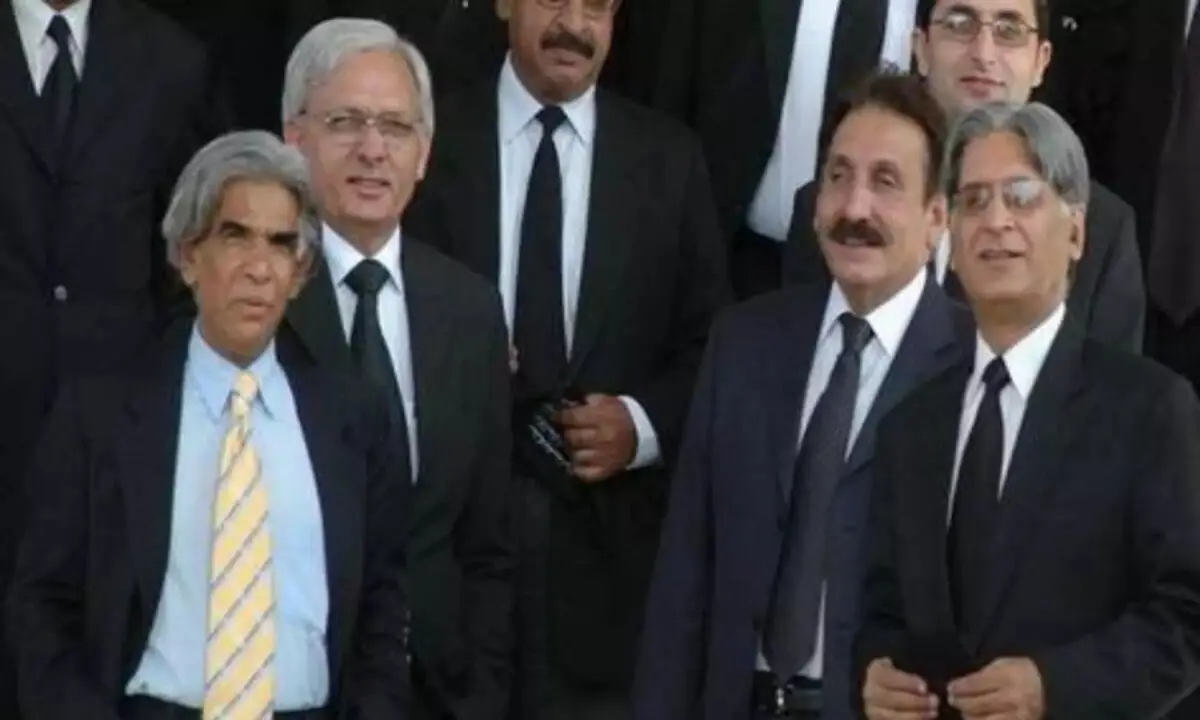
In 2007, live television turned a sacked chief justice into a national uprising that ended Gen Musharraf’s rule. A lawyer who marched then, and resigned from the Supreme Court in protest last year, explains why that isn’t happening now.
The Lawyers’ Movement of 2007-2009 is considered one of the most significant episodes of civic mobilisation in the country’s history. What began as a dispute over the suspension of the chief justice of Pakistan evolved into a nationwide campaign to challenge Gen Musharraf’s rule
The reinstatement of a handful of deposed judges was symbolic. Its true importance lay in restoring the Constitution, ending a decade of dictatorship, facilitating the return to democratic governance, and reaffirming the principle that political authority must derive from the will of the people, rather than from unelected centres of power.
The conventional explanation given for the movement’s success focuses on lawyers, judges, and political parties. All three groups played a role, but this reasoning overlooks a fundamental factor: the movement’s ability to transform a constitutional dispute into a compelling national narrative.
Understanding why that happened explains why no comparable lawyers’ movement exists today, despite continuing debates about constitutionalism, judicial independence, and the rule of law.
When it began, of course, the 2007 Lawyers’ Movement was hardly a mass uprising. In those days most Pakistanis had little direct engagement with judicial politics. The turning point came when private television channels began providing continuous live coverage of protests, court proceedings, and political developments. For days, weeks, and months, prominent lawyers such as Aitzaz Ahsan, Muneer Malik, Hamid Khan, Tariq Mehmud, and Ali Ahmad Kurd addressed audiences live on television, openly challenging the authority of Gen Pervez Musharraf, who simultaneously held the offices of president and chief of army staff. He had underestimated the impact of live visuals.
This was unprecedented. Millions of Pakistanis watched lawyers criticise the country’s most powerful institutions in realtime. Rallies, arrests, police actions, and courtroom developments were broadcast live, transforming what might otherwise have remained a professional dispute on a national political cause.
The significance of this media environment cannot be overstated. Political movements succeed not simply because grievances exist, but because they become visible, shared, and emotionally resonant. Live television allowed citizens to witness events as they unfolded, turning isolated protests into a national conversation. Images of the chief justice being manhandled by police, unarmed lawyers in their black coats resisting arrest, the violence in Karachi on May 12, 2007, and, later that same evening, Gen Musharraf displaying his arrogance by raising his fists and declaring victory, transformed a constitutional dispute into a moral drama that was beamed into millions of living rooms.
An often-overlooked aspect of the movement is that, in its initial months, the judiciary itself did not immediately emerge as a united institution of resistance. Following the chief justice’s suspension in March 2007, judges continued functioning within the existing judicial framework. Between March and November, however, the movement gathered extraordinary momentum through relentless media coverage and sustained public mobilisation. Twenty-four-hour television transformed lawyers into national figures and judicial independence into the defining constitutional issue of the day. As public support intensified, judges increasingly found themselves at the centre of a national constitutional struggle. When emergency rule was imposed in November 2007 and judges were required to take the oath under the Provisional Constitutional Order, many refused. By then, they understood that they would be seen as villains if they joined the other side.
The movement also arrived at a particular time within the broader political context. By 2007, Pakistan had experienced almost a decade of Gen Musharraf’s rule, for which public fatigue had become increasingly evident. Many Pakistanis, irrespective of political affiliation, were thus receptive to demands for constitutional restoration and democratic change. Gen Musharraf had also largely lost the support of key foreign allies, many of whom appeared to believe that their principal strategic interests had already been secured.
A further important factor was the alignment of political parties. All major political parties eventually converged on a shared minimum demand: restoration of the judiciary and genuine democracy. Their common objective of restoring democracy transformed what began as a professional protest into a broad constitutional movement and greatly facilitated mass mobilisation. The violence of May 12, 2007 and its visuals telecast live further alienated the few political parties that continued to support Gen Musharraf, deepening his political isolation.
Today, the political landscape is markedly different. Except for one major political party, most others are perceived to have accommodated themselves to prevailing centres of power, weakening their capacity to serve as independent drivers of constitutional and democratic mobilisation. The principal opposition party, despite commanding substantial public support, is widely seen as politically and organisationally constrained. Its leadership remains incarcerated, its organisational structure fragmented, and its ability to act as a unifying national force significantly diminished. There is a widespread perception that recent constitutional and legal changes, including the 26th and 27th Amendments, have further strengthened the coercive apparatus. Unlike in 2007–09, there is no unified political front capable of reinforcing or amplifying a nationwide constitutional movement.
Youth and young lawyers also played a critical role. Senior leaders themselves were committed and led by the idealism of the young, whose determination discouraged compromise at crucial moments. Thousands of younger lawyers organised rallies, travelled across cities, and maintained the movement’s momentum for nearly two years. Effective movements require leadership, but they also depend upon committed participants willing to assume personal risk.
Equally important was the culture of the legal profession. Before the Lawyers’ Movement, bar associations functioned differently. Although elections were contested, they were generally fought over professional integrity, institutional independence, and the welfare of the legal profession rather than overt partisan loyalties. The organised bar retained a strong institutional identity rooted in constitutionalism and the defence of judicial independence.
The establishment had also not regarded the organised legal profession as a significant political challenge. Consequently, it had made relatively few inroads into the internal politics of bar associations. When the confrontation over the judiciary emerged, the bars were therefore able to respond with unusual unity and institutional coherence.
Slogans amplified mobilisation. Demands such as Dastoor ki baladasti (supremacy of the Constitution) and Adliya ki bahali (restoration of the judiciary) were accompanied by more emotive expressions such as Riyasat hogi maa ke jaisi (the state will be like a mother). Crowds openly chanted slogans directed at the dictator’s regime, and these scenes were broadcast live by private television channels into millions of homes. The fact that such slogans could be aired live on national television was itself extraordinary. Together, these broadcasts transformed constitutional language, political dissent, and public protest into a vocabulary that ordinary citizens could understand, identify with, and embrace.
The movement combined grievance with hope. While opposing undemocratic rule, it presented an aspirational vision of justice, constitutionalism, and dignity. That combination enabled it to resonate far beyond lawyers and political elites.
The absence of a comparable lawyers’ movement today reflects the disappearance of many of these conditions. Contemporary Pakistan differs fundamentally from the environment that existed between 2007 and 2009.
The most obvious difference is the media landscape. During the movement, private television channels powerfully amplified dissent. The same channels that broadcast lengthy speeches against a sitting general and provided uninterrupted coverage of anti-establishment protests are now widely perceived to operate within much narrower limits.
Whether due to formal restrictions, informal pressures, commercial considerations, or self-censorship, sustained live broadcasts openly challenging powerful institutions have become almost unimaginable on mainstream private television. Equally important is the perception that the media’s institutional role has changed. During the lawyers movement, many journalists regarded themselves as participants in a broader struggle for constitutionalism and media freedom. Today, that visible institutional resistance is far less apparent. The institution that once helped construct a national narrative of resistance is now widely seen as less able to perform that function.
This matters because movements depend upon visibility. Without shared public exposure, grievances remain fragmented and rarely develop into collective causes.
A climate of fear has increased the perceived cost of mobilisation. Reports of pressure, restrictions on dissent, and intimidation have reinforced the perception that political participation carries greater personal risk, making collective action considerably more difficult. The authority meant to serve the people is instead perceived as being used to silence them.
The legal profession has also undergone profound change. The unity that once characterised the bar associations is no longer evident. Many observers argue that bar politics has become increasingly shaped by partisan affiliations and factional interests rather than shared institutional principles. Over the past two decades, the establishment has also had considerably more opportunity to cultivate influence within a range of institutions, including segments of the legal profession.
Perhaps the most significant change lies within the bars themselves. It is no secret that many lawyers privately acknowledge what they regard as a serious erosion of the rule of law and judicial independence. Many believe that the judiciary has become increasingly subject to the influence of unelected power centres, often acting through the constitutional façade of an elected parliament. Yet these concerns have rarely translated into sustained institutional resistance. Instead, there appears to be a degree of resignation — and, in some quarters, tacit acceptance — that this is now the prevailing constitutional order. The reality may be widely understood within the profession, but few institutional voices are prepared to challenge it publicly.
Cases involving lawyers such as Imaan Mazari and Hadi Ali Chattha are frequently cited in this context. The muted response from representative legal bodies manifests the difference between today and the collective activism displayed during the Lawyers’ Movement.
There is another, perhaps more ironic, reason why the public is reluctant to place the same trust in judges and lawyers today. The success of the Movement raised immense public expectations that the restored judges and lawyers would fulfil their promise of making the Riyasat like a mother for its people. Regrettably, many believe those expectations were not met. The judges and lawyers became the principal beneficiaries of a struggle sustained by the sacrifices of ordinary citizens. The ninety innocent lives lost during the movement were gradually forgotten, while the idealism of countless young lawyers was left frustrated.
Instead of using the opportunity to transform the justice system, particularly at the district level where ordinary citizens seek justice, the restored judiciary was widely perceived to have reverted to many of the same institutional practices that had existed before the movement. Genuine reform, made possible by the extraordinary public support for the judiciary, never materialised. For the common citizen, little changed. That disappointment has inevitably weakened public trust in both judges and lawyers.
The broader lesson extends beyond Pakistan. Political movements are rarely driven by facts alone. They depend upon narrative, visibility, organisational cohesion, favourable political conditions, and emotional resonance. The Lawyers’ Movement succeeded not simply because lawyers protested or judges were restored, but because it transformed judicial independence from an abstract legal issue into a compelling national story that millions of Pakistanis could identify with.
Today, nearly every condition that made that transformation possible has changed. The media no longer possesses the same freedom to amplify dissent, bar associations are more fragmented and increasingly shaped by partisan politics, collective institutional resistance has weakened, and political parties no longer provide a unified constitutional platform. Constitutional concerns remain, but the institutional and political ecosystem that once transformed those concerns into a nationwide movement no longer exists.
Throughout history, lasting constitutional transformation has been brought about by political leadership rather than by judges or generals. The Lawyers’ Movement was never merely about restoring a handful of judges to office. Its larger purpose was the restoration of the Constitution, democracy, and the principle that the will of the people must prevail.
It was the political leadership—not judges or lawyers—that ultimately had to make the Constitution work in letter and spirit. For more than seven decades, Pakistan has witnessed repeated cycles in which political leaders aligned themselves with centres of power, celebrating when their opponents became victims, only to forget their own persecution when they later returned to office with the support of those very centres of power. In the end, it has always been the will of the people that has suffered.
The Lawyers’ Movement succeeded because, at that historic moment, political leadership demonstrated the resolve to honour the Charter of Democracy. That spirit created the possibility of building a state that cared for every citizen, especially the weakest and most vulnerable.
The success of the Lawyers’ Movement is too often measured by the restoration of the deposed judges rather than by its far greater achievement: ending nearly a decade of Gen Musharraf’s rule and paving the way for the restoration of constitutional democracy through a freely elected parliament after the unprecedented mass mobilisation that culminated in the 2008 general elections. The reinstatement of the judges was largely symbolic. Ironically, the restored judges were later widely perceived as contributing to the weakening of the very parliament that represented the movement’s greatest constitutional success. That role, however, deserves separate discussion.
Today, the reality is widely recognised. Regrettably, political leaders who have sworn to preserve, protect, and defend the Constitution now openly take pride in governance through a hybrid system rather than under the Constitution itself. The greatest responsibility, therefore, rests with the political leadership because it has voluntarily assumed the duty of leading the nation.
What Pakistan needs today is not another Lawyers’ Movement but the collective spirit that once united political leaders, judges, lawyers, journalists, the media, civil society, and ordinary citizens. It needs a movement to make the Riyasat a mother for every citizen, to break the shackles of elite capture, restore the supremacy of the Constitution, and ensure that the will of the people alone governs the country.
It is time for truth and reconciliation. The choice is clear: continue repeating the failures of the past, or finally learn from our mistakes, honour the constitutional promise made to the people, and build a state governed, in both letter and spirit, by the will of its actual stakeholders — the people.
Crowds in the capital’s central business district fled as the crash sent debris falling into the streets below.