









Bills

Home Bills

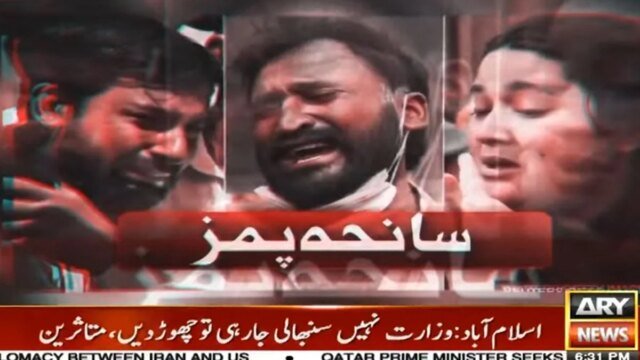
PIMS tragedy: Victims demand judicial commission to probe fire
0


ISLAMABAD, August 27, 2026: Victims of the PIMS hospital fire spoke to the media and demanded a judicial commission to investigate the incident, ARY News reported.

According to sources, the affected families said DNA tests of the children who died in the fire were not conducted.

They said that if such a tragedy had occurred in another country, the entire system would have been shaken.

The victims said those who cannot handle their ministries should step down.

The affected parents said the real issue is that the government has formed a committee to investigate the PIMS incident.

They said bureaucrats are appointed to inquiry committees after every tragedy, but no one is ready to accept the committee formed for the PIMS incident.

The affected parents demanded that a judicial commission should be formed to investigate the PIMS tragedy.

Earlier, the Pakistan Institute of Medical Sciences (PIMS) administration had formed a new four-member inquiry committee to investigate the fire incident at the hospital’s nursery.

Professor Dr Atif Inam Shami has been appointed as the head of the inquiry committee, sources said. The committee comprises three senior PIMS professors along with Deputy Executive Director Dr Aneza Jaleel.

Professor Altaf Hussain from the ENT department and Professor Sajid Rafiq Abbasi from the Nephrology department have been appointed as members of the committee, sources said.

The inquiry committee will investigate the nursery fire and determine its final cause. It will also examine the fire safety arrangements around the nursery, sources said.

The committee will review the firefighting and rescue operation, including the response time of the rescue operation.

Sources said the PIMS inquiry committee will prepare its report within 48 hours.

President’s remission power bars enhancement of sentence after release, SC rules

0


ISLAMABAD   –  The Supreme Court of Pakistan has ruled that the President’s constitutional power to remit or reduce a convict’s sentence is final and irrevocable, holding that any subsequent enhancement of that sentence must be supported by a clear and explicit legal basis.  In this regard, the SC dismissed an appeal seeking its directions to convert the life imprisonment of a convict Tahreen Ilyas into the death penalty, noting that the convict had already completed his sentence and been released.

 During the hearing, the Superintendent of Jail, Zhob, Balochistan, appeared before the court via video link. The bench questioned him about the report stating that the convict had served 14 years in prison before being granted remission of the remaining sentence under a presidential general remission. The court asked under which law a 14-year period had been treated as sufficient for a life convict.  The bench observed that, to its knowledge, Supreme Court precedents require a life convict to undergo at least 17 years of imprisonment. However, since the convict had already been released, the court said the legal question would be examined in another appropriate case.

 The court also questioned how a second punishment could be imposed under Section 302 of the Pakistan Penal Code after the original sentence had already been executed.

 It observed that the trial court had convicted the accused for murder, the sentence had been implemented, and any attempt to enhance the punishment now required a strong legal justification.  The bench further remarked that the Constitution empowers the President to remit or reduce sentences and that this constitutional authority had already been exercised in the present case. It observed that if the law were to permit enhancement of a sentence after such remission, it would require a constitutional amendment, adding in a light-hearted remark that constitutional amendments are not exactly difficult these days.

The Supreme Court subsequently dismissed the appeal seeking to enhance Tahreen Ilyas’s sentence from life imprisonment to death.

IGP asks probationary ASPs to prioritise public service

0


LAHORE  –  A delegation of probationary Assistant Superintendents of Police (ASPs) of the 52nd Common Training Programme (CTP) called on Punjab Inspector General of Police (IGP) Abdul Kareem at the Central Police Office (CPO) on Tuesday. The delegation comprised 14 probationary ASPs, including two female officers, belonging to Punjab, Khyber Pakhtunkhwa, Balochistan and Sindh. Speaking on the occasion, the IGP said the Punjab government, under Chief Minister Maryam Nawaz Sharif’s “Safe Punjab Vision”, had provided extensive resources to equip the Punjab Police with IT-based applications, modern community policing tools and advanced technologies. He said a zero-tolerance policy was being strictly implemented against incidents of violence, sexual assault and harassment involving women and children, adding that the entire province had been brought under an Artificial Intelligence (AI)-enabled Safe City system extending to the tehsil level. Abdul Kareem emphasised that on-ground policing, keen observation, timely decision-making and practical field experience were essential for probationary officers throughout their professional careers. He directed the officers to resolve public issues on a priority basis within the ambit of the law and promote people-friendly policing to improve public service delivery. The IGP also advised the probationary ASPs to acquire comprehensive knowledge of the modern infrastructure, surveillance systems and virtual technologies being used by the Punjab Safe Cities Authority. He said field training in district police and other specialised branches would play a key role in their professional development, adding that officers should focus on community policing, effective public engagement and the welfare of subordinate police personnel. During the meeting, the IGP sought feedback from the officers regarding their training experiences and responded to their queries. According to a Punjab Police spokesperson, the probationary ASPs had been posted in various districts of Punjab for six months of field training. They were also briefed on police operations, investigation, the Crime Control Department (CCD), traffic management, public service delivery and crime prevention. Additional Inspector General (Training) Asim Gulzar, Additional Inspector General (IAB) Imran Mehmood, Additional Inspector General (Operations) Punjab Muhammad Ali Nekokara, DIG Establishment-II Suleman Sultan Rana, DIG Headquarters Dr Muhammad Abid and other senior police officers were also present.

US treasury secretary welcomes Pakistan’s economic reforms, return to capital markets

0


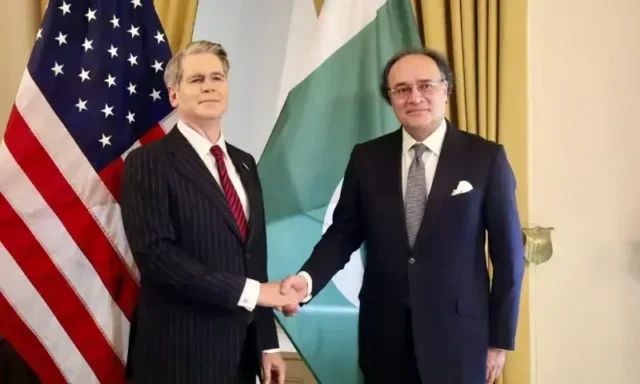
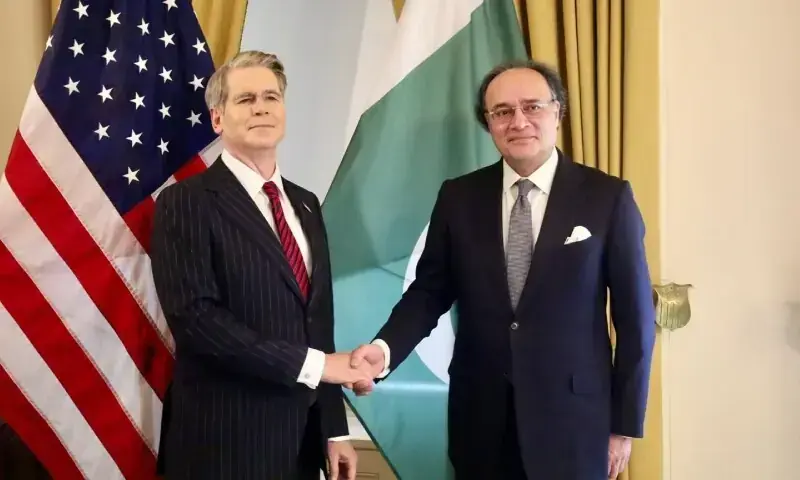
US Treasury Secretary Scott Bessent met Finance Minister Muhammad Aurangzeb a day earlier and welcomed Pakistan’s progress in implementing economic reforms and laying the groundwork for a return to international capital markets, the Treasury said in a statement on Wednesday.

According to a statement, Bessent emphasised the “importance of Pakistan’s work to continue its reforms, become more economically self-reliant, boost growth and strengthen its economic resilience”.

“Secretary Bessent welcomed the progress Pakistan has made in restoring macroeconomic stability and advancing fiscal consolidation, recognising the government’s efforts to implement significant economic reforms,” Treasury said.

The statement added that Bessent also expressed support for Pakistan’s efforts to build greater economic self-reliance and commended the government’s commitment to creating the conditions for a successful return to international capital markets.

The statement, however, did not address Pakistan’s request for a $10 billion exchange stabilisation facility.

Meanwhile, a statement issued by Pakistan’s Ministry of Finance on Tuesday said that Aurangzeb highlighted Pakistan’s journey from macroeconomic stabilisation to sustainable, export-led growth, while noting the economy’s vulnerability to regional geopolitical developments.

The statement added that Senator Aurangzeb sought greater US support for Pakistan’s path to the market, underpinned by improved access to international capital markets, higher foreign exchange reserves and enhanced sovereign credit ratings.

It said both sides reaffirmed their commitment to deepening bilateral economic cooperation, promoting greater US investment and advancing strategic projects.

The proposed $10 billion exchange stabilisation facility would be a financial mechanism under which the US government, through the Treasury’s Exchange Stabilisation Fund, would provide loans or other backstop facilities to Pakistan to bolster its foreign exchange reserves, ease debt pressures, and help stabilise the economy.

Such facilities are primarily used to prevent currency instability and, where necessary, support a partner country’s currency through intervention in foreign exchange markets.

Additional input from Reuters

CCPO vows zero tolerance for corruption

0


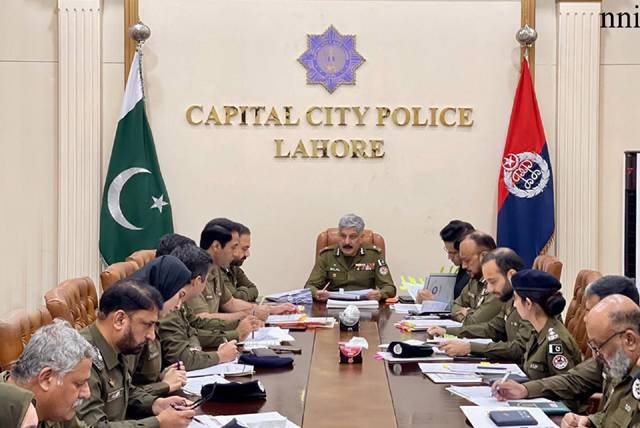
LAHORE  –   Capital City Police Officer (CCPO) Lahore Bilal Siddique Kamyana has said that there was zero tolerance for corruption and no form of misconduct will be tolerated in the police department. He expressed these views while chairing a meeting to review the performance of Model Town and Cantt divisions, here on Saturday. The meeting reviewed the overall performance of both divisions, law and order situation and measures being taken to prevent crime. The CCPO directed police officers to intensify indiscriminate action against pickpockets and trace organized gangs involved in pickpocketing to bring them to justice.

He ordered increased action against pickpockets in markets, commercial centres and crowded places. He also directed police to ensure the arrest of proclaimed offenders wanted in electricity theft cases and adopt an effective strategy to prevent theft and burglary incidents. The CCPO ordered continuation of indiscriminate action against drug peddlers and directed officers to ensure all necessary measures for crime prevention and protection of citizens’ lives and property. He directed supervisory officers to perform their duties diligently and closely monitor the performance of subordinate staff, making it clear that negligence or dereliction of duty would not be overlooked.

DIG Administration Imran Kishwar, DIG Investigation Zeeshan Raza, DIG Operations Faisal Kamran, SSP Investigation Muhammad Naveed, SSP Operations Abdullah Ahmad, SPs and ASPs of Model Town and Cantt divisions, circle officers, SHOs and investigation incharges attended the meeting.

Egypt vs Argentina: A law-based critique of FIFA World Cup 2026

0


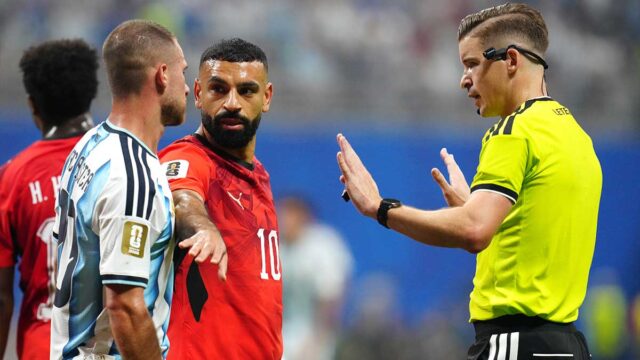
In one of the most dramatic and controversial fixtures of the 2026 FIFA World cup, reigning champions Argentina managed to claw back from 2-0 down to win 3-2 in the Round of 16 against Egypt in a game that should have been praised for the inspirational quality of play.

What instead took precedence, however, were questions over referee Franois Letexier and the VAR team. Egypt Football Association brought an official complaint citing the “influential” nature of the officiating in the match, and called for an investigation for the full 90 minutes. Being a football critic this game highlighted once again the obstacles to perfection in the protocol of football.

However, the moment of the match came in the second half when Mostafa Ziko seemingly put Egypt in the lead with a fantastic strike. However everyone’s celebrate was snuffed out by VAR who deemed the strike to be disallowed after a foul on Lisandro Martnez by Marwan Attia in the adversaries area along the way. Under IFAB Laws of the Game and the VAR Protocol, violations committed by the attacking team in the build-up – including fouls – are entirely reviewable and that decision is technically within the regulation mandates as long as much as the attacking sequence so-called clear and obvious decisions.


In the eyes of many, the intervention was downright fussy. The contact was tenuous at best, and calls into question the uniformity of the application of the rule. If these sort soft fouls will result in correctly disallowed goals, then why did we not see the issue called in other phases of the same game, or indeed the tournament? Egypt’s anger should not just have been at the banished goal, but at the feeling that the line was moveable when the home team was concerned.

Adding to the outcry was Egypt’s denied appeals for penalties, especially around the time of the match-winner. Expensive attempts for penalties from players such as Hamdy Fathy and Mohamed Salah were completely ignored in the final minutes without even a quick VAR check, the game report suggests. Under Law 12, a careless foul in the penalty area leads to an easy spot-kick, but the officials decided the contact was “ordinary football contact.” This unaccountability can be contrasted with the laser-like focus on Egypt’s goal.

The way Argentina swiftly scored all three late goals also drew attention. Doubts remained over possible fouls leading up to their equalizer and winning goal, with Video Assistant not intervening much if at all. Egyptians and officials seemingly furious with referees saw the goalkeeping coach receive a red card. Hours later FIFA’s head of refereeing Pierluigi Collina defended the social media evidence in the media, stating officials did an excellent job independently and as accurately as possible, but optics – especially when a star-studded Argentina side led by Leo Messi – didn’t do much to dispel conspiracy theories and bias accusations.

In conclusion, numerous individual judgements could be defended under the strict letter of the IFAB Laws of the Game and Video Assistant Referee specifications, but the whole package failed to demonstrate the parity and outward clarity appropriate for a World Cup encounter.

Close decisions had a lifting effect, and of ten speaking for the pain threshold, primarily affecting the unfortunate Egypt side that had scored twice and reached outs to the reigning superpowers.

It clearly illustrates, however, an inherent flaw that dogs the sport of today, rather than achieving what he sets out to do, the match official’s use of the technology damages every proceedings, all supporters and the image of the beautiful game as a whole.

Football thrives on emotion, but controversies like this threaten to overshadow the sport’s beauty. The Egypt vs Argentina saga will linger in memory not for the comeback alone, but as a cautionary tale of refereeing under the spotlight.

Bonnie Tyler, Who Sang ‘Total Eclipse of the Heart,’ Dies at 75

0


With a voice both weathered and operatic, she minted 1980s pop anthems like “Total Eclipse” and “Holding Out for a Hero.”

Jeffries and Kushner Meet Privately as Midterm Attacks Fly

0


President Trump’s son-in-law and the man in line to be speaker of a Democratic-led House discussed how Democrats and the administration could work together.

Islamophobia’s Rise in Texas: ‘I Won’t Rest Until Every Muslim Is Gone’

0


Muslim communities have been growing for decades, particularly around Dallas. Now, conservatives want to roll up the welcome mat.

DC reviews arrangements for UHS MDCAT to be held on August 16

0


RAWALPINDI – Deputy Commissioner Captain (R) Nadeem Nasir here on Wednesday chaired a meeting at the DC complex conference hall to review arrangements for the Medical and Dental College Admission Test (MDCAT-2026), which will be conducted by the University of Health Sciences (UHS).

The meeting was attended by Additional Deputy Commissioner (General) Maliha Sehar, Assistant Commissioner City Iman Zafar, representatives of the Education Department, Directorate of Colleges, police, traffic police, Rescue 1122, and other relevant departments.

The meeting was informed that a total of 6,240 candidates will appear in the MDCAT examination at three examination centres in Rawalpindi – PMAS-Arid Agriculture University Rawalpindi, Government Postgraduate College, and Siddique Public School. Additional Deputy Commissioner (General) Maliha Sehar has been designated as the focal person to oversee and coordinate all examination arrangements.

Addressing the participants, the DC said that the MDCAT was one of the most important examinations for aspiring medical and dental students, and therefore all arrangements must be made to ensure transparency, fairness, and the highest standards of security.

He directed all concerned departments to make comprehensive arrangements for the secure transportation and custody of examination papers and other confidential material.

He further instructed that all examination centers must provide a conducive environment for candidates, including proper seating arrangements, uninterrupted electricity, clean drinking water, emergency medical assistance, and effective coordination among all departments.

Adequate parking facilities, traffic management plans, and comfortable waiting areas for parents accompanying the candidates should also be ensured.

The head of the district management emphasized that there should be zero compromise on security.

He directed the police, traffic police, Rescue 1122, and district administration to remain on high alert and work in close coordination to ensure the peaceful, transparent, and smooth conduct of the University of Health Sciences (UHS) MDCAT examination scheduled for 16 August 2026.

It may here be mentioned that the examination has come under close watch following results protests by aspiring medical students in India after National Eligibility-cum-Entrance Test (NEET), menat for admission in MBBS, question papers were leaked.

Popular Posts

My Favorites

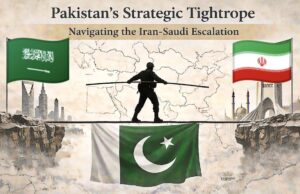
Pakistan’s Strategic Choice: Balancing Relations between Saudi Arabia and Iran

0
Pakistan’s foreign policy centers on balancing competing interests within the Muslim world. Its ties with Saudi Arabia are based on religious connections, highlighted by...