







Bills

Home Bills Page 121

What Exactly Are Free Slots and How Do They Work?

0

Play Free Slots Online with No Download or Registration Required
Free slots

Feeling hesitant to wager real money when you just want to enjoy the thrill of spinning reels? Free slots let you play the exact same games without any financial risk, keeping the fun entirely intact. You simply pick a title, hit spin, and use the virtual credits provided to explore features and paylines at your own pace. This makes them an ideal way to learn game mechanics and unwind, offering pure, pressure-free entertainment whenever you like.

What Exactly Are Free Slots and How Do They Work?

Free slots are digital replicas of casino slot machines that use virtual credits instead of real money. They operate on the same Random Number Generator (RNG) as paid versions, meaning each spin’s outcome is completely independent and fair. You press spin, the reels land, and any win is added to your play balance—but that balance cannot be cashed out. The core mechanics—paylines, symbols, scatter triggers, and bonus rounds—work identically to real-money play, giving you a risk-free way to learn volatility and hit frequency.

The only practical difference is zero financial liability, so you can test long-term betting patterns or bonus features without bankroll pressure.

Since free slots never require deposits, they also bypass registration fatigue; you load, spin, and stop whenever you want, with no timer or obligation attached.

Understanding the Core Mechanics Behind No-Cost Reels

Understanding the core mechanics behind no-cost reels starts with the random number generator (RNG), which decides every spin’s outcome the instant you hit the button. This means free slots run on the same math as paid versions—volatility and return-to-player percentages still shape your experience, just without real money. You’ll find that paylines, wilds, and scatter triggers behave identically, so practice here translates directly to real-money play. The key is that demo mode simulates true randomness without a wallet connection, letting you test bet sizes or bonus rounds risk-free. Treat it like a sandbox: watch how often features land, then adjust your strategy accordingly.

  • RNG ensures each free spin is independent and unpredictable.
  • Paytable values and hit frequencies mirror the paid version exactly.
  • Bonus rounds activate under the same symbol conditions, so you can learn triggers.
  • No deposit or wagering requirements means you can experiment freely.

Difference Between Demo Play, Bonus Rounds, and Free Spins

Understanding the difference between demo play, bonus rounds, and free spins is key to enjoying free slots. Demo play is your personal practice mode, letting you spin with virtual credits—it mirrors the base game but never triggers real-money features. Bonus rounds, however, are special mini-games unlocked by specific scatter symbols, often offering pick-and-click rewards or multipliers. Free spins are simpler: they’re extra spins awarded either by a bonus round or as a standalone feature, usually triggered by landing three or more scatters. In demo mode, you can experience both bonus rounds and free spins exactly as they’d occur in real play, but without any cost.

Free slots

  • Demo play uses virtual credits and never involves real money.
  • Bonus rounds are interactive mini-games, not just extra reels.
  • Free spins are often a component inside a bonus round.
  • All three exist in free slots, but only demo play is available on demand.

Free slots

Why These Games Use Virtual Credits Instead of Real Money

Free slots replace cash with virtual credits to isolate the core entertainment loop from financial risk. By removing real-money stakes, developers eliminate the psychological pressure of loss, allowing players to focus purely on mechanics, themes, and bonus triggers. This design choice also sidesteps the need for payment processing, account balances, and withdrawal systems—costly infrastructure that would otherwise complicate a casual gaming session. Another key reason is session control: virtual credits can be refreshed instantly after depletion, ensuring uninterrupted play without the friction of funding a wallet. For the player, the absence of monetary value reduces decision anxiety, making spins purely recreational. Thus, virtual credits serve as a **functional barrier against real-world financial consequences**, preserving the game’s arcade-like simplicity.

Q: Why do free slots use virtual credits instead of real money?
A: Because credits are abstract tokens with no exchange value, their loss carries no real-world penalty. This lets the game remain a pure time-passing activity—no deposit screens, no payout calculations, and no fear of overspending—while still delivering the sensory feedback of “winning” through sound and visual effects.

Key Features to Look for When Selecting a Free Slot Game

When evaluating free slots, prioritize the return-to-player (RTP) percentage—anything above 96% signals fair long-term payouts, but check the volatility level to match your bankroll style: low volatility offers frequent small wins, while high volatility suits patient players chasing bigger multipliers. Ensure the demo mode includes bonus features like free spins, wilds, and cascading reels, since testing these in free play reveals how often they trigger. Look for adjustable bet sizes and autoplay controls, allowing you to simulate real wagering strategies without cost. Finally, confirm the game runs smoothly on your device—mobile-optimized free slot games should load instantly and keep the reels responsive. Avoid titles with hidden payline complexities or confusing paytables; a transparent game rules section is non-negotiable for effective practice.

Paylines, Volatility, and RTP: What They Mean for Your Session

Free slots

Paylines decide how often you’ll snag a win—more lines mean more chances, but they also raise your effective bet per spin, so match them to your bankroll. Volatility, meanwhile, tells you about the ride: low-vol slots hit frequently with small payouts, perfect for stretching a free-session, while high-vol games tease you with dry spells before a potential big smash. That’s where RTP percentages guide your expectations—a 96% return suggests, over many spins, you’ll keep a touch more than a 94% game, though short-term luck always varies. Together, these three dictate pacing and thrill.

Aspect What it controls Best for
Paylines Frequency of winning combinations Casual, steady play
Volatility Risk vs. reward rhythm Patience or adrenaline
RTP Long-term theoretical return Value-conscious spinners

Bonus Symbols, Wilds, and Scatters That Boost Your Fun

When evaluating free slots, bonus symbols, wilds, and scatters are your primary fun multipliers. Bonus symbols that trigger free-spin rounds often appear as thematic icons, while wilds substitute for pay symbols to complete winning lines—stacked or expanding variants can cover entire reels. Scatters, by contrast, pay regardless of position and frequently unlock pick-me bonuses or multipliers. A well-designed wild that carries a multiplier is rarer and more valuable than a plain substitute. Before playing, check the paytable: fixed wilds are predictable, but sticky wilds lock in place for respins, and walking wilds shift across reels to extend engagement. Scatters with “collect” mechanics can accumulate across spins, adding a progressive layer to your session.

Q: How do wilds and scatters differ in free-slot mechanics?
A: Wilds mimic adjacent symbols to form wins, while scatters trigger features or pay independently—always verify each game’s unique rules for activation thresholds. In free slots, prioritize titles where scatters also expand into wilds during bonus rounds, as this dual action maximises both frequency and payout potential without risking real money.

Theme, Graphics, and Audio Quality That Enhance Immersion

When selecting a free slot, prioritize a cohesive narrative theme that visibly drives symbol design, background art, and bonus round staging, as this consistency prevents visual dissonance. Examine graphics for crisp, scalable rendering—blurry sprites or clashing color palettes break the illusion of a unified world. Audio must layer ambient soundscapes with dynamic payline-win jingles that pitch-shift proportionally to bet size, reinforcing each spin’s stakes. Look for subtle haptic-like visual feedback, such as reel wobble or particle bursts, paired with synchronized sound cues that react instantly to every win or near-miss. Mismatched audio (e.g., generic rock music over an Egyptian slot) destroys immersion instantly, so test with sound on.

Immersive free slots demand a coherent theme, crisp high-fidelity graphics, and dynamic audio that reacts to every spin’s outcome, not just decorative flourishes.

How to Get the Most Enjoyment Out of No-Deposit Slot Play

Treat no-deposit free slots as a pure playground, not a chore. Pick games that spark your curiosity—wild themes, bonus rounds, or high-volatility thrills—and let the free credits stretch your session. The key is to savor the spin itself: crank the sound, watch the reels, and chase the novelty of each feature rather than a payout. Don’t rush through the balance; instead, set a target of, say, 50 spins on a game you’ve never tried, turning the no-deposit bonus into a discovery tour. Remember, the real jackpot is the unforced fun of risk-free spins.
Q: How do I make free slot play last longer? A: Treat the credits like a timer—use small bets and switch games every few minutes to keep excitement fresh.

Setting a Time Budget to Avoid Getting Carried Away

Setting a time budget before you start playing free slots is your primary defense against losing track of the session. Decide on a hard stop, such as thirty minutes, and use a physical alarm or timer that is out of sight, as in-session notifications are easy to ignore. Break this period into smaller, focused blocks, and after each one, stand up and step away from the screen for a few minutes to mentally reset. This structured pause prevents the hypnotic flow of continuous spins from carrying you into an unintended marathon. Crucially, treat this pre-agreed limit as non-negotiable, and use a visible countdown clock to keep your session length honest. By strictly adhering to this cut-off, you preserve the novelty and fun of each spin, ensuring free slot enjoyment is never diluted by fatigue or mindless repetition.

Testing Different Bet Sizes to Learn Game Behavior

Treating free slots as a sandbox lets you test different bet sizes to learn game behavior without financial risk. Start by wagering the minimum to observe how frequently the base game triggers features. Then, jump to a mid-range stake to see if larger bets alter the perceived intensity of bonus rounds or free spin frequencies. Finally, max out the bet to feel the volatility spike, noting whether wins cluster or dissipate.

  1. Log the minimum-bet hit rate for twenty spins.
  2. Repeat at 50% of max to compare bonus frequency.
  3. Finish at max bet to sense the risk-reward swing.

This trial-and-error reveals each game’s personality, helping you pick the stake that feels most thrilling before you ever spend a cent.

Using Free Play to Master Complex Bonus Features

To truly master complex bonus features, treat free play as a targeted training ground. Instead of randomly spinning, select a slot and force yourself to trigger its bonus round repeatedly, noting how each symbol or meter fills. For layered features—like pick-a-prize rounds nested inside free spins—map the decision tree during free sessions. Strategic free-play rehearsal builds muscle memory for risky choices, such as when to gamble a win or retrigger. best casinos not on gamstop A precise sequence works best: first, isolate the triggering condition; second, test low- versus high-volatility outcomes within the bonus; third, rehearse the maximum-bet scenario to mimic real-stakes timing. This way, bonus mechanics become instinctive before you wager a cent. Track your results in a simple log to identify which features reward patience versus aggression, then apply that blueprint when playing for real.

Free slots

Practical Tips for Choosing Between Hundreds of Complimentary Games

When facing hundreds of complimentary games, prioritize **free slots** with a demonstrable return-to-player percentage above 96%, as this directly impacts your bankroll longevity. Filter by volatility: choose low-variance titles for frequent, smaller wins, or high-variance ones for massive jackpots, based on your session goals. Always test the **bonus rounds** and free-spin triggers in demo mode before committing real time; a slot’s base game can feel entirely different from its feature-rich bonus cycles. Check the maximum win cap and betting range to ensure they align with your preferred stake size. Finally, shortlist three to five **themed free slots** that offer unique mechanics, like cascading reels or cluster pays, so you avoid burnout and keep your play sharp and intentional.

Matching Game Complexity to Your Experience Level

When exploring free slots, matching game complexity to your experience level prevents frustration and sharpens skill-building. Beginners should prioritize three-reel, single-payline titles with straightforward bonus triggers, while intermediate players can handle five-reel grids with scatter pays and modest feature clusters. Advanced spinners may select multi-level bonus rounds, cascading reels, or 243-ways mechanics. The key is to **calibrate volatility tolerance against your bankroll psychology**—high-volatility games demand patience, low-volatility suits quick, steady play. Always audit the paytable and demo round length before committing. If a free slot’s rules require more than two reads, step down a tier. Progressive mastery emerges from incremental rule complexity, not leaps.

Q: How quickly should I advance complexity in free slots?
A: Increase complexity only after you can predict bonus outcomes and manage session tempo without reference notes—typically after 10–15 consistent plays at your current tier.

Checking for Mobile Compatibility and Instant-Load Options

Before committing to any complimentary game, verify that its mobile version runs smoothly on your specific device’s operating system, as browser-based slots often behave differently than dedicated apps. Seek titles labeled with instant-load technology, which eliminates lengthy downloads and lets you spin directly from your mobile browser. Test the demo mode on a cellular network, not just Wi-Fi, to confirm that graphics and sound effects don’t stutter or drain your battery excessively. Favor games that auto-resize for smaller screens without pinching or zooming, and check whether the interface buttons remain responsive when you switch between portrait and landscape orientations. Finally, clear your browser cache before playing to ensure the newest version of the game loads without glitches.

Always test a free slot’s mobile load speed and interface responsiveness before use; instant-load, browser-based versions are the most practical option.

Reading the Paytable Before You Spin for the First Time

Before committing to any complimentary spin, the paytable is your only reliable map. In free slots, where no money is at stake, players often skip this step, but that dismisses the table’s role in revealing feature triggers, multiplier ranges, and symbol values. A quick scan tells you whether the volatility suits your patience—high-payout tables might require longer dead spells. Even in a free game, the time spent reading predicts whether you’ll enjoy the real-money version later. Compare the bonus round conditions across three options, and you’ll immediately discard titles with unattainable entry requirements. Checking paytable volatility before your first free spin filters out frustration and lets you choose a session that matches your actual expectations.

Free slots

Common Questions About No-Cost Slot Machines Answered

Players often ask if no-cost slot machines pay out real money; the short answer is no—free slots use virtual credits, so wins are purely for entertainment. Another common question is whether free spins or bonus rounds behave differently; they mirror the paid versions’ mechanics, letting you test volatility without financial risk. You might wonder if practice on free slots improves your odds on real-money games; it sharpens your understanding of paylines and feature triggers, though RNG outcomes remain unchanged. Can you win jackpots in free slots? Typically not—progressive prizes require a wager. Finally, many ask if downloads are necessary; most no-cost slots run instantly in-browser, requiring only a stable connection. Treat free play as a risk-free tutorial, not a income source.

Can You Win Real Prizes From Free Slots?

Strictly speaking, you cannot win real money from standard free slots, as they operate on virtual credits with no cash value. However, many online casinos offer free slots with real prize potential through no-deposit bonuses or free spin promotions, where you play without funding your account yet can convert winnings into withdrawable cash after meeting wagering requirements. Always verify the maximum cashout cap, as some rewards limit your real prize to a small fixed amount like $50. Prize-linked tournaments also allow free entries, with leaderboard placements earning tangible rewards such as gift cards or cash. The key is distinguishing pure demo mode from bonus-funded play—only the latter pays out actual prizes.

You can win real prizes from free slots only when they are tied to bonus credits or free-spin promotions, not in pure demo mode.

Do These Games Use the Same Random Number Generator as Paid Ones?

Yes, in nearly all reputable platforms, free slots rely on the exact same Random Number Generator (RNG) as their real-money counterparts. The core software—whether you are spinning for virtual credits or cash—cycles through thousands of numbers per second, and the moment you hit “Spin,” it locks in a result from that identical algorithmic stream. This means the odds, hit frequency, and payout patterns you experience in demo mode are statistically indistinguishable from paid play. However, pay attention to the return-to-player (RTP) percentage: some casinos deliberately adjust free-play versions to a lower RTP, but this is a settings tweak, not a different RNG. The randomness itself is never altered. Free slots maintain RNG parity with paid games unless explicitly stated otherwise.

At their core, free and paid slots use the same RNG engine; only optional RTP tweaks can separate them.

What Is the Best Way to Transition From Free Play to Real-Money Play?

The best way to transition from free play to real-money play is to treat your free sessions as a precise rehearsal, not just casual fun. Start by setting a strict loss limit before your first deposit, then choose a slot you mastered in demo mode, sticking to the exact bet size you practiced. Increase your stake gradually rather than jumping to max bets, and only switch once you consistently understand the paytable and bonus triggers. This bridges the gap between zero-risk familiarity and confident wagering, minimizing costly mistakes.
Transitioning from free play to real-money play works best when you replicate your demo strategies, including session length and spin speed, before risking cash.

**Q: What is the best way to transition from free play to real-money play?**
A: Select one game, play 200 free spins at your intended real-money stake, then deposit only that same bankroll amount—this mirrors your practice conditions, reducing surprise and improving discipline.

Why This Card Game Demands More Than Luck to Master

0

Master Poker Strategy and Bluff Like a Pro in Any Game

Poker is a card game where skill, psychology, and a dash of luck collide as you build the strongest five-card hand or bluff your way to victory. Each hand unfolds through betting rounds, reading opponents, and deciding when to fold, call, or raise—turning every decision into a test of nerve and math. Beyond the thrill, it sharpens your ability to calculate odds and manage risk, making you cooler under pressure in any high-stakes moment. Mastering the art of reading tells is what separates casual players from those who consistently walk away with chips.

poker

Why This Card Game Demands More Than Luck to Master

Poker’s true mastery reveals itself when the same two cards win drastically different pots depending on who holds them. It demands more than luck because every decision—from pre-flop sizing to river bluff-catching—reshapes the probability landscape your opponents must navigate. A lucky flop can hand you a set, but reading the story your opponent’s betting tells is what turns that set into maximum value instead of a missed opportunity. Conversely, folding a mathematically strong hand against the right player is often the winning move, as you’re exploiting tendencies, not cards. The skill lies in managing variance: you can play perfectly and lose, yet play poorly and win. The true test is whether you can stay emotionally indifferent to the results while relentlessly refining your strategic edge. Over thousands of hands, your decisions, not your draws, define your profit.

The Real Difference Between Playing Hands and Playing Opponents

Playing hands is a static exercise in probability—calculating pot odds and equity against a fixed range. Playing opponents is dynamic, exploiting the human tendencies behind those ranges. The real difference between playing hands and playing opponents lies in adjusting your strategy when a player folds too often to a continuation bet or calls down with weak pairs. You don’t just ask, “What beats me?” You ask, “What does this specific player fear?” A hand’s strength becomes secondary to the narrative you construct about your opponent’s reactions. Q: What is the core distinction? A: Hand play maximizes math; opponent play maximizes error—forcing others into decisions they cannot profitably make.

poker

How Position at the Table Shapes Every Decision You Make

Your seat at the table is the invisible force dictating every hand you play. Acting late gives you the advantage of watching opponents commit chips before you decide, turning their mistakes into your information. Early position forces you to play tighter because the players behind you hold the power to punish weak opens. Mastering positional poker strategy means recognizing that a marginal hand in the cutoff becomes playable, while the same hand under the gun becomes a fold. Each decision flows from this spatial hierarchy:

  1. Assess how many players act after you — more means narrower ranges.
  2. Use late position to steal blinds and control pot size with check-backs.
  3. Exploit early-position players by three-betting their predictable limp-folds.

Without this awareness, every call and raise is a blind guess, not a calculated edge.

Bankroll Management as the Silent Skill Most Amateurs Ignore

poker

Bankroll management is the silent skill most amateurs ignore, yet it separates grinders from gamblers. While they obsess over bluffs and hand ranges, pros treat their stack as a buffer against variance, not a scoreboard. Disciplined bankroll allocation ensures you survive losing streaks that would bankrupt a casual player. Concretely, follow this sequence: first, set aside a fund you can afford to lose entirely; second, buy into games where your bankroll covers at least 20 full buy-ins; third, drop a stake level whenever your funds dip below that threshold. Amateurs skip these steps, then chase losses with scared money. That fear ruins decision-making. Master this silent skill, and you stop playing for excitement—you start playing for longevity.

Core Strategies That Turn Beginners Into Consistent Winners

To evolve from a beginner into a consistent winner, you must first master tight-aggressive (TAG) play, meaning you fold most hands preflop and only enter pots with strong starting ranges, then bet relentlessly when you have initiative. Second, internalize positional awareness: play far more hands from the button or cutoff, and drastically tighten your range from early seats, since acting last lets you control pot size and steal blinds. Your third pillar is bankroll discipline—never risk more than 5% per session, and drop stakes after two buy-in losses. Winning consistently rarely comes from hero calls or bluffs, but from relentlessly exploiting weaker players’ passive check-calls with value bets on the river. Finally, review every lost pot to identify whether you lost money with a marginal made hand, then adjust your calling frequency until your fold-to-cbet becomes mathematically sound.

Starting Hand Selection: The Shortcut to Fewer Costly Mistakes

Mastering starting hand selection is the fastest lever for reducing leak-driven losses, as it pre-filters most post-flop decisions before money enters the pot. Play only premium pairs, strong broadways, and suited connectors from early position, then widen cautiously in late seats—this single discipline eliminates the marginal hands that bleed chips over hours. The real shortcut is not memorizing charts but internalizing why offsuit weak aces and low gap connectors lose value against multiple opponents. When you fold A-10 offsuit under the gun, you skip the costly top-pair-with-kicker traps that bankrupt recreational players. Position dictates range: the later you act, the more speculative hands become profitable. By ruthlessly culling the bottom 30% of your current range, you instantly cut the frequency of tough, unprofitable spots.

Aggression Mechanics and When to Bet, Raise, or Fold

Mastering aggression mechanics in poker means turning pressure into profit, not just bluffing wildly. Bet when you have the initiative, a credible story, or a hand that benefits from folding out equity—like a naked flush draw with overcards. Raise to isolate a weak limper or punish a continuation bet when you hold top pair with a weak kicker, but always ask: “What worse hands call, what better hands fold?” Fold when facing a raise from a tight player on a wet board unless you have a nutted draw or two-pair-plus. Don’t call “to see”—that’s passive leakage. Instead, use the check-raise sparingly on turns to represent slow-played sets. Consistency comes from betting two-thirds pot when ahead, over-betting rivers with nuts, and folding top-pair when the over-raise screams strength.

  • Bet for value thin on turns; fold to river over-raises without the stone nuts.
  • Raise with semi-bluffs best vpn for rainbet (flush/straight draws) to win two ways: immediate fold or future made hand.
  • Fold second-pair to aggressive check-raises from shallow-stacked opponents.
  • Use position to bet last; raise only when you can represent a narrow, strong range.

Reading Board Texture to Spot Hidden Draws and Traps

Board texture isn’t just about what’s showing—it’s about what your opponent *wants* you to think is showing. A dry flop like K-7-2 rainbow looks harmless, but it hides slow-played sets or top pair with a weak kicker. Conversely, a wet board (e.g., 9♠8♠5♥) screams hidden straight draws, flush draws, and combo draws that can trap you on the turn. Reading board texture to spot hidden draws and traps means asking: “Which turn or river card changes the nuts?” If a 6♦ or J♣ completes too many sequences, bet smaller or check back. Your biggest leak is assuming your opponent’s bet equals strength—it often equals a draw that wants a cheap card.

  • Identify monotone or connected boards—these hide flush and straight draws that’ll check-raise you on the river.
  • Watch for “scary” turn cards that pair the board—they often turn trips into traps for over-aggressive bettors.
  • If the flop is paired, deny free cards on the turn—hidden full houses love to let you bluff into them.
  • Re-evaluate after every street—the board texture changes the trap frequency, not just the hand rankings.

How to Read Tells and Betting Patterns Like a Pro

Mastering how to read tells and betting patterns like a pro begins with observing baseline behavior before interpreting deviations. Watch for timing tells: a quick call often signals weakness, while a delayed check-raise betrays deliberate strength. Analyze bet sizing relative to pot odds—an overbet on the river frequently indicates a polarized range (nuts or bluff), whereas a uniform 50% continuation bet suggests a merged, value-heavy hand. Track rhythm changes: a player who suddenly slows down after fast betting may be trapping. Conversely, a fast call after a long think usually means a draw completed. Physical tells, like trembling hands during a large bet, more often indicate a monster than fear. Always correlate patterns with position, stack depth, and previous showdowns, then adjust your reads against each opponent’s unique tendencies.

poker

Physical Tells That Leak Information—and How to Fake Your Own

Your opponents’ micro-movements—a trembling hand on a big call, suddenly steady breathing when bluffing—leak more than words. Watch for stray glances at chip stacks during weak hands, or a fake sigh that’s too theatrical. To fake your own, standardize a single “stress” ritual: tap the table twice and exhale every hand, whether bluffing or holding nuts. Then, when you deviate—silent and still—the contrast reads as strength. Control pulse by pressing your thumb against your leg; mask shakes by resting both forearms on the felt. Remember the sequence:

  1. Identify your natural tells (hand on mouth, quick swallowing).
  2. Replace each with a deliberate, repeated motion.
  3. Practice it in low-stakes hands until the ritual is unconscious.
  4. Deploy the opposite pattern only when you need to sell a story.

Once your body performs uniformly, your only reliable tell becomes the one you choose to show.

Bet Sizing Clues That Reveal Strength or Bluffing Intent

When you’re watching a pot develop, bet sizing clues that reveal strength or bluffing intent often hinge on timing and the ratio to the pot. A player who snaps out a tiny, almost dismissive bet on a scary river usually wants a cheap showdown—that’s a weak hand begging not to be raised. Conversely, an overbet, like 1.5x the pot or more, often screams a polarized range: either a monster that’s afraid of action drying up, or a bluff that’s trying to rep that monster. The real tell? Watch for the *quick* all-in after a long pause—that’s often a bluff, because a true nuts often takes a few seconds to fake a decision. Yet a deliberate, slow bet that’s exactly two-thirds of the pot after deliberate thought frequently signals genuine value, as fakers rarely nail that precise sizing. Trust the consistency between your opponent’s story and their chip motion.

Timing Tells in Online Play That Live Players Never Show

In the online arena, the clock becomes a psychological weapon, revealing timing tells in online play that live players never show. A snap-call after a long think screams weakness—a marginal hand eager to see the turn cheaply. Conversely, a deliberate, agonizing pause before a river bet often signals a monster, manufactured to mimic indecision. Watch for the “auto-check” delay: an instant fold indicates a total miss, while a slight hesitation before folding might expose a reluctant laydown of a strong hand. These digital rhythms are involuntary leaks, unfiltered by physical composure.

poker

  • A fast call on the flop often indicates a weak draw, not strength.
  • A delayed check-raise is a classic slow-play pattern, telegraphing a trap.
  • Sudden speed on the river when betting suggests a bluff, rushed to avoid overthinking.

Tournament vs Cash Games: Which Format Fits Your Style

Choosing between tournaments and cash games hinges on your tolerance for variance and time commitment. Tournaments offer a fixed buy-in with a shot at a life-changing payday, but the escalating blinds force aggressive play and long grind sessions—perfect if you thrive on structured pressure. Cash games, however, let you buy in and leave anytime, with blinds that stay static, rewarding patient, deep-stacked strategy where skill compounds over hours. If you hate being eliminated by a bad beat with no rebuy option, cash games soften that sting—you can simply reload. Your emotional reaction to losing a stack reveals your true format: tournaments punish one mistake brutally, while cash games forgive it with a new buy-in. Ultimately, tournaments suit thrill-seekers chasing glory, while cash games fit grinders who value steady hourly returns and flexible control over their session.

Stack Depth Strategies That Change Entirely Between Formats

In tournaments, stack depth strategies that change entirely between formats flip your preflop math upside down. A 30-big-blind tournament stack demands shove-or-fold aggression, punishing limps with jam-or-fold ranges that cash games never use. Conversely, cash games routinely play 100-200 big blinds deep, where implied odds rule—you call speculative hands to stack opponents, not to survive blind escalation. Postflop, tournament short stacks must commit with top pair instantly, while deep cash stacks force you to pot-control with the same hand. Your c-bet frequency collapses in tournaments; every chip conserved buys a blind level, whereas cash allows expensive probes.

  • Tournament: ICM pressure shrinks value betting ranges at pay jumps.
  • Cash: Deep stacks turn set-mining and suited connectors into profit centers.
  • Tournament: Re-stealing all-ins becomes mandatory at 15-20bb.
  • Cash: Three-barrel bluffing thrives only with 100+bb behind.

Bubble Dynamics and How to Survive Pay Jumps

The bubble in a tournament is where your cash-game instincts become a liability, as survival outweighs chip accumulation. When approaching a pay jump, you must tighten your opening ranges and avoid marginal confrontations with medium stacks who can bust you. To survive, identify the short stacks and apply pressure on them, rather than engaging in large pots with equal or larger stacks. Conversely, when you are the short stack, you must shove first-in with a wider range, as fold equity is your primary weapon to ladder up. Mastering bubble dynamics requires constantly recalculating each opponent’s risk premium, ensuring you never risk a significant portion of your stack without a clear equity edge.

Cash Game Adjustments for Maximum Hourly Value

To maximize hourly value in cash games, prioritize deep-stack positional adjustments rather than tournament-centric aggression. Exploit loose opponents by widening your preflop calling range on the button, then applying pressure on turns when stacks exceed 100 big blinds. Fold middle-pair hands against check-raises from tight regulars, as their range skews toward nutted combos. Rebuy immediately when down to 60 big blinds, but cap sessions at two buy-ins to avoid tilt-driven leaks. Track your win rate per hour, not per session, and switch tables when the average pot size drops below 8 big blinds. Finally, target profitable table dynamics—sit to the left of aggressive recreational players to isolate them with premium hands.

Common Pitfalls That Drain Your Chips and How to Fix Them

The biggest chip drain is playing too many hands from early position, where you’re out of position against the whole table. Fix this by folding marginal suited aces and low connectors preflop—your win rate jumps instantly. Another silent killer is calling river bets with bluff-catchers when your opponent’s range is value-heavy; instead, force yourself to fold unless you have a strong read. Also, tilting after a bad beat compels you to chase losses with reckless raises.

Set a hard rule: three losing pots in a row means you sit out for ten minutes.

Finally, ignoring pot odds on draws bleeds chips slowly. Calculate your equity against the bet size—if you’re getting less than 3:1, muck it and live to fight another hand.

Tilt Management: Practical Cues to Reset Your Mental Game

Tilt hits when your logical brain checks out, so the first practical cue is to **recognize your physical tells**—clenched jaw, racing heart, or snapping at the table. When you notice one, instantly place your hand flat on the felt and take a slow, four-second exhale. That simple physical reset interrupts the adrenaline loop. Next, use the “one-hand rule”: before any re-buy or big call, physically remove your hands from the chips and count your breaths. This forces a micro-pause. Also, change your posture—sit up, uncross your arms—because your body signals your brain to calm down. Finally, whisper a neutral word like “next hand” to detach from the last loss.

Your breath is your fastest tilt reset button, not your logic.

Q: What’s the quickest cue to stop tilt mid-hand?
A: Drop your eyes to your own chip stack for two seconds and exhale slowly—it breaks the emotional stare-down with the board or opponent.

Overvaluing Suited Cards and Other Classic Misconceptions

Overvaluing suited cards is a classic leak: players overestimate the flush potential, yet a suited hand only wins roughly 2.5% more often than its offsuit counterpart. This misconception leads to calling raises with trash like J♦3♦, draining chips through dominated draws. Similarly, believing pocket pairs must see a flop at any price, or that “any ace” is playable, distorts post-flop decisions. Fix this by treating suitedness as a tiebreaker, not a primary reason to enter a pot. Overvaluing suited cards and other classic misconceptions vanish when you assign hand ranges based on positional strength and implied odds, not visual appeal.

Question: Why do players overvalue suited cards despite the small equity edge?
Because the visible flush draw feels powerful, but the math shows you’ll miss the flush 65% of the time by the river—and when you hit, opponents often fold their weaker hands, limiting the payoff.

Why Multi-Tabling Hurts Your Win Rate More Than You Think

Many players believe more tables equal more profit, but multi-tabling reduces your strategic edge more than you realize. Each additional table forces split-second decisions, replacing thoughtful hand-reading with mechanical clicks. You’ll miss exploitative bet-sizing tells, misread board texture changes, and fail to adjust ranges when a passive opponent suddenly raises. The math is brutal: doubling your tables often halves your win rate per hand, so your hourly rate barely moves while your variance spikes. You also burn mental energy faster, leading to tilt-driven calls in the sixth hour that erase five hours of grinding. Playing fewer tables lets you focus on opponent tendencies, pot control, and bet-folding discipline—the exact skills that separate winners from break-even players.

  • You lose the ability to track betting patterns and timing tells that reveal weak hands.
  • Your post-flop decisions become generic and formulaic instead of situation-specific.
  • Fatigue compounds across tables, causing careless preflop mistakes late in sessions.
  • You cannot consciously review marginal spots while the next hand is already dealt.

Unraveling the Chaos in Ceuta

0


Whatever caused the migrant surge in the Spanish territory, it’s already shaking up European politics.

As France’s Elders Swelter in the Heat, Postal Workers Come to the Rescue

0


To help prevent heat-related deaths, the French government has asked postal workers to check in on older people.

Living with leopards in the Himalayas

0


In the afternoon of Feb 22, 67-year-old Bulal Maharjan, a farmer on the outskirts of Kathmandu, was sitting on his porch chopping cauliflower leaves to feed his chickens.

Hearing a loud thud as a parked motorcycle toppled, he turned and watched in horror as a leopard leapt away from the fallen vehicle and lunged at him, piercing its sharp canines into his forehead, its claws lacerating his hands.

Within seconds, neighbours swarmed in, and the leopard ran into a nearby house. They eventually trapped the animal inside. After nearly two hours of panic that saw two more people injured trying to control the distressed big cat, forest division officials managed to sedate it and bring the situation under control.

Maharjan still can’t shake off memories of the attack. “For three days straight, I couldn’t even sleep. Every time I began to doze, the scene of this attack would jolt me up!” he says. “I think we should just get rid of this animal. Period.”

Conflicts with people are growing as expanded forest land and climate change push the creatures into human settlements

Sentiments like Maharjan’s are common across Nepal, where leopards have been responsible for significant loss of human life and livestock. Research shows that from the years 2000 to 2020, conflicts between humans and four large mammals — elephants, rhinos, tigers and common leopards — claimed 887 human lives and led to the killing of 1,139 animals. Of these, common leopards were the leading cause of human deaths at an average of 19 deaths per year, and the species most frequently killed.

To try to bring the conflict under control, Nepal and other countries with human-large predator conflicts are exploring a range of solutions.

Nepal has three ecological zones: lowland dominated by Bengal tigers, mountainous regions where snow leopards roam free, and the vast mid-hill ruled by common leopards as the top predator. While protected areas in the lowlands and mountains receive dedicated conservation funding for their charismatic predators, the mid-hills are largely managed as community forests.

The celebrated community forest program is a key reason for leopards’ thriving in the mid-hills. In the early 1990s, amid worsening floods and landslides linked to forest degradation, King Birendra handed over management of large swaths of forest to local communities so that they would have stakes in conservation, and benefit from timber and fruit harvests.

Today, almost 47 per cent of Nepal is covered by forest patches. About a third of that area belongs to community forests, most of which are run by people living in the mid-hills. “But what the communities didn’t realise was they also restored habitats so that the top carnivores could return,” said Kedar Baral, a wildlife biologist for Nepal’s Bagmati province.

In 2020, Baral’s team conducted an analysis of leopard scat collected in the mid-hills that showed that 27pc of the animals’ diet consisted of domestic animals, while the wild ungulates that big cats typically prefer to hunt, like barking deer and wild boars, made up only 10pc.

In search of sprouting leaves, barking deer venture from the dense community forests to farmland, and “as the deer enter the farmlands, that’s where the leopard follows,” says Baral, bringing them into contact with domestic livestock.

Nepal’s hydropower and construction projects are also expanding into remote forested areas at higher elevations, disturbing habitat and bringing workers as well as a new hunting pressure against top predators, including common leopards, living there.

That forces the leopards and their prey to leave their territory, says Madhu Chetri, a wildlife ecologist at the National Trust for Nature Conservation.

Climate change might be influencing conflict patterns, too. While he was working as a district forest officer in Nepal’s western mid-hills, Baral and his team were repeatedly called to respond to common leopard attacks on local communities. Over time, he noticed a change in the pattern: Conflict incidents and human or livestock deaths were increasingly reported from higher-elevation settlements.

Reporting in 2023, Baral and colleagues investigated whether climate change was driving this shift. Using data from 343 sites across Nepal based on signs of leopard scat, animal tracks and kills, he modeled habitat preferences of leopards, considering factors such as temperature, rainfall and elevation.

The results suggest that leopards prefer mid-hill conditions at around 1,000 meters with moderate temperatures and high rainfall. Warming climates are likely expanding the range of suitable habitat uphill, which could allow the leopard population to grow and, as a result, have a higher risk of conflict with humans.

Of course, it is a conservation success to be celebrated when numbers of threatened or endangered large carnivores increase — whether they be lynx, wolves, tigers or leopards — but it also presents new challenges, says Philip Nyhus, a conservation biologist at Colby College in Maine.

Solutions to the problem have two parts, he adds: first, to keep wildlife separate from people and their livestock to prevent conflict to begin with, and second, to mitigate impacts when conflicts do occur. “A lot of attention has been given to the second piece,” he says. “What would be better is if we could prevent conflict from happening in the first place.”

There are international examples to draw from. In the Argentinian Dry Chaco forest, for example, small households in woody areas have faced frequent attacks by pumas on sheep and goats. Sofia Nanni, a conservation biologist at the National Scientific and Technical Research Council of Argentina, worked with locals to come up with the idea of trying spiked leather collars on livestock, an approach that had proved successful in reducing leopard attacks on cows in countries like Iran.

“We found a local artisan who made collars for dogs and we asked him if he could make collars,” Nanni says. Tracking collared goats and sheep for two years, her team found that the puma predation in uncollared animal groups was 10 times higher than that in collared groups. Several other strategies are successfully reducing leopard and other top predator conflicts globally.

Still, changing attitudes and implementing effective interventions, as well as better compensation, can take years, while frustration among affected communities continues to grow.

Published in Dawn, August 3rd, 2026

New Round of Trump Threats and Pullbacks Raises Uncertainty in Mideast

0


Analysts and lawmakers are trying to divine whether Mr. Trump’s latest announcement means negotiations with Iran will truly get underway Monday or if the president is just working through unappealing options.

Swat: Death toll rises to 14 in Kabal police station suicide blast

0


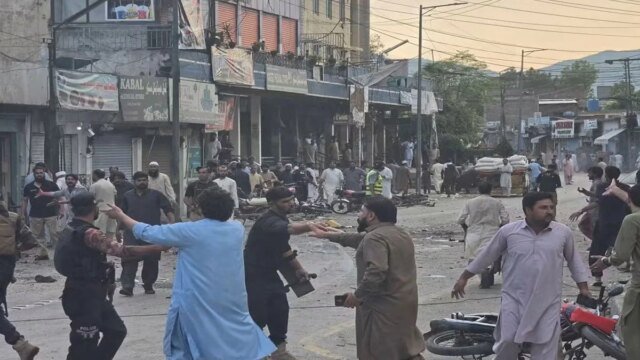
SWAT: The death toll has climbed to 14 following a suicide blast in front of the Kabal Police Station in the Swat district, ARY News reported, citing District Police Officer (DPO) Muhammad Umar Khan.

DPO Muhammad Umar Khan confirmed that the 14 martyred individuals included five police officers and nine civilians. Additionally, 23 people were injured, 15 of whom were police personnel.

The DPO said that terrorists belonging to Fitna al-Khwarij carried out a suicide blast in front of the main gate of Kabal Police Station in the Swat district of Khyber Pakhtunkhwa.

According to initial reports, the suicide blast partially damaged the main gate of the police station.

Police stated that a Bomb Disposal Squad (BDS) has reached the site to determine the exact nature and intensity of the explosion.

Meanwhile, a heavy contingent of police led by District Police Officer (DPO) Muhammad Umar Khan arrived at the scene.

The deceased and injured were shifted to Swat Central Hospital.

Investigators recovered the head of the suicide bomber from the blast site, with preliminary reports indicating that the attacker was an Afghan national.

Read More: Pakistan Army major martyred, 5 terrorists killed in North Waziristan: ISPR

DPO Swat confirmed that an intelligence-based operation has been launched to arrest facilitators connected to the attack, emphasizing that all elements involved will be identified and brought to justice.

Jon Bernthal reveals family sacrifice behind ‘The Punisher’ role

0


The actor Jon Bernthal, who portrays Frank Castle (also known as The Punisher), revealed that he made the decision to distance himself from his wife and children while filming the show. Based on the Marvel character portrayed masterfully by Bernthal, The Punisher is a standalone series.

The actor had to step outside of his comfort zone to play the brutal role of Frank Castle. He did not want his relationship with his family to be impacted by the shadow of the character, so he distanced himself from his wife, Erin Angle, and their children.

During an interview with Howard Stern, Jon stated, “I isolate myself. I do talk to my wife—she’s sort of the only person that I talk to… I just wouldn’t feel right about being out and about going to restaurants and bars and then showing up and playing this guy who lost.”

Speaking about his children, the 49-year-old actor said, “I wouldn’t want to be that guy around them… It’s just getting harder and harder to be away from them. I love them with every fiber of my body.” He further added, “I got diapers to buy, man. These kids are expensive. And if I’m gonna do it—if I’m gonna be away from them—I’m gonna do it right.”

Jon Bernthal reprises his role as The Punisher in Tom Holland’s Spider-Man: Brand New Day, directed by Destin Daniel Cretton.

LA-29 Muzaffarabad City 3: Unofficial result

0


MUZAFFARABAD: Pakistan People’s Party (PPP) candidate Mukhtar Ahmad Abbas has defeated Pakistan Muslim League-Nawaz (PML-N) candidate Syed Iftikhar Gillani in the LA-29 Muzaffarabad-III constituency during the second phase of the AJK elections, ARY News reported.

The winning PPP candidate secured 19,792 votes, while the runner-up, PML-N’s Syed Iftikhar Gillani, received 16,413 votes.

The polling was conducted as part of the second phase of the Azad Jammu and Kashmir (AJK) elections.

Voting took place across the Muzaffarabad Division—covering nine local constituencies—as well as all 12 refugee constituencies located in Pakistan.

Polling for the second phase of the Azad Jammu and Kashmir (AJK) elections ended on Sunday evening after authorities extended voting by one hour until 6 pm across nine constituencies in the Muzaffarabad division.

The polling process, originally scheduled from 8 am to 5 pm, was extended by an hour to facilitate voters in the Muzaffarabad division.

The AJK Election Commission said in a statement that the decision was taken in view of the large number of voters arriving at polling stations and to facilitate them in exercising their right to vote.

Voting took place in nine constituencies of Muzaffarabad division — five in Muzaffarabad district, two in Jhelum Valley, and two in Neelum — with 207 candidates contesting.

Second phase of AJK polls concludes amid renewed rigging allegations by PPP

0


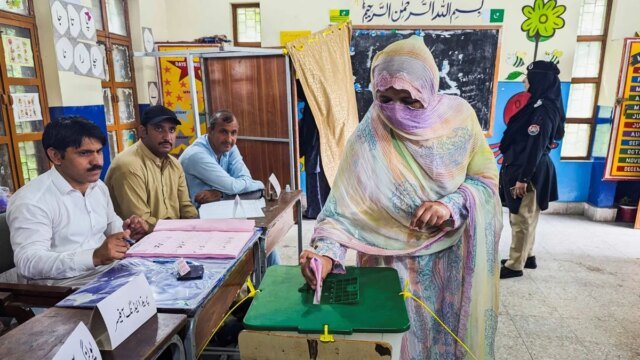
The second phase of the Azad Jammu and Kashmir (AJK) elections took place on Sunday, with polling held in eight out of the nine constituencies of Muzaffarabad division and all 12 refugee constituencies.

Polling began at 8am and continued till 5pm for the refugee seats, while the process concluded at 6pm in Muzaffarabad after an hour-long extension.

The electoral process in LA-27 (Muzaffarabad-I) was postponed due to heavy rain, AJK Chief Election Commissioner (CEC) Ghulam Mustafa Mughal said, DawnNewsTV reported.

Polling in LA-27, commonly known as Kutla, was deferred until August 4 after polling material could not be dispatched due to a landslide.

Similarly, polling in 52 of the 147 polling stations of LA-28 (Muzaffarabad-II) was also postponed until August 4 for the same reason.

Over 300 candidates were in the fray for the Muzaffarabad seats and the 12 seats for refugees settled in different regions.


Continuing his rigging allegations, PPP Chairperson Bilawal Bhutto-Zardari on Sunday accused the PML-N of “robbing” votes in the second phase of the AJK elections as well.

In a post on X later in the day, he condemned an “attack” on the party’s regional president, Chaudhry Latif Akbar — also the candidate for LA-31 (Muzaffarabad-V).

Accusing “miscreant elements of the PML-N” of being behind the incident, Bilawal said PPP worker Mushtaq Shah was killed in the same constituency.

“The PML-N is robbing the votes of the people of Azad Kashmir through bullets, batons and coercion,” he alleged.

The PPP chairman demanded that those responsible for the attack on Akbar and the “murderers” of the party worker be arrested immediately.

In a separate statement, Bilawal said, “The PML-N has crossed all limits. Attacks are taking place on our voters and the president of the state (AJK).”

He remarked that in Muzaffarabad, the PPP’s “politics of dignity and principles was in contest with the PML-N’s threat, rigging and coercion”.

The PPP shared a complaint written to the Election Commission regarding a “physical assault” on Akbar.

The party said the LA-31 candidate was “engaged in the electoral process on polling day” when the alleged incident took place, accusing three individuals.

It said a first information report (FIR) was being registered and urged the Election Commission to order an inquiry into the “security lapse” that resulted in the incident.

AJK Prime Minister Faisal Mumtaz Rathore, who belongs to the PPP, took notice of the incident and ordered the chief secretary and the police chief to take those responsible to justice.

The AJK PM termed the attack “a slap on the politics of dignity and principle in Kashmir”.

Akbar also wrote two letters to the Election Commission. In one, he alleged that an attempt on his life was made at Polling Station 177 “by PML-N workers” and wrote of the PPP worker’s death.

He further claimed that his polling agents were not allowed to “sit in the polling area” at 14 polling stations.

In the second letter, Akbar said PPP leader Syed Mumtaz Hussain Naqvi sustained bullet wounds in a “[murderous] attack” at a polling station in a building.

Addressing a press conference, PPP leader Nayyar Hussain Bokhari claimed that eight party workers had been injured in the ongoing elections so far.

Bokhari contended there was a “state of lawlessness” in AJK.

Polls in AJK are being held in three phases over security concerns, with the first set of polls held in Mirpur division on July 27, the second held today, and the third phase set for August 10 across Poonch division.

Ahead of today’s elections, internet services were restored in parts of Muzaffarabad division after remaining suspended for 54 days on July 29. At the time, it was not clear whether the restoration covered the entire division or was limited to the state capital.

Addressing the media on Sunday, the AJK CEC said that a letter had been written yesterday to request the restoration of internet services.

He added that the outcome would be known today, without providing further details.

“We will work according to the law; we will not come under pressure from anyone,” CEC Mughal said to a question.

Preliminary, unofficial results

According to preliminary and unofficial results, the PML-N was leading in LA-25 by 1,364 votes, while the PPP was ahead in LA-26 and LA-28 by 1,745 and 1,782 votes, respectively.

In LA-29, the PML-N was leading by 379 votes, with the PPP in second place. Similarly, the PML-N was ahead in LA-30 by 247 votes, while the PPP was trailing in second position.

In LA-31, the PML-N was leading with 2,934 votes, while the PPP was in second place. In LA-32, the PML-N was ahead by 892 votes, according to the unofficial results.

In LA-33, the PPP was leading by 1,349 votes, while the PML-N was ahead in LA-34 with a lead of 2,503 votes.

Refugee seats

CEC Mughal held a press conference along with senior Election Commission members Khawaja Muhammad Ahsan and Syed Nazirul Hassan Gilani.

“The second phase of the Azad Jammu and Kashmir Legislative Assembly elections is being completed today,” the CEC said.

He said the results from the five refugee seats had been received, with PML-N candidates winning four of the five seats, while the PPP secured one seat.

PML-N’s Muhammad Amir Shah won LA-41 (Kashmir Valley-II) with 1,804 votes, defeating independent candidate Saba Diwan, who secured 1,523 votes. In LA-42 (Kashmir Valley-III), PML-N candidate Syed Shaukat Ali Shah emerged victorious with 1,524 votes, while PPP’s Muhammad Asim Sharif received 466 votes.

PML-N’s Muhammad Yasin Loon won LA-43 (Kashmir Valley-IV) with 1,276 votes, defeating PPP candidate Javed Butt, who secured 563 votes. In LA-44 (Kashmir Valley-V), PML-N candidate Muhammad Ahmad Raza Qadri won with 2,308 votes, while All Jammu and Kashmir Muslim Conference candidate Mehrun Nisa received 740 votes.

The PPP secured LA-45 (Kashmir Valley-VI), where Abdul Majid Khan won with 3,448 votes, defeating Muslim Conference candidate Khawaja Muhammad Dilawar, who obtained 823 votes.

Info ministry criticises foreign media coverage

The Ministry of Information and Broadcasting criticised Al Jazeera’s coverage of the Azad Jammu and Kashmir (AJK) elections, accusing the channel of “selective reporting” from “handpicked polling stations” in Muzaffarabad.

In a post on X, the ministry alleged that the channel had sought to “misrepresent” the elections and voting process through “carefully chosen timings and scripted statements from selected individuals”.

It alleged that it was aimed at “delegitimising” the electoral exercise and undermining the will of the people of Muzaffarabad and AJK.

PML-N says man did not die from bullet, had heart failure

On its part, the PML-N disputed the PPP’s stance on a man’s death in Muzaffarabad, saying that he died due to heart failure and did not suffer any bullet injury.

Responding to the PPP’s stream of allegations in a media talk in Rawalpindi, PML-N Punjab Senior Minister Marriyum Aurangzeb said a man aged between 68 and 70 years was trying to resolve a “scuffle” when he suffered heart failure.

She noted that there was a physical altercation between groups of the PML-N and the PPP, describing the incident as “unfortunate”. She further said that Shah’s family has refused to have a post-mortem examination conducted.

“Will you do politics on bullets? Will you sabotage a democratic process by spreading such fake claims?” Aurangzeb said.

She further said, “My brothers, this politics of bullet, this politics of robbing votes, this does not suit parties like us.”

The PML-N leader went on to emphasise that the PPP leadership had given sacrifices and spent their “entire lives” in making efforts to strengthen democracy.

She remarked that ex-prime minister Benazir Bhutto “did not give sacrifice to see this day”.

“You should remember that you are Zulfikar Ali Bhutto’s grandson. We will keep reminding you because we will not let their sacrifices go to waste.”

She further said that the PPP was aware that the public did not vote for it. “Are elections won by crying, grabbing collars, issuing threats or making accusations? Elections are won with courage.”

The PML-N leader also took exception to Bilawal’s remarks of “snatching away seats” and “taking out seats”, saying: “Bilawal, you say good things. What kind of statements are you making now?”

Aurangzeb compared the PPP’s attitude to that of the PTI, saying the former’s “narrative” should not be the same.

“Find out so that you may not have to cry in Sindh,” the PML-N leader cautioned the PPP, noting people in Sindh were seeking performance similar to that of the Punjab government.

Aurangzeb recalled the Charter of Democracy signed between the PPP and the PML-N in 2007, stressing that its purpose was not to let democratic processes be sabotaged.

Noting that the PPP was in power in AJK and had its administrative machinery in the region, the PML-N leader questioned if Bilawal’s “own government is carrying out rigging against you”.

She remarked that if one considered the PPP’s allegations to be true, the party would have to “accept” that its own government “carried out rigging against Bilawal”.

Aurangzeb said the PPP-led administration was preventing the transportation of the required electoral equipment.

She also commented on Bokhari showing ballot papers stamped with votes for PML-N, saying, “This is an election of thousands of votes. He was showing two stamps on two ballot papers.”

The Punjab minister took aim at the PPP’s governance, saying that it had nothing to show for its performance. She quipped that voters were yet to head to polling stations early in the morning while the PPP had already started holding media talks on rigging.

Aurangzeb said that if the PPP still had reservations, there were relevant platforms such as the Election Commission and tribunals to approach, rather than hold press conferences.

“Contest the elections. Do not cry out loud,” she said.

In a similar tone, Adviser to the Prime Minister on Political Affairs Rana Sanaullah also regretted the rigging allegations levelled by the PPP.

“Unfortunately, a democratic party, which is also a signatory to the Charter of Democracy, has been alleging rigging since 10:30 in the morning,” he said while addressing the media in Islamabad.

Flanked by Kashmir Affairs Minister Amir Muqam, Sanaullah claimed that the second phase of polls in AJK was conducted in a “peaceful manner”.

The inter-provincial coordination minister said the electoral process was completed at 96 per cent of polling stations, adding that vote counting was underway.

Sanaullah maintained that it was the “most transparent and non-violent electoral process”, adding that a few incidents had occurred during the day.

Referring to the alleged attack on PPP leader Akbar, Sanaullah said it was a dispute involving another family in the area and that there had been “no physical confrontation”, only a verbal argument.

Contesting the PPP’s claim about the second reported incident involving a party worker, the PML-N leader said a citizen named Mushtaq was involved in a scuffle with his family members, one of whom pushed him.

“He reportedly went home afterwards and then suffered a heart attack as he was a cardiac patient. They [PPP] claimed that shots were fired, but not a single bullet was fired,” the premier’s adviser asserted.

Sanaullah added that the PML-N condoled his death, but that the “deceased individual was not a PPP worker”.

PPP alleges electoral malpractices

On Sunday, the PPP alleged electoral malpractices shortly after polling commenced, with several of the complaints claiming its polling agents at some stations were not allowed to observe the voting process.

At 2pm, the party also wrote a separate letter to the Election Commission requesting follow-up on 25 complaints filed by it regarding 11 constituencies.

The PPP said it had not received any formal written response or acknowledgement from the electoral watchdog on the status of any of the 25 complaints.

“Given the gravity, number and geographical spread of the violations documented, the Party respectfully submits that a formal response from the Commission is now overdue and urgently required.”

On the other hand, the PML-N’s social media posts revolved around voters across Muzaffarabad and Punjab showing up to cast ballots with “enthusiasm”.

Several posts highlighted that a large number of voters were flocking to the PML-N’s election camps, rather than those of rival parties.

The PML-N also wrote to the Election Commission in response to a PPP complaint about LA-40 (Valley-I), terming the latter’s allegations against its candidate Muhammad Naeem Khan as “baseless”.

In the letter, seen by Dawn, the PML-N asserted that the allegations “regarding administrative failures are unsubstantiated and appear to be an attempt to create unnecessary controversy around the polling process”.

The PML-N urged the electoral watchdog to ensure that “no misleading or politically motivated complaint is allowed to undermine public confidence in the integrity of the polling”.

‘Ballot stuffing’

At a polling station in LA-32 (Muzaffarabad-VI), the PPP accused PML-N supporters of “ballot stuffing”. It further said that a government employee had been deployed as a polling agent for the PML-N at a separate polling station.

In LA-30 (Muzaffarabad-IV), the PPP claimed PML-N workers removed a ballot box at the Banaw Langah polling station and placed it outside, where they were allegedly “stamping ballot papers”.

In Charakhpora Union Council of LA-31 (Muzaffarabad-V), the PPP said “bogus voting” was taking place at the Sharik Kamal Bandi-Khalsa polling station.

The party said the alleged act “directly subverts the integrity of the poll”, adding that the polling station also did not have adequate security despite being declared “sensitive”.

The PPP also alleged a PML-N MPA at a polling station in Khyber Pakhtunkhwa’s Abbottabad of obstructing the voting process for the refugee seat of LA-45 (Kashmir-VI).

In LA-25 (Neelum-I), the PPP said the voting process at a polling station had been halted after reports emerged of PML-N supporters tearing up ballot papers.

The PPP also said its polling agents at a polling station in LA-25’s Khawaja Sari reported that “fraudulent votes are being cast” there. It urged the Election Commission to dispatch officials and law enforcement to halt the alleged action.

‘Polling agents excluded’

The party alleged that its polling agents were not allowed to sit at polling stations for refugee seat LA-34 (Jammu-I) in Cantonment and Lahore’s Sheranwala Gate, calling on the Election Commission to intervene.

The PPP wrote to the electoral watchdog about a similar complaint emerging from a polling station in Janabad, Sargodha, for LA-34.

Sharing another letter addressed to the Election Commission about LA-34, the PPP said “elected members” of the PML-N were present inside a Pakpattan polling station and “stamping ballot papers”.

It further claimed that its polling agent was “barred from entering the same polling station”.

“The deliberate exclusion of the PPP’s oversight representative while PML-N’s own elected officials conduct fraud inside the station is not a coincidence — it is a coordinated strategy to commit electoral fraud without any independent witness,” it alleged.

The party urged the electoral watchdog to dispatch law enforcement to the polling station and remove the PML-N supporters allegedly involved in “ballot stuffing”.

Regarding LA-42 (Valley-III), the PPP filed a complaint over party candidate Asim Sharif Butt’s polling agent being “physically prevented” from entering a polling station in Muzaffargarh’s Alipur Tehsil.

The PPP also claimed its polling agents at three polling stations in LA-30 (Muzaffarabad-IV) were denied from observing the electoral process.

Similarly, the party said polling agents of candidate Ishfaq Zaffar were not permitted to take their seats at three polling stations in LA-32 (Muzaffarabad-VI).

Terming it a “serious violation” of the electoral code of conduct, the PPP sought disciplinary action against the presiding officers who allegedly refused the agents from discharging their duties.

At one of those polling stations, the PPP claimed a “violent confrontation” was underway between supporters of PML-N candidate Raja Farooq Haider and PPP supporters.

Other issues

In a separate statement in the morning, the party claimed that no polling staff was present at any of the 196 polling stations in LA-27, adding that this raised the concern that there was a “deliberate” attempt to delay the polling.

Similarly, the party alleged that polling staff had reached late at 71 polling stations of LA-28, due to which the voting process was facing delays. The PPP claimed that a similar situation was being witnessed at several polling stations of LA-30, where polling staff had not arrived on time.

Regarding LA-31, the PPP said it had written to the Election Commission on behalf of its candidate Akbar, urging it to take action over difficulties faced by voters due to the closure of the Rangla-Katkair Road in Muzaffarabad.

The party said over 50 vehicles carrying voters were stuck due to the road’s closure.

PML-N slams ‘blame game’

Earlier in the day, PML-N’s Muqam called on political parties not to indulge in a “blame game”.

“Nothing is to be gained from a blame game,” he said during a press conference in Islamabad, adding that law enforcement personnel were also deployed to ensure security.

“They should not act in a manner that ‘why was I not given seats’,” Muqam said, stressing that it was the public whose votes allocate seats.

The minister urged all political parties to let the electoral process take place in a peaceful manner, stressing that making allegations without evidence cannot change the results.

At the same time, Muqam also highlighted “arbitrary transfers and administrative decisions” in AJK, where the PPP is in power. He said the moves “seemed discriminatory”.

He recalled that the PML-N had accepted the results of elections in Gilgit-Baltistan held in June, where the PPP emerged the winner and formed the government.

Defending the results from Mirpur, Muqam asserted that the people voted for PML-N due to its performance.

On the other hand, PPP leader Nadeem Afzal Chan also held a press conference where he called on the Election Commission to play its role in “proving” the election process in AJK to be free and fair.

“Azad Kashmir is an international issue … people’s eyes are on it,” the former MNA said, adding that if the commission did not recognise the public and assure a free election, “tomorrow we will not be able to ratify this election under any circumstance”.

He recalled that after the Mirpur polls, there was a detailed discussion within the party about boycotting the second and third phases. However, the party leadership refused the idea of a boycott.

Chan cautioned that if the PPP was “compelled” to move towards such steps for the third phase, it would benefit those who wanted to prove the election “dirty”.

“I see this becoming an ultra Form-47 election,” he said.

He said that in negotiations in Muzaffarabad, the PPP had provided proof of rigging in four constituencies, as well as agreeing to hold re-polling in any other constituencies in which there were objections.

He also called for a benchmark for voting, saying, “General polling was less than 30 per cent. But wherever you won, it was 80pc, 90pc, 75pc … this doesn’t even happen in urban cities like Islamabad and Lahore.”

‘Admission of rigging’

The PPP and the PML-N — coalition partners in the Centre — have been engaged in a war of words since the PML-N emerged in the lead during the first phase of polls. The PPP has accused the PML-N of rigging in Mirpur and demanded re-polling.

Scuffles, violence and allegations of rigging had marred the polls in Mirpur, with the PML-N and PPP accusing each other of electoral malpractice.

To defuse the tensions, senior leaders of both parties met multiple times in Azad Kashmir over the weekend to “explore a legal resolution” to the dispute. The latest round of talks followed two earlier meetings on Thursday and Friday.

A PML-N source told Dawn that discussions focused on the PPP’s allegations and its demand for re-polling in certain constituencies. “It was not planned or pre-planned rigging but isolated acts at places where supporters of one candidate enjoyed numerical dominance over their opponents. Such incidents have unfortunately been part of the territory’s polling atmosphere and have also been witnessed in previous elections,” the source quoted the PML-N leaders as telling their counterparts.

Referring to this statement in a X post on Sunday, Bilawal said: “Despite this admission from the rigging party, the [EC] has still failed to take action on our complaints from phase 1. Had they done so, the credibility of today’s phase 2 election would have been restored.

“The PPP reserves the right to protest and demand re-election in phases where rigging took place, and the election commission failed to act. We have already sent multiple written complaints about ballot stuffing and illegal removal of our polling agents in today’s election. It is hoped the election commission acts swiftly and at least maintains fairness in round 2.”

According to the sources, during meetings with the PML-N, PPP initially raised objections to the results in four constituencies — Charhoi, Sehnsa and Nakyal in Kotli district, and Barnala in Bhimber district during phase-I of the election. However, it later withdrew its allegations regarding Sehnsa and Barnala.

Saturday’s discussions centred on Charhoi, where PPP AJK President Chaudhry Yasin lost to PML-N’s Raja Riasat, and Nakyal, where PPP candidate Javed Iqbal Budhanvi was defeated by PML-N’s Raja Ayaz Ahmed.

Meanwhile, the Sharif family also held discussions at Jati Umra. According to a statement issued by the PM’s Office, Prime Minister Shehbaz Sharif held consultations with his elder brother and PML-N chief Nawaz Sharif at Jati Umra to take stock of mounting political challenges, including the rift with the PPP over the AJK elections.

A senior PML-N leader told Dawn that the party leadership had taken serious note of the PPP chairman’s increasingly combative rhetoric against the Sharif family over the AJK polls and his warning that the PPP could reconsider its support for the federal government if the remaining phases of the elections were manipulated in favour of the PML-N.

Election numbers

According to the AJK Election Commission, 207 candidates are in the fray for the nine constituencies in Muzaffarabad division, comprising five seats in Muzaffarabad district and two each in Neelum and Jhelum Valley districts.

Another 137 candidates are contesting the 12 refugee constituencies, including six seats representing refugees from the Kashmir Valley and six from Jammu.

A total of 809,621 voters are registered in Muzaffarabad division, while the 12 refugee constituencies have a combined electorate of 438,834. According to the commission, 1,483 polling stations have been established across Muzaffarabad division, of which 533 have been declared highly sensitive, 741 sensitive and 209 normal. Another 1,057 polling stations have been set up for the 12 refugee constituencies.

Out of 12 refugee seats, seven seats are in Punjab, one seat is in Khyber Pakhtunkhwa, one seat (Jammu-VI) is divided between Pun­jab, Islamabad and KP, one seat is divided between Sindh and Balo­chistan (Valley-I), and one seat (Jammu-I) is shared among refugees living in Balochistan, Punjab and Sindh. Valley-V seat is divided between Punjab and Islamabad.

In Rawalpindi and Islamabad, about 27,000 registered male and female voters will elect lawmakers for LA-43 (Valley-IV), LA-44 (Valley-V), and LA-39 (Jammu-VI) seats. A total of 175 polling stations have been established, out of which 18 polling stations in Rawalpindi have been declared sensitive. A total of 34 candidates are in the fray.

In Gujrat, almost 2,000 policemen will perform security duties at scores of polling stations for the LA-38 elections. The total number of polling stations in these districts is 115, with 75 in Gujrat, 24 in Wazirabad and 16 in Mandi Bahauddin. The total number of voters is 50,225 in the entire constituency. As many as 11 candidates are contesting this seat.

In Sindh, officials said the elections will be conducted on LA-34 (Jammu-I) and LA-40 (Kashmir Valley-I) with polling stations established across Karachi and other districts of Sindh.

In LA-34 (Jammu-I), a total of 17 candidates are contesting the election, which has 698 registered voters in Karachi’s seven districts and 477 voters in 13 other districts of Sindh. For LA-40 Kashmir (Valley-I), 11 candidates are in the race. The constituency has 4,200 registered voters in Karachi and 403 voters in 17 other districts of Sindh.

In Balochistan, seven polling booths have been established across the province for the Kashmir Valley-I constituency, where 1,174 registered voters are expected to cast their ballots. Balochistan shares this seat with Sindh.

For the Jammu-I constituency, six polling booths have been set up, with a total of 182 registered voters, including 85 men and 97 women, eligible to vote. Polling stations have been established for AJK refugee voters residing in Balochistan at various locations, including Quetta, Pishin, Qila Saifullah, Hub, Loralai, Sibi, Mastung, Zhob and Barkhan.

In KP, 41 polling stations, mostly in Swat and Mansehra, have been set up for the LA-45 (Kashmir VI) seat.


Additional input by Ameer Hamza and Tariq Naqash

Popular Posts

My Favorites

Immigration Hard-Liners Repeatedly Lost in Court Before Justices Ruled in Their...

0
“This is a victory 10 years in the making,” a White House official said after the Supreme Court ruled that the Trump administration could...