









The Film Industry Is Worried About Survival. France Wants to Save the Day.
An A-list gathering in the French Riviera aimed to serve as a rallying cry for a sector threatened by YouTube, TikTok and artificial intelligence.
An A-list gathering in the French Riviera aimed to serve as a rallying cry for a sector threatened by YouTube, TikTok and artificial intelligence.
There is noise. There is clamour. There are voices of support. There is also vociferous resentment. Both are at opposite ends of the pole. A lot has to happen to arrive at a midpoint of agreement. It will require time. It will demand maturity for negotiation. The Nation will have to come out of its cocoon of status quo and inertia. We shall, without choice, have to embrace change and accept realities as they both exist and shall develop over our journey to centenary celebrations in 2047. The then generation must have reasons to applaud us for bold decisions and forward-looking decisions.
Some are inclined towards hope. Some see only despair. All the dust that has been thrown up is a consequence of a general feeling across the board that the system, if not completely rotten or has collapsed, is surely, in the minimum, certainly not working. The gulf of difference in the governance standards between one province and the other is glaringly visible. At least the optics are very different.
The demand for more provinces is gaining momentum. While there is value in having smaller administrative units, it is equally a valid thought held by many that it will necessarily lead to better governance. Possibly yes, with a caveat that it will succeed only if it is backed by a strong and legally well-defined process of accountability. Failing this litmus test of governance, we must brace to witness more vexatious corruption, nepotism and favouritism.
A few politicians and several forces of anti-creation of provinces are issuing statements with taunt and sarcasm…..if currently four/five provinces run on a high index of corruption, what will be the size and quantum of it, in say 12–15 provinces? This argument is a mere distraction. The country needs more provinces to address issues of the common man across cities, towns and villages.
This scribe believes that before we venture to create provinces or federally administered cities, it will be best to have in place, firstly, a well-designed process of inter-provincial coordination that must, without any cobwebs of confusion, address the issues of collection, allocation and deployment of revenue/resources. No city or geographic area should receive any preferential consideration at the cost of others.
Often, there is mention by political commentators that the country needs “Structural Reforms”; however, when asked to explain and elaborate what ‘structure’ needs ‘reforms’, we get in response quizzical faces. It seems this demand has become a cliché word or more of a political slogan, that is essentially a hot air balloon…no helium inside, but only vagueness of action.
The need for administrative units is a given….how many is a nagging question. The inability of large provincial set-ups to address the everyday problems of the citizens makes the demand more worthy. The supply of water, health, hygiene and sanitation requires governmental support…only local governments can deal with these issues with “interest”. Statistically, with a population that is teasingly close to 250 million people, the need for more provinces is imperative. About four or five countries of Europe together may have less than 250 million people. The demand therefore is justified.
Karachi, the commercial and financial capital of the country, is cracking at its seams under the weight of mismanagement and neglect. It may not be deliberate. The sheer magnitude of the megapolis city that it is today demands or needs attention, leading to self-governance. Every single day, men, women and children are crushed under the wheels of trailers, dumpers, etc. There is no accountability…the killer drivers and the callous owners go scot-free. The legal and administrative mechanism is weak. It favours the powerful and lethally disempowers the weak.
Regardless of how many and when these provinces should be carved out, there is an even more significant aspect and that is to imbibe within the populace what it means to have authority, and how judiciously it is to be exercised; the authority used to take decisive decisions must have the support of the “concerned people”, and above all, a realisation must be present of accepting ‘responsibility’ for the outcomes of having used authority.
We have in place a fairly decent and workable framework to undertake initiatives for economic and social development. What we seriously lack is the institutionalisation of compliance with a given framework. Every citizen must feel the importance of self-accountability, which would lead to the assumption of responsibility for choices made between alternatives, the outcomes of decisions, and the fearless attitude to accept the wrongs done. An admission of lack of compliance will usher in best practices of conducting business.
Writing in the Global Institute of Organisational Coaching, Dr Peggy Marshall quotes Jim Rohn on the need and process of self-accountability: “you must take personal responsibility. You cannot change the circumstances, the seasons or the wind, but you can change yourself. That is something you have charge of”. The responsibility for decisions and their results is the first step towards creating an environment of self-discipline and self-accountability.
If political leaders travel from one point to another, disrupting traffic flows by having switched off the traffic lights, and with a cavalcade of 25–30 vehicles that defy speed limits, we can imagine what will be the situation in newer and smaller provinces!
We need a solid structure of checks and balances; otherwise, even new provinces shall behave like the current big ones, possibly with vengeance.
Economic growth doesn’t happen with well-designed blueprints alone. The will to pursue is a prerequisite. The strategy must be clear. There must exist unanimity of purpose. If the economic edifice is built on the proceeds from ‘Inheritance of corruption’, the people must be ready to see the collapse of any new administrative unit.
The process of self-discipline begins with “Self” and not by pointing fingers at others. If as a Nation we can tame our passions and ambitions in a cohesive and coordinated manner, there is no reason why we cannot achieve our cherished economic and financial gains.
Pakistan needs, firstly, more “good governance” than merely creating provinces. A nation that is honest to itself will inevitably be successful. “The happiness of the society is the end of the government” (John Adams).
Amending Lord Nelson’s words: Pakistan “expects that every man will do his duty”. Politicians are best reminded that if public trust is sought, and if they succeed in acquiring it, they become public property—open to scrutiny, who will be questioned, and will remain answerable to the people. Stupidity is not doing one’s duty. For good governance to be prevalent, each of the citizens must know that the buck stops with them… not elsewhere.
Sirajuddin Aziz
The writer is a Senior Banker & Freelance Columnist.
His photojournalism festival, Visa Pour l’Image, brought to wide attention images of war and suffering. The French president called him “a great defender of reality.”
A cousin of President Ferdinand Marcos Jr. was charged with plundering public funds meant for flood control in the Southeast Asian country. He has denied wrongdoing.
Italy’s Investor Visa, commonly dubbed Italy Golden Visa, allows non-EU nationals to obtain an EU residency permit by investing in the country through various qualifying ways.
Its aim is to attract global private capital and awards its holders, for the first year (which is renewable thereafter on three-year intervals), a renewable residence permit allowing immigrants to legally reside in the country as long as they maintain their investment.
An investor resident in Italy through this method has full access to Italy’s public healthcare, education, can work, live and study within Italian borders and furthermore enjoys visa-free movement throughout the European Schengen Area.
What’s most important for business minded investors, is that the Italian investor visa does not feature minimum stay requirements.
Investors are not expected to commit to the full extent of their planned investment to obtain a preliminary approval: instead, they first make a remote online application for an entry Nulla Osta (Certificate of No Impediment) issued by the Italian Ministry of Enterprises and Made in Italy.
Successful candidates can apply for their actual entry visa at the nearest Italian consulate then they relocate in Italy and finalize their capital transfer in 3 months from entry.
Capital transfers can be performed through one of the 4 investment vehicles: Innovative Startups, which will be subject to a minimum equity investment of 250.000; established Italian Companies, which will require an investment of at least 500.000; Philanthropic Initiatives, requiring a non-refundable donation of at least 1 million in support of public-interest projects in culture, education or research and Government bonds, that require an investment of at least 2 million.
Residence permit covers also immediate family members (spouse, dependent children, dependent parents) without further capital contributions.
After 5 years of uninterrupted legal residence in Italy, investor visa holders can apply for EU permanent residence status and after 10 years of Italian residence, if they meet the income and B1 level language proficiency requirements, the way for Italian citizenship can also be opened.
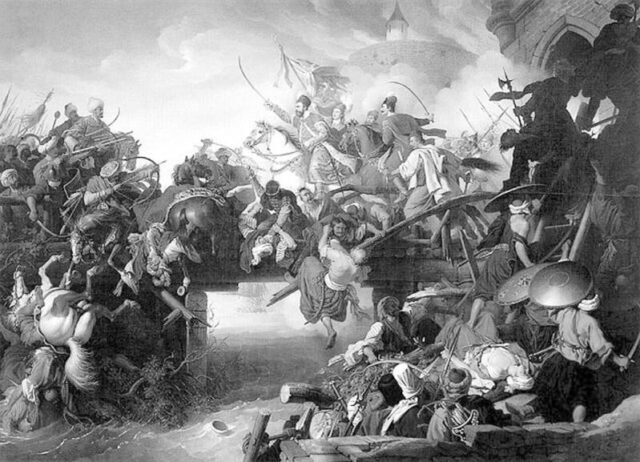

The Great Siege of Malta was a monumental conflict between the Ottoman Empire and the Knights Hospitaller, a Christian military order.
Jefferson County, Colo., is one of the few public school systems to sue the Trump administration over demands that it revoke transgender protections or face funding cuts.
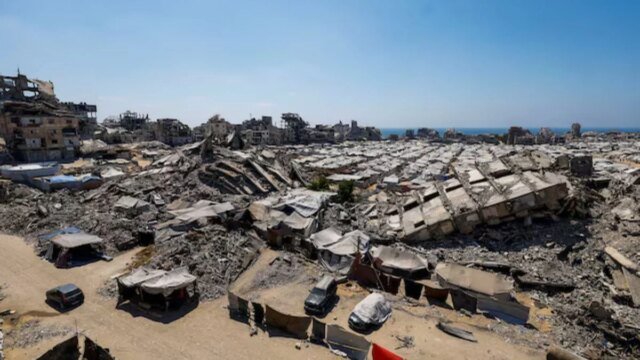
A UN expert warned Monday that large-scale rubble removal in parts of Gaza under Israeli control risked erasing traces of “atrocity crimes”, and preventing the recovery and identification of human remains.
Francesca Albanese, the United Nations special rapporteur on the Palestinian territories, warned in a statement that the implications of Israel’s “ongoing removal, crushing and relocation of rubble in Gaza” were “profound”.
“Gaza’s rubble contains human remains and physical evidence relevant to the investigation of alleged international crimes, including genocide,” she said, pointing to estimates from Palestinian authorities that more than 10,000 people remain buried under the debris in the war-ravaged Palestinian enclave.
The Italian-born independent expert has faced harsh criticism from Israel and some of its allies over her long-standing accusations that Israel is committing genocide and other war crimes against Palestinians in Gaza and the occupied West Bank.
Albanese, who was appointed by the UN Human Rights Council in 2022 but who does not speak on behalf of the United Nations, said she had received credible information from multiple sources last month of “deliberate and widespread removal, crushing and transport of rubble”.
In the devastated, Israeli-occupied Palestinian territory, “rubble is not just construction waste”, the expert insisted.
“It is part of a crime scene, a graveyard, and the material record of what happened during a brutal and senseless bombing campaign that lasted two years.”
Israel’s full-scale war on Gaza — which began after a Hamas retaliatory attack inside Israel on October 7, 2023 — reduced much of the Palestinian territory to rubble.
The relentless Israeli bombardment and ground offensive has killed more than 73,000 Palestinians, including more than 1,330 since a ceasefire agreed last October, according to Gaza’s health ministry, which is under Hamas authority.
Hamas’s October 7 attack resulted in the deaths of 1,221 people, according to an AFP tally based on official Israeli figures.
Many of the Palestinians killed in Gaza are children.
Albanese insisted on Monday that the possibility of recovering human remains in Gaza was far from theoretical.
She pointing to the burial last month of 112 members of one extended civilian family whose remains were recovered from under Gaza City buildings destroyed by Israel in November 2023.
“The remains of 41 others killed in the same strike were never located,” her statement said.
“It is vital that before decisions are made on displacement or crushing by the occupying army or its allies, the recovery and dignified identification of human remains, systematic documentation of sites and materials, preservation of potentially relevant evidence, and an unbroken chain of custody under independent oversight must take place,” Albanese said.
The expert called for international criminal investigators to oversee the evidence gathering, and to warn countries and companies involved in any removal that they “could incur international criminal responsibility” if they destroyed evidence of international crimes.
“Destroying evidence of atrocity crimes is illegal,” she stressed.
“It is unacceptable that the reconstruction of Gaza is conditioned upon the erasure of its past and the evidence required to secure justice for its victims.”
Israel did not respond immediately to a request for comment on Albanese’s statement.
The United States, a major ally of Israel, imposed sanctions on Albanese after she criticised Washington’s policy on Gaza.
Rescue crews were working to find people trapped in the wreckage of the building, which collapsed on Sunday.

Pakistan on Monday “categorically” rejected India’s “baseless assertions” regarding the status of Jammu and Kashmir, saying these are contrary to internationally recognised facts.
Responding to media queries regarding the statement issued by India’s Ministry of External Affairs on the map of disputed Jammu and Kashmir region, Foreign Office Spokesperson Sajjad Haider Khan said India’s unilateral actions and continued illegal occupation cannot alter the internationally recognized disputed status of Jammu and Kashmir.
The development comes a day after India said that any “inaccurate” or “misleading” depiction of the union territories of Jammu and Kashmir and Ladakh on a world map supported by the United Nations would not be acceptable to the country.
The FO spokesperson said Jammu and Kashmir dispute remains one of the oldest unresolved, internationally recognized disputes on the agenda of the United Nations Security Council.
The relevant UN resolutions stipulate that its final disposition must be made in accordance with the relevant Security Council resolutions and the will of the Kashmiri people, expressed through a free and impartial plebiscite under UN auspices, he said.
He said the official United Nations maps, which depict Jammu and Kashmir as a disputed territory, remain the only cartographic representation of its current legal status. “India’s so-called official maps and unilateral claims of sovereignty have no bearing on the status of the disputed territory,” he stated.
The spokesperson urged the international community to ensure that India immediately stops human rights violations in the Indian Illegally occupied Jammu and Kashmir and fulfils its commitment towards the realisation of the right to self-determination of the Kashmiri people, in line with the relevant UNSC resolutions.