






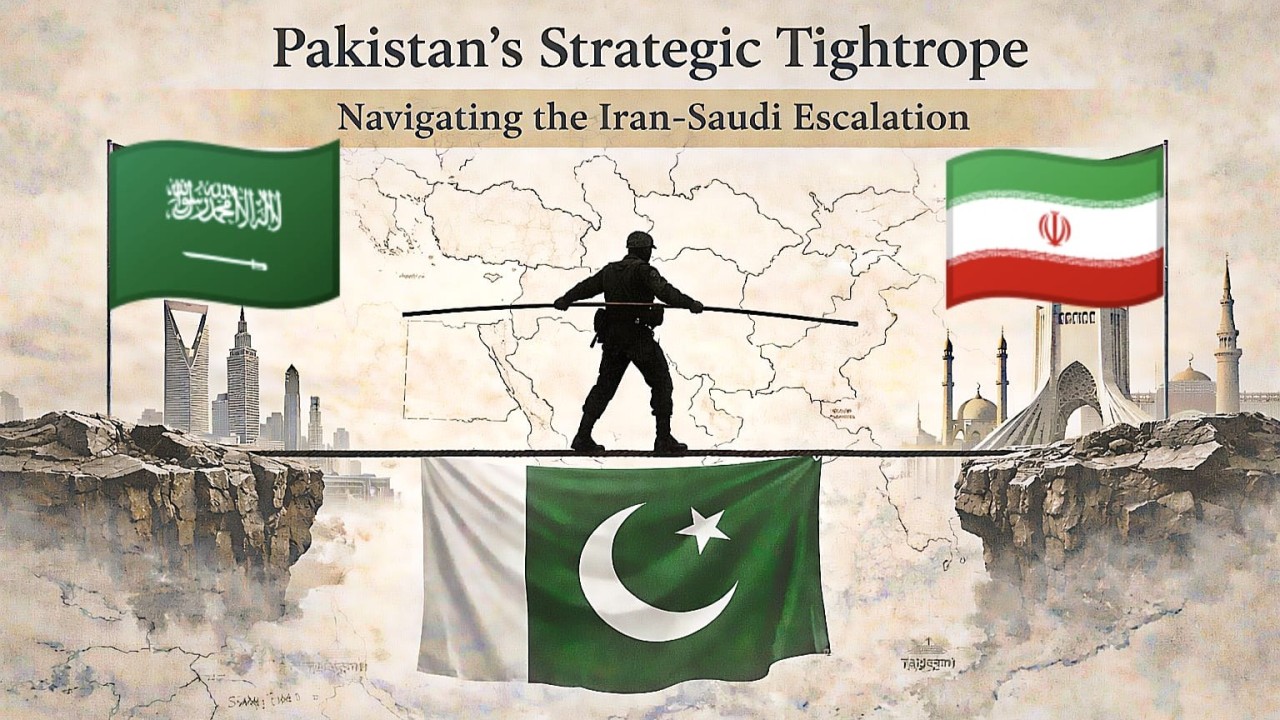
Pakistan’s foreign policy centers on balancing competing interests within the Muslim world. Its ties with Saudi Arabia are based on religious connections, highlighted by the presence of Islam’s holiest city, Makkah. The economic dependence also plays a role, with financial assistance, debt rollovers, and remittances from about 2.6 million Pakistani workers in the Kingdom contributing significantly. This long-standing partnership was formalized and strengthened through a defense agreement signed in 2025. On the other hand, Pakistan’s relationship with Iran is influenced by geography, sectarian ties, and the need to manage shared border security.
Power and security are essential concerns, pushing states to respond to threats rather than act on ideology or morality. States driven by the need for survival and security, seek hard-power mechanisms and external alliances to protect their interests. In this context, Pakistan’s foreign policy choices transcend mere religious and cultural ties; they focus on managing security and survival in a fluctuating regional landscape. The concept of neutrality and balancing offers a useful perspective. It is a practical foreign policy approach that combines two strategies. Neutrality lets Pakistan avoid siding openly with one bloc against another, reducing the chance of direct confrontation. At the same time, balancing allows Pakistan to maintain strong ties with both Saudi Arabia and Iran, adjusting its position as needed. This hybrid approach gives Pakistan the flexibility to uphold its defense pact with Saudi Arabia while also engaging with Iran to mitigate border tensions and sectarian conflicts. Located between these two nations, Pakistan’s foreign policy can be well understood through these two views: neorealist explains Pakistan’s necessity to engage with both sides, as it relies on economic support from Saudi Arabia, including remittances and debt rollovers, while navigating the geographic realities and sectarian diversity that connect it to Iran.
Pakistan’s balancing act between Iran and Saudi Arabia has been ongoing since the Iranian Revolution. Following that event, Tehran and Riyadh engaged in proxy rivalries across various regions, seeking greater influence. Pakistan’s reactions to the Yemen War in 2015 and to tensions between Iran and Saudi Arabia spurred by U.S.-Israeli actions in 2026 showcase its effort to maintain this balance. A neorealist perspective clarifies how Pakistan has done this: by keeping its statements cautious, steering clear of direct involvement in Gulf conflicts, and preserving diplomatic channels with both nations. In essence, Pakistan’s stance represents a survival strategy in a chaotic system, where flexible balancing protects national interests without dragging the country into proxy wars. Pakistan has strong military cooperation with Saudi Arabia. The two nations are defense partners, having signed many defense agreements and conducted joint military exercises. Pakistan’s armed forces provide training and advisory support to the Saudi military and have long stationed troops in the Kingdom. During the recent U.S.-Iran conflict, Islamabad followed a similar dual approach. It condemned Western aggression and expressed condolences over the death of Iran’s Supreme Leader. However, it also criticized Iran’s retaliatory strikes on Gulf States and reaffirmed its support for Saudi Arabia. This dual stance showed in Pakistan’s voting record at the United Nations Security Council, where it backed resolutions that both condemned Iranian actions and implicitly criticized Western intervention.
Economic cooperation has always been a key aspect of Pakistan-Saudi Arabia relations. Saudi Arabia has regularly supported Pakistan through capital grants and soft loans during global economic downturns, as well as through the significant remittances from millions of Pakistani workers in the Kingdom. These remittances are vital for Pakistan’s GDP, bolstering foreign exchange reserves and stabilizing the balance of payments. Because Pakistan’s reserves are often pressured by trade deficits and debt servicing, this capital inflow greatly impacts economic stability. Consequently, this dependency gives Saudi Arabia significant economic influence over Pakistan’s foreign policy decisions.
Relations with Iran are more complex, shaped by a deep historical connection, shared threats from external forces, and ongoing rivalries over various issues. Pakistan’s neutrality aligns with its national interests, allowing it to mediate between competing factions and prevent conflict in its region. Cooperation on security, trade, and shared resources suggests a path to a constructive bilateral partnership. Many Pakistanis sympathize with Iran, viewing it as a victim of Western aggression. Demonstrations across the country, especially in Karachi, Lahore, and northern areas, following the U.S.-Israeli offensive highlighted the domestic sensitivity of the situation. Islamabad must calibrate its foreign policy in response to both external pressures and internal political realities. Pakistan and Iran share a border of over 900 kilometers, presenting both cooperation opportunities and significant security challenges. This border has often been exploited by militants, smugglers, and insurgents. Groups like the Baluchistan Liberation Army (BLA) and Jaish al-Adl operate in the area, launching attacks against both countries and straining relations. To counter these threats, Pakistan and Iran have initiated joint security measures, including coordinated border patrols and intelligence sharing, recognizing that border security is a shared national interest. While the southwestern border with Iran remains vulnerable to insurgencies, smuggling, and militant activity, making peaceful relations essential for security management, Pakistan’s eastern border remains its top military priority. By building constructive ties with Iran, Pakistan reduces the chances of conflict on its western side, allowing it to concentrate military efforts on the east this reflects a practical and strategically sound foreign policy choice.
Pakistan’s foreign policy toward Saudi Arabia and Iran reveals the structural limits highlighted by neorealist, where systemic pressures require a cautious balance instead of a decisive alignment. Economically and militarily linked to Saudi Arabia, yet geographically and demographically tied to Iran through shared borders and security needs, Pakistan cannot afford to alienate either power. As conflicts in the Middle East escalate, Islamabad’s most pragmatic approach involve positioning itself as a mediator, protecting its national interests while steering clear of costly wars beyond its capacity to sustain.