








Houthis Claim Attack on Yemeni Military Camp
Recent escalating tensions between the Iran-backed group and the Yemeni government have prompted fears that a truce in place since 2022 is nearing collapse.
Recent escalating tensions between the Iran-backed group and the Yemeni government have prompted fears that a truce in place since 2022 is nearing collapse.
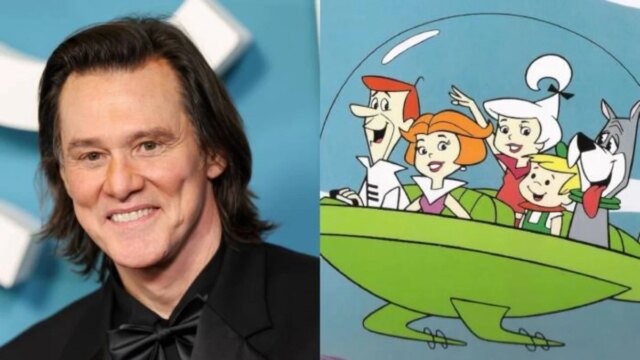
A live-action version of The Jetsons is slated to star Jim Carrey, with the Golden Globe winner appearing in the upcoming film in an undisclosed role, Warner Bros. Discovery announced on Thursday, August 6.
According to the company’s Q2 shareholder letter, the movie is currently scheduled for release after 2027.
Since Variety revealed in October 2025 that the 64-year-old Jim Carrey was in talks to star in the film, he has been associated with the project. The project also involves co-writer Joe Epstein and director Colin Trevorrow of Jurassic World.
The 1962 debut of The Jetsons followed George Jetson and his family as they made their way through a futuristic world.
The family was completed by Jane, Judy, and Elroy, while the robotic maid Rosie and their dog Astro also gained popularity.
Before coming to a conclusion in 1987, the Hanna-Barbera animated series underwent multiple revivals. Later, its characters made appearances in video games, comic books, and motion pictures, including the 1990 theatrical release Jetsons: The Movie.
Following his role as Dr. Robotnik in three Sonic the Hedgehog movies, Jim Carrey now adds another significant family-friendly franchise to his portfolio.
The beloved actor may soon return to another legendary role as well in the upcoming days.
The reports claimed that he is in negotiations to reprise his role as the Grinch in a sequel to the 2000 film How the Grinch Stole Christmas, which is anticipated to be directed by Ron Howard.
if (!window._rawHtmlListenerAttached) {
window._rawHtmlListenerAttached = true;
window.addEventListener(‘message’, function(event) {
if (event.data && event.data.type === ‘raw-html-resize’ && event.data.id) {
var iframe = document.getElementById(event.data.id);
if (iframe) {
var height = Math.min(Math.max(event.data.height, 50), 9200);
iframe.style.height = height + ‘px’;
}
}
});
}
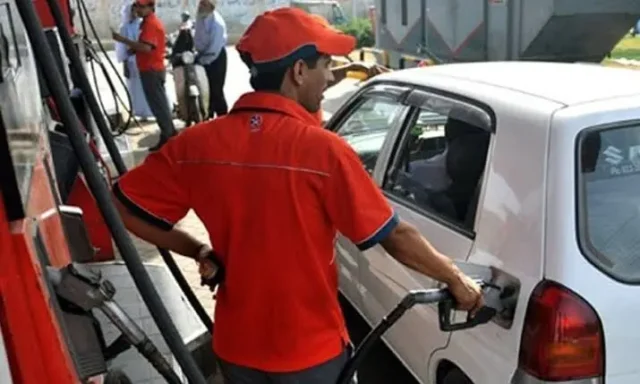
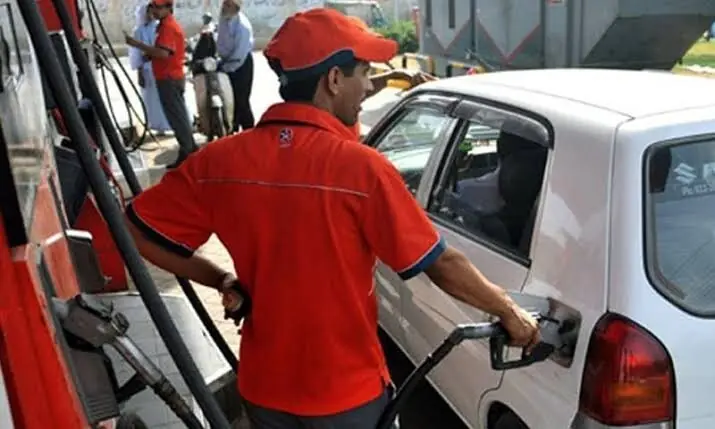
The government on Friday reduced the prices of petrol and high-speed diesel (HSD) by Rs2.20 and Rs1.50 per litre, respectively.
Following the revision, petrol will retail at Rs327.62 per litre while HSD will cost Rs380.86 per litre. The government continues to levy Rs114 per litre in taxes and duties on petrol and Rs100 per litre on HSD.
According to the Petroleum Division’s notification, the new prices will apply from August 8 to 10.
The diesel price has come down from a peak of Rs520.35 recorded on April 3. Its price had started rising from Rs281 per litre after the US-Iran war broke out on February 28.
The petrol price had peaked at Rs458.41 on April 3 after beginning its upward trajectory from Rs266 in the first week of March.
Earlier, Petroleum Minister Ali Pervaiz Malik announced that fuel prices would now be fixed on a daily basis due to fluctuations in international market prices following renewed hostilities between Iran and the US.
The government had been announcing weekly revisions to fuel prices since early March, alongside measures for the conservation of fuel amid possible oil supply disruptions due to the ongoing conflict in the Middle East. The federal government in April also announced targeted relief measures to provide subsidised fuel.
The petroleum minister stated that the cabinet and the prime minister had decided to give the Oil and Gas Regulatory Authority (Ogra) the responsibility of deciding fuel prices on a daily basis based on international market trends.
The daily pricing decision was rejected by the All Pakistan Dealers Association, which said it would consider a protest plan.
Petrol is mainly used in private transport, small vehicles, rickshaws and two-wheelers, and changes in its price affect the middle and lower-middle classes.
Similarly, changes in diesel prices also impact the public at large, as it is mainly used in the heavy transport sector, power plants and large generators.
Petrol and high-speed diesel (HSD) are the major revenue earners, with monthly sales of about 700,000 to 800,000 tonnes, compared to just 10,000 tonnes of monthly demand for kerosene.
The river’s water levels have fallen as extreme heat has afflicted Europe, exposing sunken German vessels from World War II that are impeding navigation.
Robert Gilman, 32, is in “dissociative stupor,” an advocacy group said, and his family members say they are afraid for his life. Mr. Gilman was arrested in Russia in 2022.
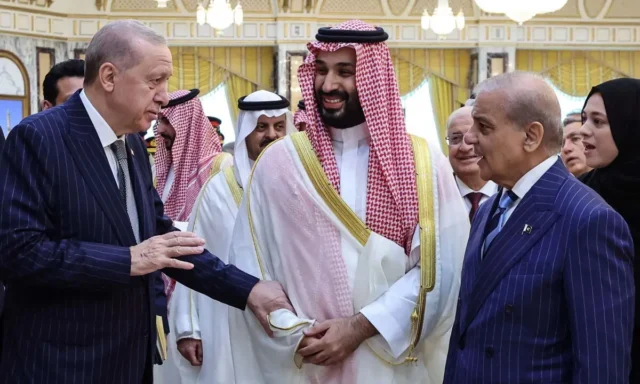
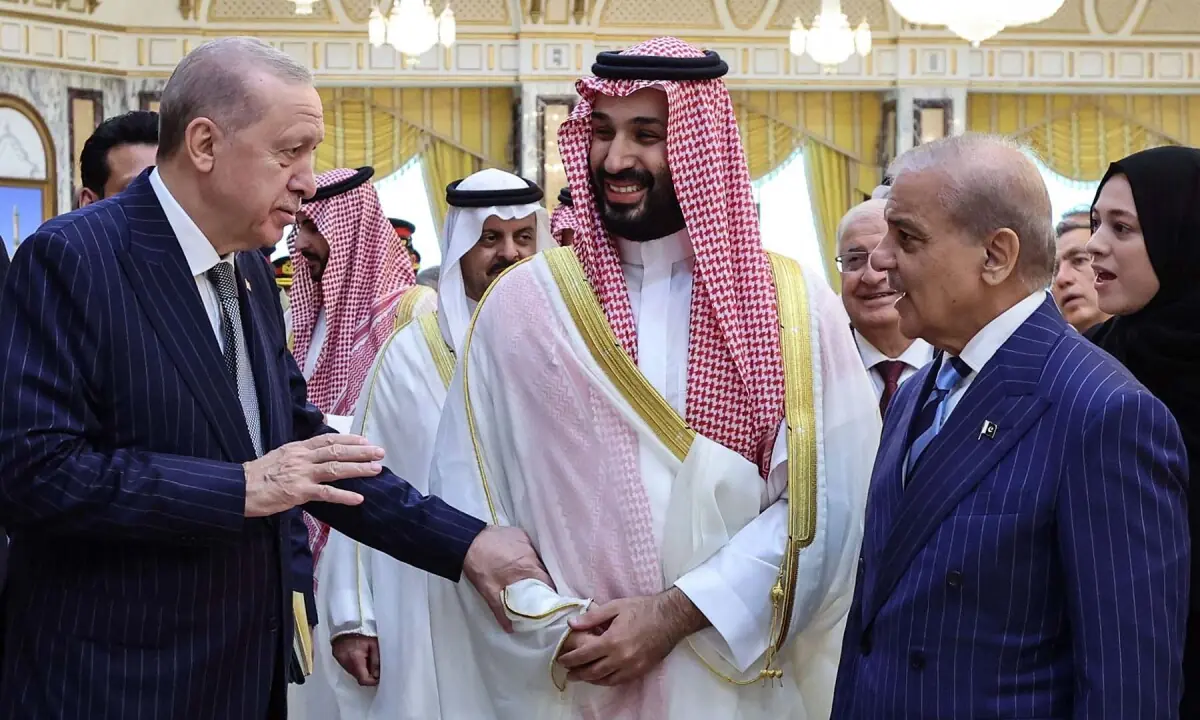
Pakistan, Saudi Arabia and Turkiye on Friday signed a joint defence pact in Makkah that empowers member states to treat an attack against one of them as an attack against all of them.
The Makkah Joint Defence Agreement, which seeks to strengthen the collective security of the three states, was signed by Prime Minister Shehbaz Sharif, Saudi Crown Prince and PM Mohammad bin Salman, and Turkiye’s President Recep Tayyip Erdogan at the “Makkah Al-Mukarramah Summit for Joint Defence” held at Al-Safa Palace.
Since the signing, experts, political figures and commentators have offered their views on the agreement, with many describing it as a significant regional development and a historic moment for the three countries.
Information Minister Attaullah Tarar, while talking to a private TV channel, described the signing of the joint defence agreement between the three states as a “historic day” for Pakistan, saying the pact reflected growing recognition of the country’s defence capabilities and strengthened ties among the three nations.
Speaking about the agreement, Tarar said the defence cooperation framework would take relations between Pakistan, Saudi Arabia and Turkiye to a new level. He credited Prime Minister Shehbaz Sharif and Field Marshal Asim Munir with bringing the three countries together, saying they had an “ideal working relationship” and that their teamwork had contributed to recent successes.
Saudi Foreign Minister Prince Faisal bin Farhan said the pact underscored the depth of the fraternal and strategic relations between the three countries.
He said the agreement marked an important milestone in their defence cooperation and embodied the three countries’ shared political will to safeguard security, support a more secure regional environment and pave the way for greater development and prosperity.
Former federal minister Khawaja Saad Rafique took to X and hailed the agreement as “a historic development and a good omen for the Muslim Ummah”.
“This agreement will prove to be a fundamental pillar for the stability, security and promotion of mutual brotherhood of the Ummah,” he wrote, praising the foresight of the three nations.
Former federal minister Mushahid Hussain called the agreement a “welcome and timely development at a crucial moment of turbulence and transformation”.
In a post on X, he noted that the Makkah Agreement came soon after Pakistan’s pivotal role in brokering the Islamabad Memorandum of Understanding between Iran and the US, as well as the launch of the Regional 4 Diplomatic Coordination Mechanism comprising Pakistan, Turkiye, Saudi Arabia and Egypt.
“Today’s pact has a three-fold significance. This is the first Pan-Islamic military institutional initiative among three key Muslim countries, independent of the West,” he wrote.
“Second, this Muslim Defence Pact is [a] big blow to Israel and [the] ‘Abraham Accords’, as it would be an effective counter to Israeli expansionism,” Hussain added. “Third, it’s good for Pakistan’s security, given the emerging India-Israeli Axis, which has [the] backing of some regional regimes as well.”
Andreas Krieg of King’s College London said the deal showed a clear desire to diversify alliances beyond the United States.
“Saudi Arabia, Turkiye and Pakistan are not trying to replace the United States. They are building the capacity to protect their interests when Washington cannot or will not do so.”
Riyadh, in particular, he said, “wants several layers of security rather than one American umbrella”, after the shock of the Iran war.
The deal will support Saudi Arabia’s ambitions to become an organiser of regional security and diversify its defence umbrella, while Turkey and Pakistan gain political clout and access to potential Saudi investments, he said.
Ilhan Naz, the author of Old World Empires, took to X and called the agreement, “A positive development & another step towards a regionally owned and operated security architecture.”
Burcu Ozcelik, a Senior Fellow at the Royal United Services Institute (Rusi), called the pact the product of ongoing regional efforts and cautioned against reading into it as “evidence of a post-American Middle East”.
“If anything, it fits the broader US preference for greater regional burden-sharing, regional powers assuming more responsibility for deterrence and security while remaining embedded, to different degrees, within a US-centred security architecture,” she wrote on X.
“This is the culmination of regional efforts already underway. Saudi Arabia and Pakistan already have a mutual defence agreement, while Ankara, Riyadh and Islamabad have spent months discussing a trilateral framework,” Ozcelik added.
She noted that the signatories have their own sets of interests, priorities and existing commitments and that the agreement demonstrates a common direction. Still, the deal does not mean “unanimous consensus on all regional challenges or how to resolve them”.
Lawyers for the former CNN anchor asked a judge to throw out the case, saying prosecutors had “acted on the president’s animus by filing unprecedented charges against a journalist for doing his job.”
Some officials warn that a more hard-line leader could emerge if the Trump administration moves forward with its plans.
As President Trump struggles to extricate the United States from the war in Iran, his promises to protesters in the country have fallen by the wayside.
Footage shows doctors in Japan clinging to an operating table to protect a patient from the violent tremor. The surgery was completed successfully.