









Google Hit With $1 Billion Fine By EU Over Search Engine Practices
At a tense moment for trans-Atlantic trade, the European Union accused Google of anti-competitive business practices.
At a tense moment for trans-Atlantic trade, the European Union accused Google of anti-competitive business practices.
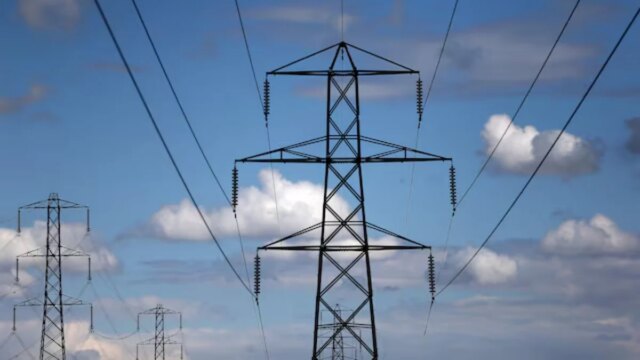
Centrica plans to shed about 1,300 jobs, the British Gas owner said on Thursday after reporting that market volatility, asset disposals and adverse weather had weighed on profit, knocking its shares as much as 10% lower.
The job cuts, some of which have already been completed, include a proposed reduction of about 500 staff in customer operations and fewer outsourced offshore positions.
Centrica, which has been selling non-core assets and concentrating on LNG-related infrastructure to boost margins, also warned of growth stagnating at its energy trading arm.
It is facing other challenges including hot weather in Britain and Iran war-linked disruptions to energy markets.
Centrica has been increasing investment in AI and technology upgrades as it seeks to simplify its operations, and had previously alluded to headcount reductions.
“AI isn’t driving these particular job reductions; that’s mainly due to changing customer behaviour,” Centrica CEO Chris O’Shea told reporters after Thursday’s results.
SOFTER ENERGY TRADING OUTLOOK
Centrica’s first-half adjusted core profit dropped 18% to £737 million, mainly due to the impact of Spirit Energy asset disposals and production outages.
“Volatility across energy markets has created challenges in some parts of our business, and some of our delivery has been slower than we would like,” O’Shea said.
Centrica warned that core profit for next year at its optimisation division, the major contributor to its trading arm Centrica Energy, would be in line with expectations for 2026, which currently stand at around £250 million.
That would be much lower than the £300 million to £400 million medium-term target for Centrica Energy, as it aims for £2 billion overall by 2030.
Centrica said it has sought government intervention to keep Britain’s largest gas storage facility in Rough open and to help the country’s efforts on energy security endeavours.
“We’ve spent the last few years eking out this asset to preserve the option, but we’re really coming to the end of the road now,” O’Shea said, adding that Centrica does not intend to renew its operating licence which expires in April.
President Volodymyr Zelensky of Ukraine has pivoted from unpopular moves before, but a recent decision about military leadership and strategy could weaken his position.
A Swedish Viking center said its vessel was used in the filming of Christopher Nolan’s epic but needed repairs when it was returned. Now, the center is seeking compensation.
Kyiv is escalating its air war by striking commercial warehouses, trying to bring the conflict closer to home for ordinary Russians.
In Europe, Asia and the Middle East, countries seek nuclear capabilities to hedge against aggressive neighbors and a receding Washington, potentially creating a more freewheeling era.
A favorite vacation option may be at risk because of rising temperatures. Even those sticking with their summer plans agree: More air conditioning would help.
There are a million people displaced by violence in the epicenter. They live in dangerous conditions and are fighting the virus with very little clean water.
Designed by Charles Rennie Mackintosh, the Glasgow School of Art is one of Britain’s most famous buildings. The school says it can’t undertake a planned “faithful restoration” alone.
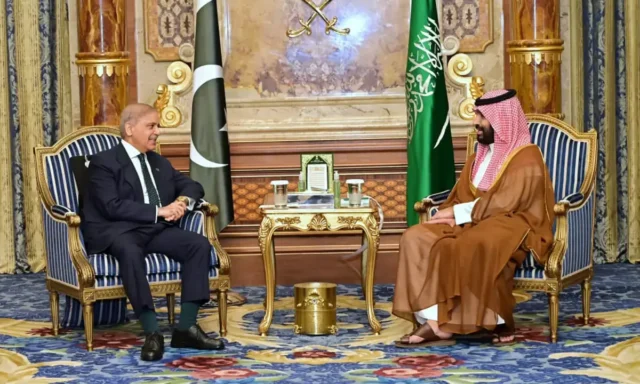
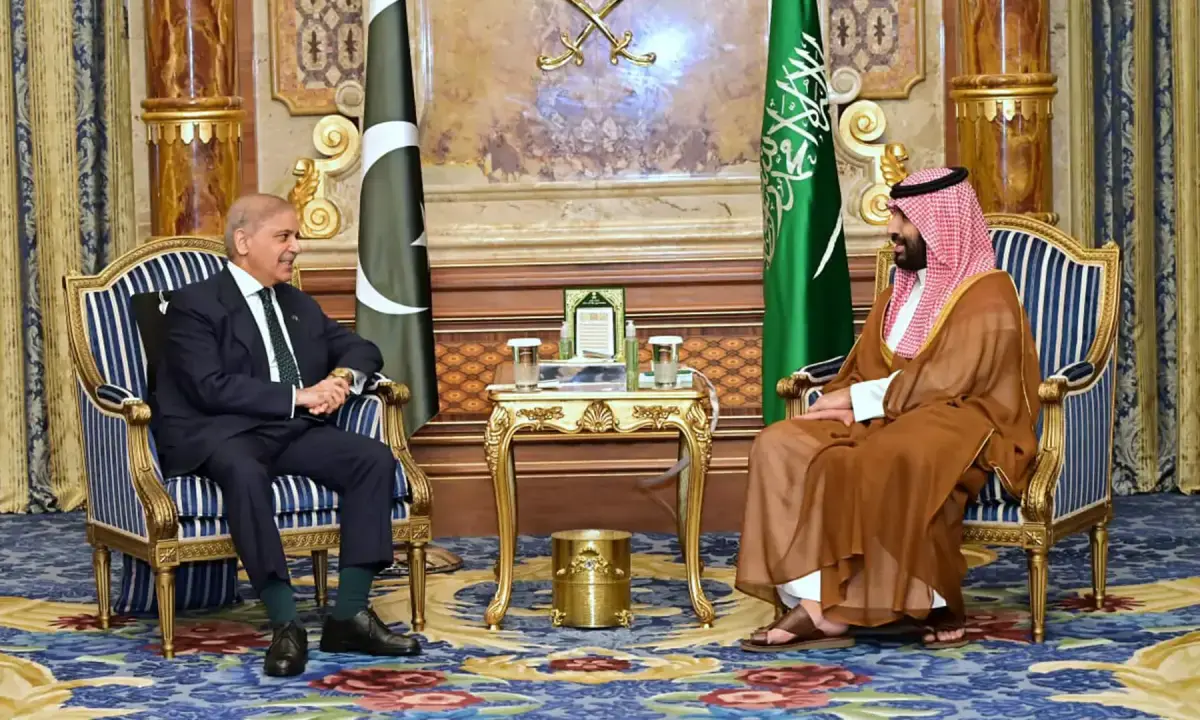
Prime Minister Shehbaz Sharif on Thursday condemned Houthi attacks on Saudi oil tankers in the Red Sea in a telephone conversation with the Saudi Crown Prince Mohammed bin Salman.
“Such actions are unacceptable, violate international law, threaten freedom of navigation and undermine regional peace and security,” PM Shehbaz said in a statement posted on X.
Hostilities in the Middle East flared on Thursday as the Yemen’s Houthis said that they attacked two Saudi Arabian oil tankers in a military operation, while the United States carried out strikes in Iran for a 12th consecutive night. A Saudi news agency confirmed one of the two vessels was ablaze after an assault while sailing in the Red Sea.
In his post on X, PM Shehbaz said that he reaffirmed Pakistan’s solidarity with Saudi Arabia during the call with the crown prince.
He added that he conveyed that he, Chief of Defence Forces and Chief of the Army Staff Field Marshal Asim Munir and the nation “stand firmly and resolutely with the Saudi leadership and the brotherly people of the kingdom at this critical time”.
PM Shehbaz said that the two agreed to “continue working very closely to maintain regional peace, security, stability, and the uninterrupted flow of lawful maritime commerce through the Red Sea as well as the Strait of Hormuz and the wider region”.
Meanwhile, the Prime Minister’s Office (PMO) described the conversation between the two as “most cordial”. It added that the Saudi crown prince appreciated “Pakistan’s steadfast support and the close fraternal ties between the two countries”.
The conversation comes a day after Pakistan on condemned the continued threats issued by the Houthis against Saudi Arabia and commercial shipping in the Red Sea, warning that it had the right to take all necessary measures in self-defence if its “maritime interests” were targeted in “any hostile act”.
The warning had come after the Houthis announced a maritime embargo against Saudi Arabia and threatened to close the Bab al-Mandeb strait, one of the world’s busiest maritime chokepoints, in retaliation for what they described as the longstanding Saudi blockade of Yemen and a recent attack on Sanaa airport.
The Bab al-Mandeb strait, connects the Red Sea with the Gulf of Aden, is a critical artery for Pakistan’s trade and energy supplies. A significant share of the country’s oil imports transits the Red Sea route, although no Pakistani vessels have so far been reported stopped or targeted.
Pakistan’s statement on Wednesday was by far the strongest issued by any non-Arab country on the Houthi threats.
Unlike most countries, which have confined themselves to expressing concern over freedom of navigation, Islamabad explicitly warned that any hostile act against Pakistani vessels could invite a response in self-defence.
The unusually forceful response also marks Pakistan’s strongest public warning to the Houthis since the group began attacking commercial shipping in the Red Sea in late 2023.
It also comes less than a year after Pakistan and Saudi Arabia signed the Strategic Mutual Defence Agreement in September 2025, under which aggression against one country is regarded as aggression against the other.