Bills

Home Bills Page 149

FIA establishes official channel with Meta to combat organized crime

0


ISLAMABAD  –  The Federal Investigation Agency (FIA) has established an official communication channel with Meta Asia Pacific (APAC) through its newly created National Command and Control Centre (NC3), enabling direct coordination with the technology giant to strengthen investigations into cybercrime and other organised offences.

The development follows Meta’s formal recognition of the FIA’s nominated Single Point of Contact (SPOC), allowing secure and direct communication for lawful information requests, officials familiar with the arrangement told The Nation.

Under the new mechanism, all requests relating to Meta-owned platforms, including Facebook, Instagram and WhatsApp, will be routed exclusively through the FIA’s NC3. These include preservation requests, subscriber information, account registration details, login IP histories, content removal requests and emergency disclosure requests, subject to applicable laws and legal procedures.

According to the FIA, the framework is intended to expedite access to digital evidence, shorten response times and strengthen cooperation with Meta in investigations involving cybercrime, terrorism, organised crime, human trafficking, financial offences and other crimes falling within the agency’s jurisdiction.

Under the prescribed procedure, an investigating officer will compile the case file along with the required legal documentation and relevant Meta account identifiers. Following scrutiny and approval by the concerned circle in-charge, the request will be forwarded to the FIA’s designated SPOC at NC3 for submission to Meta through the newly established channel.

FIA officials said the initiative forms part of the agency’s broader efforts to modernise its investigative capabilities and deepen collaboration with global technology companies to improve digital law enforcement and facilitate the timely acquisition of electronic evidence in cross-border investigations.

Heavy rains trigger landslides in Shangla, Khan Khwar Dam spillway opened

0


Shangla  –  The third spell of the monsoon has intensified across Shangla and other upper parts of Khyber Pakhtunkhwa, with intermittent torrential rainfall continuing for the fourth consecutive day. The downpours have triggered landslides, swollen rivers and streams, and prompted authorities to open the spillway of the Khan Khwar Dam in Ranial as a precautionary measure. The Pakistan Meteorological Department (PMD) has forecast more rainfall in the coming days and warned of possible flash floods and further landslides.

Persistent rain has significantly disrupted normal life in several parts of Shangla. Landslides were reported in various mountainous areas, while water levels in rivers, seasonal streams, natural springs, waterfalls and other water bodies rose considerably due to continuous rainfall.

The Alpurai College Road, which was blocked by a landslide a day earlier, remained closed to all types of traffic, causing severe inconvenience for patients travelling to hospitals, students, teachers and local residents. Authorities had yet to restore the road at the time of filing this report.

Rain-induced debris, large boulders and uprooted trees also fell onto several major roads, including the Alpurai–Bisham Highway, Alpurai–Khwaza Khela Road, roads in Poran, Chakesar and Shah Pur Kana, as well as other key routes across the district. Although most roads remained partially open, vehicular traffic continued under difficult conditions, with motorists advised to exercise extreme caution.

The prolonged rainfall also caused seasonal streams to overflow, while rivers and other natural waterways witnessed a significant increase in water flow. Several irrigation channels in rural areas were damaged, traditional water-powered flour mills were affected, and reports indicated losses to agricultural land, protective embankments and rural link roads. Fast-flowing floodwater also damaged small bridges and crossings in some villages, creating difficulties for residents.

Meanwhile, the spillway of the Khan Khwar Hydropower Dam in Ranial was opened after continuous rainfall caused a substantial increase in inflows into the reservoir. The measure was taken to maintain the water level within safe operational limits and minimise the risk of downstream flooding.

Local residents urged the district administration, the Communication and Works (C&W) Department and other relevant agencies to immediately clear debris from affected roads, restore blocked routes and conduct an emergency survey of damaged irrigation channels, traditional water mills and other public infrastructure to ensure timely rehabilitation and minimise further hardship.

Meanwhile, in view of the continuing monsoon rains, Additional Deputy Commissioner (Relief) Fida Hussain and District Emergency Officer Engineer Malik Sher Dil Khan conducted a late-night inspection of several sensitive and high-risk locations across the district.

During the visit, the officials reviewed the water levels and flow in the Alpurai Khwar and Lilwonai Khwar, where a slight increase in water discharge was recorded following the recent rainfall. Authorities continued to monitor the situation closely to respond promptly in the event of any emergency.

The district administration directed all relevant departments to remain on alert to deal with any weather-related emergencies and appealed to the public to avoid unnecessary travel during the ongoing spell of rain.

PPP slams KP govt after rain inundates Peshawar

0


ISLAMABAD  –  Pakistan People’s Party (PPP) leader Senator Palwasha Khan on Wednesday launched a scathing criticism of the Khyber Pakhtunkhwa government, saying a single spell of rain in Peshawar had exposed what she described as the failures of the provincial administration over the past 13 years.

In a statement, Palwasha alleged that heavy rainfall had submerged major roads, including the city’s University Road, causing severe hardship for students, commuters and residents.

She claimed that while the people of Peshawar were struggling with urban flooding and disrupted daily life, the provincial leadership remained preoccupied with political activities in Islamabad instead of addressing public concerns.

“The people of Peshawar are wading through floodwaters while those in power are busy pursuing political interests,” she said.

The PPP leader said the Khyber Pakhtunkhwa government’s claims of development had been exposed by the recent rainfall, arguing that the city’s drainage and sewerage infrastructure had failed despite the party’s 13 years in power.

She maintained that students, traders and ordinary citizens were bearing the brunt of poor urban planning and inadequate civic infrastructure, accusing the provincial government of remaining indifferent to the hardships faced by the public.

Palwasha said the inundated roads and stranded residents of Peshawar stood as evidence of what she termed the government’s poor performance and administrative failure.

Residents seek independent probe into Mardan sewerage project

0


Mardan  – Residents of several areas in Mardan have called for an independent technical inquiry into the Khyber Pakhtunkhwa Cities Improvement Project (KPCIP), alleging that sections of its sewerage infrastructure have developed faults following recent monsoon rains despite the project’s multi-billion-rupee cost.

Local residents claimed that sewerage pipelines laid under the Asian Development Bank (ADB)-funded project had collapsed, sunk or deteriorated at several locations before becoming operational, raising concerns over construction quality and project supervision.

According to residents, rainwater entered houses in Canal Road, Gali Bagh, Misri Abad and neighbouring localities after the recent downpours, while damaged pipelines were reported at various points.

Residents further alleged that inadequate construction standards, poor planning and insufficient safety measures during execution had caused inconvenience to the public and increased concerns about the project’s durability.

They demanded the formation of an independent technical committee comprising representatives of the Local Government Department, the Public Health Engineering Department and engineering experts from the University of Engineering and Technology (UET) Mardan to assess the quality of construction, implementation standards and project supervision.

The residents said the project was being financed through an estimated Rs10 billion loan from the Asian Development Bank, which would ultimately be repaid from public funds. They stressed that transparency, strict quality control and effective oversight were essential to ensure the project’s long-term success.

They also urged the Khyber Pakhtunkhwa government to conduct an immediate and impartial technical inspection, rectify any defects identified and ensure accountability if negligence or substandard workmanship was established.

Residents warned that if deficiencies were not addressed, the project could face problems similar to those experienced under the earlier SUDP sewerage scheme.

Meeting calls for legal reforms to strengthen child protection laws in KP

0


Peshawar  – A high-level ministerial briefing on advancing legislative measures to end child marriage in Khyber Pakhtunkhwa was held here on Wednesday, bringing together lawmakers, government officials, development partners and civil society representatives to build consensus on stronger legal and institutional mechanisms for protecting children.

The briefing was organized by the Khyber Pakhtunkhwa Commission on the Status of Women (KPCSW) in collaboration with the Provincial Assembly Secretariat, the Khyber Pakhtunkhwa Child Protection Commission, and other relevant government departments and stakeholders.

Advisor to the Chief Minister on Finance Muzzammil Aslam attended the event as the chief guest. The meeting was also attended by Members of the Provincial Assembly, Provincial Assembly Secretary Waqar Shah, women legislators from various political parties, Chairman of the SDGs Task Force MPA Asif Mehsud, the Secretary of the Social Welfare Department, the Secretary of the KPCSW, the Deputy Chief of the Child Protection Commission, representatives of UN Women and Blue Veins, and senior officials from various government departments.

Participants held detailed discussions on the social, economic and public health consequences of child marriage, emphasizing that early marriage adversely affects girls’ education, maternal and child health, economic opportunities and overall human development. They stressed that addressing the issue requires a coordinated response through effective legislation, institutional collaboration and sustained public awareness.

The meeting underscored the need for comprehensive legal reforms to strengthen child protection laws and ensure their effective implementation across the province. Participants also highlighted the importance of harmonizing legislative efforts with national and international commitments aimed at safeguarding the rights and well-being of children.

Speaking on the occasion, Advisor to the Chief Minister on Finance Muzzammil Aslam reaffirmed the provincial government’s commitment to supporting legislative reforms that protect children and promote their rights.

The Khyber Pakhtunkhwa Commission on the Status of Women reiterated its commitment to providing technical assistance to the provincial government in collaboration with the Child Protection Commission, while the Provincial Assembly Secretariat assured its full support in facilitating the legislative process.

Addressing the participants, Chairperson of the Khyber Pakhtunkhwa Commission on the Status of Women Dr Sumera Shams emphasized the importance of collaborative efforts to strengthen the legislative framework for ending child marriage in the province. She called for continued coordination among lawmakers, government institutions, civil society organizations and development partners to formulate practical, effective and enforceable legislation that protects children and promotes the rights and dignity of girls.

Amish Shah Wins Democratic Primary in Swing Arizona House District

0


Dr. Amish Shah, who beat the choice of the party’s House campaign arm, will face Jay Feely, a Republican, in a battleground district that covers parts of Phoenix.

Diesel Crisis Puts Poor Farmers Around the World at Risk

0


The closure of the Strait of Hormuz has limited the shipment of diesel, depriving farmers of fuel for irrigation pumps and threatening the food supply.

PM calls for national innovation ecosystem to advance indigenous robotics tech

0


ISLAMABAD  –  Prime Minister Shehbaz Sharif on Wednesday urged all stakeholders to become part of a unified national innovation ecosystem, stressing the need to develop indigenous knowledge and technological capabilities in Pakistan.

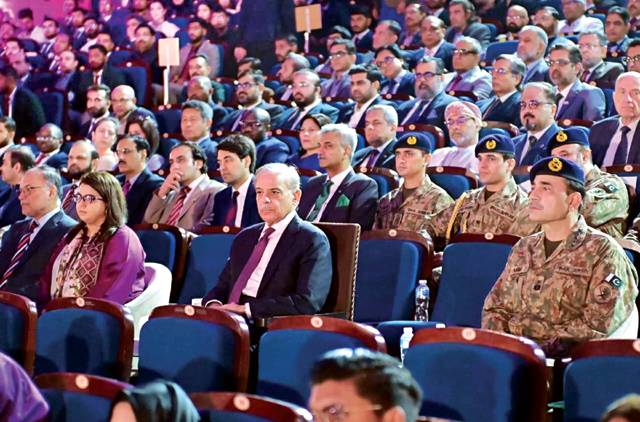
Addressing the inaugural ceremony of the “Indus RAS – Robotics and Autonomous Systems Expo 2026”, the prime minister said Pakistan must embrace the technological revolution while ensuring that its benefits reach every segment of society.  

“Let our universities, research and development centres, startups, industries, and farmers become part of one national innovation ecosystem, ensuring that the knowledge behind these technologies is indigenous, owned, and continuously advanced in Pakistan,” he said.

The prime minister emphasized that the robotics and autonomous systems revolution should not remain confined to advanced economies, large corporations, or major cities.

Instead, he said, it should become a catalyst for inclusive growth by improving the lives of farmers, small businesses, women entrepreneurs, young innovators, and underserved communities across Pakistan and the Global South.

Highlighting the rapid advancement of emerging technologies, Shehbaz Sharif said their increasing power also placed greater responsibility on governments and stakeholders.

As these technologies become more powerful, the prime minister said their responsibility also grew simultaneously.

“We must establish clear regulatory and ethical frameworks to ensure autonomous systems are safe, secure, transparent, and always used for the benefit of mankind,” he said.

The prime minister reiterated the government’s commitment to promoting innovation and technological development while ensuring that emerging technologies are deployed responsibly and inclusively for sustainable national progress.

The ceremony was attended by Chief of Defence Forces and Chief of Army Staff Field Marshal Syed Asim Munir, federal ministers, experts, industrialists, entrepreneurs, foreign delegates, brands, companies and students.

The prime minister further announced two landmark initiatives of the government which would shape the future of robotics and autonomous systems in the country; including launching the Spark and Elevate programme to transform Pakistan’s research into world-class technologies, globally competitive enterprises, and high-productive jobs and establishing the Pakistan Venture Fund with an initial commitment of $20 million to catalyse investment in our technology ecosystem.

The prime minister said the future of robots and autonomous machines that Pakistan seeks is not merely a story of technology. It was the story of a nation of about 250 million resilient people determined to re-imagine, to compete, and to build a better future for the generations to come.

“In fact, it is the story of our very young, bright people whose cherished dreams are ignited by the spark of curiosity whose talent knows no bounds and whose ingenuity will shape our motherland, Pakistan, for a wonderful future,” he maintained.

Today, the prime minister said Pakistan stood at the cusp of a historic opportunity, “one we cannot and shall not miss, inshallah. Pakistan will not be a nation that merely inherits the choices made by others. We will shape our own destiny through innovation, enterprise, self-reliance, and untiring efforts, God willing.”

He further underscored that through untiring efforts, sweat and blood, and determination, they should build a brighter, stronger, and prosperous Pakistan for generations to come, and their posterity would feel proud.

Terming the Indus RAS Expo ‘a landmark initiative’ that reflected Pakistan’s determination to become a leading player in the technologies that would define the 21st century.

Earlier this year, he mentioned that Pakistan hosted the Indus AI Summit, bringing together governments, technology leaders, researchers and entrepreneurs to shape Pakistan’s journey in the age of artificial intelligence.

The RAS Expo gave that vision its tangible form, demonstrating how innovation could be translated into viable solutions that strengthen their economy, enhance security and improve the lives of their people.

“We stand at an extraordinary moment in history where machines no longer merely calculate; they can perceive, decide and act swiftly. What once belonged to the realm of imagination has become part of our everyday reality. For generations, our farmers worked at the mercy of nature.

They faced water scarcity, rising input costs, fragmented land holdings and a climate that no longer kept its old promises,” he observed.

The prime minister said with the help of emerging technologies, the agriculture sector had witnessed a revolution.

And in the time of crisis, he said the same technology provided access and helped save lives where roads and bridges were completely washed away.

The prime minister opined Pakistan had made remarkable progress in developing indigenous autonomous capabilities in the field of defence and security.

“Under the dynamic leadership of Field Marshal Syed Asim Munir, our armed forces have adopted cutting-edge technologies, some of which I just witnessed on display outside this hall. I have seen simulators 100% manufactured and assembled in Pakistan.

Drones have already achieved more than 60% indigenization,” he added.

The prime minister also commended the IT ministry, experts, professionals, and technocrats who had made the remarkable achievements for the motherland.

And last year, during the historic Marqa-e-Haq, he said the entire world witnessed how their valiant armed forces resolutely guarded the physical and cyber frontiers through the highly effective use of advanced autonomous systems led by Field Marshal Syed Asim Munir and ably supported by Air Chief Marshal Zaheer Ahmed Babar Sidhu and Naval Chief Admiral Naveed Ashraf.

The brave armed forces proved beyond any ray of doubt that Pakistan possessed not only the iron resolve to safeguard its sovereignty, but also the indigenous capability, technological prowess, and operational excellence required to employ advanced autonomous technologies in defence of their motherland, he added.

“These remarkable military advancements are an integral part of our national defence. They will further strengthen our security architecture, make our defence more impregnable, and enhance our resilience against emerging and future threats,” he further observed.

Earlier speaking on the occasion, Minister for IT Shaza Fatima Khawaja said the countries that led the new technologies would define the future economy.

She said Pakistan would own full value chains of robotics and artificial intelligence because advanced technological self-reliance was a national decision and today, they were ready to make that.

Shaza Fatima said that under the visionary premiership of the prime minister, the government embraced a clear direction of Digital Nation Pakistan where technology was not simply another lever of the economy, but an actual engine of productivity, employment and national competitiveness.

The minister stressed that they were creating an enabling environment for the startups, investors and young people to compete globally.

“And the results are already visible. The export numbers tell you that this year the ICT exports grew by almost 21%. This is a testament to the resilience of our industry and our policies. We’ve moved 14 ranks up in the E-Governance Development Index, and we’ve moved 27 ranks up this year in ITU’s ICT Development Index,” she added.


Here come the dollars

0


HERE we go again. Having succeeded in stabilising the economy and failed at reforming it, the government is not preparing to transition to high growth the old fashioned way: through borrowed dollars procured as a geopolitical rent against services rendered.

A couple of things have happened. Most recently, we have the announcement that Finance Minister Muhammad Aurangzeb met the US treasury secretary and ‘asked’ for a $10 billion swap line from the Exchange Stabilisation Fund, the same fund from where the Trump administration gave a $20bn swap line to Argentina in October last year. Argentina drew $2.5bn from the fund for a few weeks then zeroed it down by December, and has made no further drawings from it since.

In April, President Donald Trump announced that they were in talks with the UAE for a similar facility, and that a number of other Asian countries had approached the US with requests for the same. That is when word first began to circulate that Pakistan may be among those Asian countries. Now that word has been confirmed.

On other fronts, the government is building a powerful borrowing capacity with the purpose of pulling large quantities of dollars into the system with which to kick-start a growth process. In April, for example, when the UAE called in their deposits of $3.4bn with the State Bank, the funds were returned to them and within weeks $3bn were deposited by Saudi Arabia in the finance ministry. This was an interesting procedure. The outflow to the UAE reduced the State Bank’s foreign liabilities and predetermined drains by $3.4bn, causing the net reserves of the central bank to rise by that amount. But the new borrowing from Saudi Arabia did not come on the State Bank’s liabilities, because it was extended to the finance ministry. The result was a sharp drop in State Bank liabilities and no corresponding decrease in reserves. Then in May, these liabilities dropped by another $2bn. It is hard to find a two-month period in our recent history when State Bank liabilities fell by $8bn in two months.

The movements are now unmistakable. The preparation for bringing in large quantities of dollars are underway.

This creates room for more borrowing because borrowers look at your predetermined outflows over the next 12 months and decide your credit worthiness. On cue, the government announced the creation of a consortium of international banks “for its Global Medium-Term Note” and the first rating action on the back of the improved external sector numbers came from Standard & Poor’s which upgraded its credit rating for Pakistan up to B from B negative, where it had stood for nine years.

Then came confirmation from the government that they were in talks with Saudi Arabia for another $6.7bn oil facility at one per cent interest for 15 years. Coupled with this, some news channels reported that another request for additional deposits had also been made though there is no confirmation on this yet. To top it off, word also suggests that forthcoming maturities of Saudi deposits could see rollovers on longer tenors, beyond the standard one year, which would also put them out of the 12-month window of predetermined drains. These are not yet confirmed though.

From the looks of it, they are preparing to pump growth using borrowed dollars and we are not even near the end of these announcements. In the remaining months of 2026, there will be more such announcements. The war dividend, or perhaps the peace dividend depending on your preference, is now beginning to take shape before us. It is still early days and much could go wrong, or turn out to not be what we thought it was. The swap facility with the US Treasury, for example, may not even be drawn down (just as Argentina did not draw it down after a small drawing in October which they quickly replenished). Pakistan has had other such swap lines, notably one from the People’s Bank of China, which dates back to 2013 and has been extensively utilised since then, so our recourse to such a financing line may be different from that of Argentina.

But the movements are now unmistakable. The preparation for bringing in large quantities of dollars are underway. The inflows will be from various channels, and perhaps even favourable tariff treatment for Pakistani exports versus those of its competitors, in American markets. Some are asking whether this increases Pakistan’s exposure to geopolitical risks, and even reopens the door to the bad old days when the country was routinely lectured to ‘do more’. But it seems somewhere up there a decision has been made, that this is a headache they are willing to take on in return for tens of billions of dollars.

If this analysis proves correct then this moment will be an important turning point in this government’s fortunes. Nothing changes the mood of a country like economic growth. Nothing gets people more focused on their work than the proliferation of moneymaking opportunities. Nothing breaks the fever of political gloom like a consumption binge. That is what the Pervez Musharraf regime learned by accident. It is what these people are pursuing as conscious strategy.

So if this turns out to be true, FY26 could be the year when the economy turned. There will be nothing sustainable about it, of course, and it will crash just like every other growth spurt did in the past. The greater danger here might be that Pakistan could end up being pushed to do things that create lasting bad blood with Iran. But nothing quite lands to applause like a consumption binge dressed up as economic growth. It sure feels good while it lasts! And one thing we all know about human nature is that people like to feel good and nobody likes a naysayer in good times.

So buckle up and keep your eyes out for where the moneymaking opportunities are lurking. If it’s true that good times are coming, early positioning makes for a winner.

The writer is a business and economy journalist.

khurram.husain@gmail.com

X: @khurramhusain

Published in Dawn, July 23rd, 2026

Hitler’s Birthplace in Austria Is Now a Police Station

0


The government repurposed the 17th-century building in hopes of preventing the site from becoming an attraction for Nazi sympathizers.

Popular Posts

My Favorites

Australia reach FIFA World Cup knockout phase after goalless draw with...

0
Australia booked their place in the World Cup’s round of 32 on Thursday with a cagey 0-0 draw against Paraguay that delighted pragmatic coach...