








Trump Is Squeezing Canada. Don’t Expect Carney to Roll Over.
The president’s new tariffs on a top U.S. trading partner aim at gaining concessions, but the Canadian government, and the public, have been bracing for the escalation.
The president’s new tariffs on a top U.S. trading partner aim at gaining concessions, but the Canadian government, and the public, have been bracing for the escalation.
The Iran-backed Houthi militia in Yemen has declared a Red Sea blockade on Saudi Arabia, potentially opening a new front in the war rippling across the Middle East.
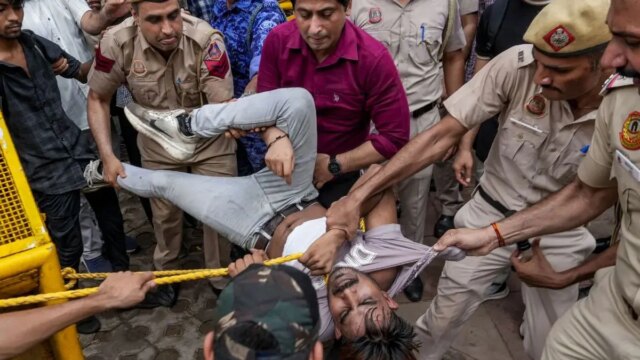
New Delhi: India’s “Cockroach” party movement vowed Tuesday to press ahead with their campaign until the education minister resigns, a day after at least 180 people were injured in protests in New Delhi.
Thousands of protesters gathered in the heart of the Indian capital on Monday, demanding Dharmendra Pradhan’s resignation and wider examination reforms, in a show of force by the Cockroach Janta Party (CJP) online movement.
The CJP has won millions of followers on social media since its launch in May, fuelling one of the biggest challenges to Hindu-nationalist Prime Minister Narendra Modi since he won his third term in office in 2024.
“We won’t stop. Pradhan has to be sacked,” CJP’s Ashutosh Ranka said in a social media post.
Hundreds of protesters remained camped at the Jantar Mantar protest site on Tuesday, many of them calling for wider changes in the education system.
On Monday, police fired tear gas and baton-charged protesters to stop them for marching on to parliament, in one of the biggest street rallies in Delhi in around five years.
At least 178 people were injured in clashes between protesters and security officials, Delhi Police said.
India’s ‘cockroach movement’ leaders say minister promises talks on demands
That included 118 police personnel, including senior officers, it said while criticising what it described as “unruly, aggressive and violent behaviour” by a “violent mob”.
“During the scuffle, around 60 protesters were also reported to get injured,” it said in a statement late Monday.
Protest organisers condemned the “high-handedness” of the authorities and said hundreds of protesters had been injured.
“It’s a shameful day in the history of Indian democracy that people, honest students, who had come for a genuine issue were brutally beaten by the Delhi police,” Ranka told AFP.
Ranka, who met senior minister JP Nadda on Monday, said the government had yet to respond to their demands.
Despite rapid economic growth, millions of people in the world’s most populous nation still struggle to find stable and well-paying jobs, fuelling discontent.
The protests follow a series of examination scandals that have shaken confidence in the country’s testing system.
Some 2.2 million aspiring medical students sat for a re-examination under tight security last month after the previous test was scrapped following the leak of a question paper.
That came on top of another scandal related to the online marking system of tests taken by nearly two million high school students.


QUETTA: Three excise officials have been abducted at gunpoint following an attack on their department’s checkpost on the Dalbandin–Taftan Highway in Balochistan’s Chagai district, police sources told Dawn on Tuesday.
According to the sources, the attack was carried out by unidentified men on Monday evening.
They said around 30 armed men surrounded the checkpost that was set up temporarily for routine checking, held the officials on duty at gunpoint and later abducted them. The sources added that the attackers also took away two official vehicles and weapons.
Police and other law enforcement personnel rushed to the site after being informed of the incident and cordoned off the area, the sources said, adding that a search operation has been launched to trace the attackers and ensure the safe recovery of the abducted officials.
They said an investigation was under way to ascertain the identity of the assailants and determine the route they used to flee.
The incident takes place as Balochistan continues to face security challenges.
Earlier this month, security forces and law enforcement personnel jointly launched Operation Shaban in Balochistan in retaliation for a deadly attack on a police post at the Mangi Dam pumping station in Ziarat on July 6. During that assault, armed attackers kidnapped and killed 27 police officers.
A monthly security assessment released in early June by the Pakistan Institute for Conflict and Security Studies (PICSS) said that after two consecutive months of improvement, Pakistan’s security situation deteriorated sharply in May, driven primarily by escalating terrorist violence in Khyber Pakhtunkhwa and Balochistan.
The report said Balochistan emerged as the most affected province during the month. The province recorded 71 terrorist attacks, compared with 34 in April, representing a 109pc increase.
The deteriorating security situation was further reflected in a surge in kidnappings, it said. Of the 54 abductions reported nationwide during May, 52 occurred in Balochistan alone, highlighting the growing operational reach and confidence of terrorist groups in the province, it said.
On July 9, Prime Minister Shehbaz Sharif said that the country’s civil and military leadership had taken a “mutual and singular decision” to end terrorism after multiple major terrorist incidents in Balochistan.
He made the remarks at a meeting in Quetta of the Provincial Apex Committee on the National Action Plan, with Chief of Defence Forces (CDF) and Chief of the Army Staff Field Marshal Asim Munir also present.
PM Shehbaz’s statement came a day after the military Inter-Services Public Relations (ISPR) Director General Lt Gen Ahmed Sharif Chaudhry addressed a press conference, pointing the finger squarely at India and Afghanistan for being behind recent attacks in Balochistan.
He specifically mentioned “three major terrorist incidents” in recent days — an armed attack on the outskirts of Quetta on July 5, an assault on a police post in Ziarat on July 6, and an ambush of an army convoy in Bela on July 7.
Troy Jackson, who is expected to become his party’s nominee in the state’s marquee Senate race, has long been an economic populist, but his positions on social issues have changed markedly over time.

PESHAWAR – Governor Khyber Pakhtunkhwa Faisal Karim Kundi on Monday said sustainable peace was essential for the province’s economic development, investment and job creation, stressing that province possessed abundant natural resources but continued to face security and economic challenges.
He expressed these views during an interactive session with a 104-member delegation of the 20th National Workshop Balochistan, led by Brig Bilal Ghafoor, at the Governor House. The delegation comprised students, journalists, youth and representatives from different walks of life belonging to all four provinces, Azad Jammu and Kashmir and Gilgit-Baltistan.
Responding to questions on security, terrorism, constitutional affairs, inter-provincial relations and the country’s political situation, the Governor said Khyber Pakhtunkhwa had historically served as a major trade hub with Central Asia but had also borne the brunt of terrorism due to its border with Afghanistan. He said terrorism remained a major challenge in both Balochistan and Khyber Pakhtunkhwa, adding that effective coordination through regular meetings of the provincial Apex Committee was necessary to tackle the issue.
The Governor said Rs900 billion had been provided by the federal government for the war against terrorism, but questions remained over its utilization. He added that despite immense sacrifices, the KP Police still lacked modern equipment and bulletproof vehicles, and said he had recommended to the Chief Minister that police salaries be brought at par with those of other provinces.
Kundi said the annual financial commitment made at the time of the merger of the erstwhile FATA had not been fully honoured even after nine years. He also expressed concern over the imposition of sales tax in the merged districts and PATA, saying taxes should only be imposed after providing those areas with development and public services comparable to the rest of the country. He reaffirmed support for all measures aimed at protecting the province’s rights and public interests, including the provincial government’s stance on the issue.
The Governor also called for the announcement of a new National Finance Commission (NFC) Award, saying that the seventh NFC Award had been finalized in 2010 and no new award had since been announced. He urged that meetings of the Council of Common Interests (CCI) be held every 90 days in accordance with the Constitution.
The Governor said the annual allocation of Rs4 billion for 36 public sector universities in the province was insufficient even to meet salary expenditures. He said Khyber Pakhtunkhwa had immense talent, particularly in sports, and assured that the Governor House would remain open for youth, students, athletes and investors.
Governor proposes to set up KPPSC regional offices
in remote areas
Governor Khyber Pakhtunkhwa Faisal Karim Kundi has written to Chief Minister Sohail Afridi, proposing the establishment of regional offices of the Khyber Pakhtunkhwa Public Service Commission (KPPSC) in Dera Ismail Khan, Malakand and Abbottabad to improve access to recruitment services for candidates from remote parts of the province.
In his letter, the Governor said the KPPSC currently operates only from its headquarters in Peshawar, forcing candidates from southern districts, Malakand, Hazara and other far-flung areas to travel long distances for written examinations, interviews and other recruitment processes.
He said the proposed regional offices would reduce travel and accommodation costs, particularly for women and candidates from remote areas, while ensuring equal access to public sector employment opportunities across the province.
The Governor suggested that the project could be implemented in phases by utilizing existing government buildings and infrastructure with minimum financial burden. He said the initiative would improve access to KPPSC services, strengthen transparency and merit-based recruitment, promote equal representation from all regions of the province and bring public services closer to the people.
Kundi also referred to the successful regional office models of the Punjab and Sindh public service commissions, saying similar facilities in Khyber Pakhtunkhwa would greatly benefit job seekers across the province.
ISLAMABAD – Pakistan’s Drug Regulatory Authority (DRAP) has issued urgent medical product alerts after the World Health Organization (WHO) warned about counterfeit blood cancer medicines circulating in the market.
The WHO identified fake versions of Jakavi tablets and Darzalex injections, prompting DRAP to ban the sale, distribution and use of the affected batches. The counterfeit products were falsely labelled as being manufactured by Novartis Switzerland and Janssen Cilag Belgium, both of which confirmed the batches are not genuine.
The affected batches include Darzalex 400mg (Batch STV01), Darzalex 100mg (Batch MYS7381), Jakavi 20mg (Batch AVT50), Jakavi 15mg (Batch FNR06) and Jakavi 10mg (Batch SGL04).
DRAP said laboratory testing found the counterfeit medicines failed to meet quality standards, with the authenticity of active ingredients unverified and unrelated particles detected in fake Darzalex injections. The regulator warned that using these products could pose serious, potentially life-threatening risks to patients.
ISLAMABAD – The Institute of Strategic Studies Islamabad (ISSI), in collaboration with the Youth Forum for Kashmir (YFK), yesterday hosted a seminar titled ‘Youm-e-Ilhaq-e-Pakistan: Revisiting History, Shaping the Future,’ where speakers reaffirmed Pakistan’s longstanding support for the people of Jammu and Kashmir and called for a peaceful resolution of the Kashmir dispute in accordance with the aspirations of the Kashmiri people.
The event, organised by the India Study Centre (ISC) at ISSI to commemorate Youm-e-Ilhaq-e-Pakistan, was attended by Chairman of the Parliamentary Committee on Kashmir Rana Muhammad Qasim Noon as the chief guest, while former Azad Jammu and Kashmir president Ambassador Masood Khan participated as the guest of honour. Newly appointed ISSI Director General Ambassador Moin-ul-Haque, Kashmiri leader and human rights activist Shamim Shawl, young Kashmiri scholar Saud Sultan and ISC Director Dr Khurram Abbas also addressed the gathering.
In his welcome remarks, Ambassador Moin-ul-Haque described Youm-e-Ilhaq-e-Pakistan as a symbol of the enduring relationship between Pakistan and the people of Jammu and Kashmir. He recalled that on July 19, 1947, the All Jammu and Kashmir Muslim Conference adopted a resolution expressing its desire for the Muslim-majority state to accede to Pakistan.
He said the developments following the partition of the subcontinent transformed what could have been a peaceful political transition into one of the world’s longest unresolved disputes. Reaffirming Pakistan’s position, he said Islamabad has consistently advocated dialogue, diplomacy and a peaceful settlement of the Kashmir dispute, stressing that durable peace in South Asia remains closely linked to its just resolution.
Addressing the seminar, Rana Muhammad Qasim Noon said July 19 occupies a significant place in the history of the Kashmir freedom movement, describing the 1947 resolution as a clear expression of the political aspirations of the people of Jammu and Kashmir.
He said Pakistan continued to stand in solidarity with the people of Kashmir and reiterated Islamabad’s support for their struggle. He also urged the international community to take notice of what he described as continuing human rights concerns, demographic changes and restrictions on freedoms in Indian-administered Jammu and Kashmir.
Guest of honour Ambassador Masood Khan said the issue of Kashmir’s accession to Pakistan was closely linked with the ideological foundations of Pakistan. Referring to the period preceding partition, he said the people of Jammu and Kashmir had aligned themselves with the vision of joining Pakistan.
He also referred to the United Nations Security Council resolutions on Jammu and Kashmir, saying they recognised the right of the Kashmiri people to determine their future through a plebiscite.
Earlier, Dr Khurram Abbas said Kashmiris across the world observe July 19 each year as Youm-e-Ilhaq-e-Pakistan, describing it as the point at which the people of Jammu and Kashmir expressed their desire to join Pakistan. He said the historical geographical, cultural, religious and economic links between the two made that aspiration a natural choice.
Human rights activist Shamim Shawl paid tribute to the Kashmiri leadership of 1947 and highlighted what she described as the hardships faced by Kashmiris living under Indian administration. She referred to the detention of political leaders, the use of pellet guns and restrictions imposed following the killing of Burhan Wani, while calling greater international attention to the human rights situation in the region.
Young scholar Saud Sultan questioned India’s account of the accession process, citing the work of historians who have challenged the validity of the Instrument of Accession.
He urged young people to engage in responsible research, advocacy and digital outreach to counter misinformation with credible evidence and strengthen informed international discourse on Kashmir.
In his concluding remarks, Ambassador Khalid Mahmood said the Muslim Conference’s decision in favour of accession to Pakistan had been taken before Pakistan’s independence and was based on religious, geographical, cultural and economic linkages between Kashmir and Pakistan. He reiterated that the final status of Jammu and Kashmir should ultimately be determined in accordance with the wishes of its people.
SHANGLA – Pakistan Tehreek-e-Insaf (PTI) Khyber Pakhtunkhwa President Junaid Akbar Khan on Monday declared that the release of former prime minister Imran Khan remained the party’s sole political objective, saying PTI leaders and workers were prepared to make every sacrifice to achieve that goal.
Addressing the Imran Khan Release Workers’ Convention in the Dheri area of Shangla district, Junaid Akbar said the party would not be intimidated by arrests, criminal cases or political pressure. He maintained that PTI would continue its political movement through constitutional and democratic means.
A large number of party workers and leaders attended the convention, including PTI Central Spokesperson and former provincial minister Shaukat Yousafzai, Provincial Deputy General Secretary Nawaz Mehmood Khan, PTI Malakand Division President Fazal Hakim Khan, senior PTI leader Fawad Ali Noor, Insaf Youth Wing KP General Secretary Shafqat Ayaz, Haji Sadeedur Rehman, Abdul Moula Khan and other provincial and local office-bearers.
In his address, Junaid Akbar said he had spent the past three decades struggling for the rights of the people under the PTI platform. He claimed that numerous First Information Reports (FIRs) had been registered against him and that he had even been declared a proclaimed offender, but had never compromised on his political stance.
He claimed that Aleema Khan, sister of PTI founder Imran Khan, had been holding a protest outside Adiala Jail for several months and alleged that party workers were not even being allowed to meet their leader.
The PTI provincial president alleged that influential quarters had placed individuals in key state institutions who, according to him, were undermining the public mandate. Despite these circumstances, he said, the party would continue its struggle for constitutional supremacy, democracy and the rule of law.
Junaid Akbar announced that an important PTI meeting would be held on July 22 under the chairmanship of the Chief Minister of Khyber Pakhtunkhwa to finalize the party’s future protest movement and political strategy.
Speaking on the occasion, PTI Central Spokesperson Shaukat Yousafzai said the movement launched from Dheri, Shangla, would become an important milestone in the nationwide campaign seeking Imran Khan’s release.
Congratulating party workers on what he described as a successful convention, Yousafzai said PTI remained committed to democratic values, constitutional governance and the supremacy of the law.
Peshawar – Chief Minister Khyber Pakhtunkhwa, Sohail Afridi, met with the Country Director of the World Food Programme (WFP) Ms Anita Hirsh, at Khyber Pakhtunkhwa House in Islamabad.
The meeting focused on matters of mutual interest, with particular emphasis on strengthening cooperation and expanding the strategic partnership between the government of Khyber Pakhtunkhwa and the World Food Programme.
Both sides reaffirmed their commitment to further enhancing collaboration in priority sectors. The dignitaries held detailed discussions on food security, climate change, stunting, and the issue of internally displaced persons (IDPs) in Khyber Pakhtunkhwa.
Speaking on the occasion, Chief Minister Sohail Afridi underscored that the Chashma Right Bank Lift Canal Project is indispensable for bringing 295000 of acres of land under cultivation, increasing agricultural productivity, and strengthening food security across the province.
He noted that the provincial government allocates funding for the project every year under its Annual Development Programme (ADP) but the Federal government has yet to provide its committed share of financing.
The Chief Minister said that the provincial government is making substantial investments in irrigation canals, tube wells, and other agricultural initiatives to enhance food security. He added that significant investments have also been made in afforestation and forest conservation.
He noted that Khyber Pakhtunkhwa carries more than 45 percent of Pakistan’s forests, with forest cover extending over approximately 26 percent of the province’s total land area.
Highlighting the growing impact of climate change, the Chief Minister said that flash floods and cloudburst incidents in the province’s mountainous regions are causing extensive damage to livelihoods, infrastructure, and the local economy. He informed the delegation that the provincial government has disbursed more than Rs15 billion in compensation to flood-affected communities in Buner, Shangla, Swat, and Bajaur. He emphasized that greater investment in green climate initiatives and early warning systems is essential to strengthening climate resilience.
The Chief Minister also highlighted the long-term impact of terrorism on the merged districts, noting that both infrastructure and local economies have suffered significant losses. He observed that districts dependent on cross-border trade continue to face severe economic hardship due to border closures.
Referring specifically to Tirah, he said that 24,000 families had been displaced, while access to livelihoods, healthcare, and education remains a major challenge. He further noted that the federal government had committed to providing Rs17 billion for temporarily displaced persons (TDPs) from the merged districts, a commitment that has yet to be fulfilled.
Despite the absence of federal support, the provincial government continues to allocate substantial resources to provide humanitarian assistance and essential services to displaced communities.
Speaking on the occasion, WFP Country Director Ms Anita Hirsh reaffirmed the World Food Programme’s commitment to working closely with the government of Khyber Pakhtunkhwa to advance food security, improve nutrition outcomes, and strengthen climate resilience across the province.