








Brazen Japanese Bears Are Breaking Into Homes and Raiding Pantries
Climate change and shifting demographics are driving the country’s Asiatic black bears closer to humans.
Climate change and shifting demographics are driving the country’s Asiatic black bears closer to humans.
Lawmakers were expected to approve a bill that would allow doctors to help terminally ill patients to die. If the law passes, the country would join a small group of nations that permit the measure.
As President Trump resumes his war, the focus is now on the Strait of Hormuz. But it remains unclear how far the U.S. military will go to exert control.
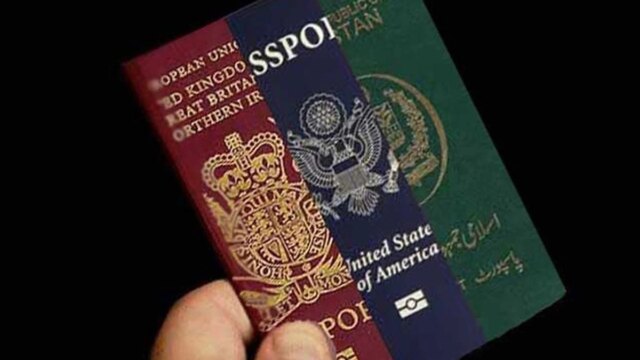
ISLAMABAD: Pakistan has introduced new travel guidelines for dual nationals, ARY News reported on Wednesday, citing well-placed sources.
As per details, all Pakistani citizens travelling on foreign passports must hold either a valid Pakistani visa or a valid National Identity Card for Overseas Pakistanis (NICOP) to enter the country, according to official sources.
The Interior ministry has informed immigration authorities of the revised procedures, which have now been implemented at airports across the country.
Under the new guidelines, Pakistani citizens will not be permitted to enter the country using an expired or cancelled NICOP, sources said.
The restrictions apply to travellers arriving from all countries, including the United Kingdom. Passengers travelling on foreign passports must present either a valid Pakistani visa or a valid NICOP upon arrival.
The new measures have been enforced at all international airports in Pakistan, according to the sources.
Earlier, Defence Minister Khawaja Asif called for the ending of dual citizenship of bureaucrats.
Speaking on ARY News’ program Khabar, Khawaja Asif stated that bureaucrats should be required to declare their assets annually, urging that their dual citizenship should be ended, along with halting the allocation of government plots to them.
Asif remarked, “While not all, at least 25 to 30 percent of the bureaucracy is corrupt. The government is spending around Rs 3.5 trillion annually on bureaucrats, and I would urge my government to introduce legislation targeting this issue.”
He clarified, “I did not name anyone specifically when discussing the bureaucracy. It’s often said that politicians are responsible for looting the country, but there is an institution in the government that holds us accountable. Has anyone ever held a bureaucrat accountable?”

The National Savings has officially announced the results of the 107th draw of the Rs 750 Prize Bond, bringing excitement for thousands of bondholders across Pakistan.
The computerized draw was held in Lahore in July 2026, and the winning bond numbers have now been revealed.
Bondholders can now check whether their bond numbers are among the lucky winners of this latest draw.
| Prize Category | Prize Amount | Winning Bond Number(s) |
|---|---|---|
| 1st Prize | Rs. 1,500,000 | 976106 |
| 2nd Prize (3 Winners) | Rs. 500,000 each | 350211, 604285, 607262 |
| 3rd Prize (1,696 Winners) | Rs. 9,300 each | Complete list to be released by National Savings |
The first prize of Rs. 1.5 million was awarded to the holder of prize bond number 976106.
Three lucky bondholders won the second prize of Rs. 500,000 each. The winning bond numbers are:
A total of 1,696 bondholders have won the third prize of Rs. 9,300 each. The complete list of third-prize winning bond numbers will be released separately by National Savings.
The cash prizes are subject to a government withholding tax of 15% for tax filers and 30% for non-filers.
For the Rs750 Prize Bond, the cash prizes are subject to withholding tax deductions based on the winner’s tax status. Tax filers face a 15% deduction, while non-filers are charged a 30% deduction.
A winner of the first prize of Rs. 1,500,000 will receive Rs. 1,275,000 after tax deduction as a filer, while a non-filer will receive Rs. 1,050,000 after the 30% tax deduction.
For the second prize of Rs. 500,000, a tax filer will receive Rs. 425,000, whereas a non-filer will get Rs. 350,000 after the applicable tax is deducted.
The third prize of Rs. 9,300 will be reduced to Rs. 7,905 for filers and Rs. 6,510 for non-filers after tax deductions.
After a fire broke out at the Oxy building in central Brussels on Tuesday morning, six bodies were found in an elevator.

Islamabad – Federal Minister for Health Mustafa Kamal met with the Chief Executive Officer of the ChildLife Foundation, according to a spokesperson for the Ministry of National Health Services. During the meeting, the ChildLife Foundation gave a briefing on its initiatives to improve children’s healthcare, emergency medical services, and access to quality treatment. The Minister praised the Foundation’s contributions, describing its role in providing timely and high-quality medical care for children as commendable.
Peshawar – Governor Khyber Pakhtunkhwa Faisal Karim Kundi on Tuesday urged the Saudi government to launch direct flights from Peshawar to Jeddah, Madinah and Riyadh and establish a Saudi consulate in the provincial capital to facilitate pilgrims, workers and other travellers.
He made these remarks while addressing the inauguration ceremony of the new Saudi Airlines (Saudia) office in Peshawar, which he jointly inaugurated with Saudi Ambassador to Pakistan Nawaf bin Saeed Ahmed Al-Malkiy. The ceremony was attended by Saudia Country Director, officials of the Saudi Embassy, travel agents and members of the business community.
Speaking on the occasion, Governor Kundi welcomed the Saudi ambassador to Peshawar and termed the opening of the new Saudia office a positive development for Khyber Pakhtunkhwa. He said the facility would provide improved travel services to people of the province, particularly Hajj and Umrah pilgrims and those travelling to Saudi Arabia for employment.
The Governor said a large number of people from Khyber Pakhtunkhwa travel to Saudi Arabia every year and stressed that direct flights from Peshawar to Jeddah, Madinah and Riyadh had become a pressing need. He also requested the Saudi Ambassador to facilitate the establishment of a Saudi consulate in Peshawar, saying it would significantly ease access to visa and consular services for the people of the province.
Governor Kundi said Pakistan and Saudi Arabia enjoyed historic and brotherly relations based on mutual trust and cooperation, adding that the Kingdom had always stood by Pakistan in difficult times. He also expressed confidence that enhanced business-to-business contacts would further strengthen economic cooperation between the two countries.
At the conclusion of the ceremony, Ambassador Al-Malkiy presented a commemorative shield to the Governor.
Earlier, the Saudi Ambassador visited the Governor House, where Governor Faisal Kundi received him warmly.
During their meeting, the two discussed the longstanding bilateral relations between Pakistan and Saudi Arabia and matters of mutual interest.
The Governor briefed the Ambassador on Khyber Pakhtunkhwa’s mineral, oil and gas resources, hydropower potential, and the historical significance of Peshawar as the cradle of the ancient Gandhara civilization.
Ambassador Al-Malkiy appreciated the hospitality extended to him at the Governor House and praised Governor Faisal Kundi’s efforts to project a positive image of Khyber Pakhtunkhwa. He said Saudi Arabia valued its enduring friendship with Pakistan and expressed confidence that bilateral ties would continue to grow stronger.
The Ambassador also recorded his remarks in the visitors’ book, while Governor Kundi presented him with a traditional handcrafted wooden souvenir from Dera Ismail Khan.
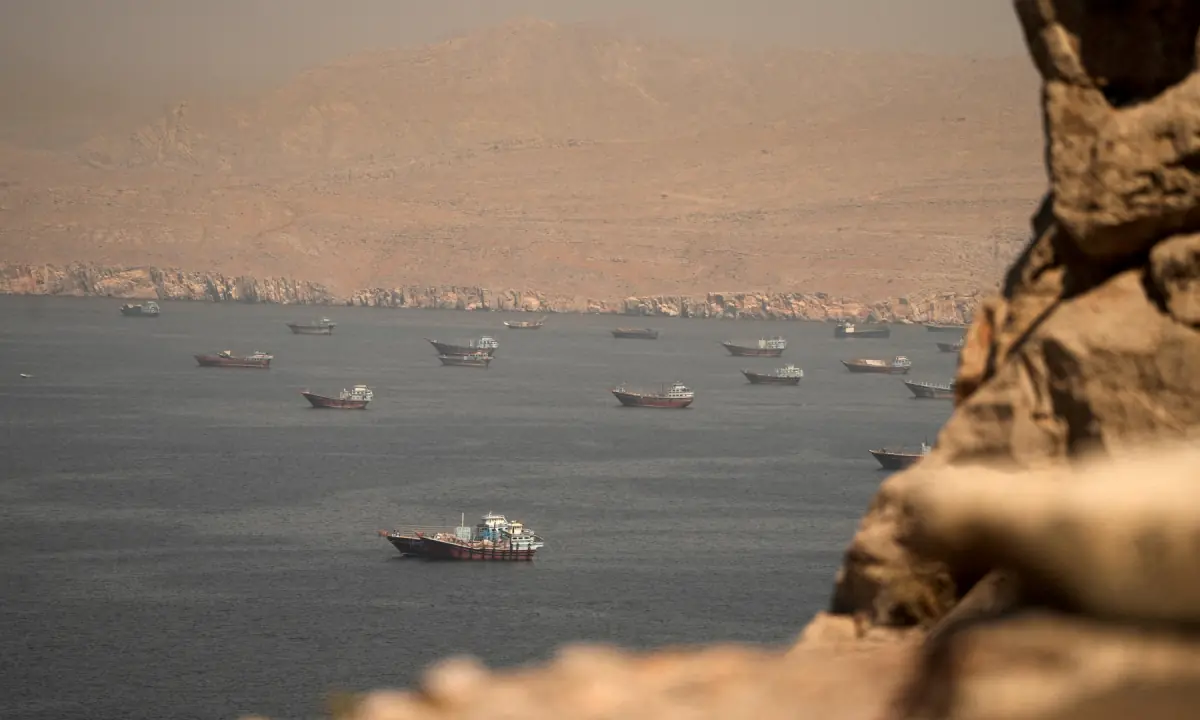
Iran’s Islamic Revolutionary Guard Corps (IRGC) has threatened to close “all other export corridors that benefit the US and its allies”, Iranian media reported on Wednesday, after Tehran shut the Strait of Hormuz and the US reimposed a naval blockade of Iranian ports.
The IRGC said the renewed US blockade had cut off oil and gas exports to the world, including “America’s economic rivals”, and warned that routes serving US and allied interests could also be shut, Iran’s state news agency, IRNA, reported on Wednesday.
“Regional energy exports are either shared by all or denied to all,” the IRGC said in its statement.
It also said that the Strait of Hormuz would remain closed until “the end of America’s evils”.
The vital Strait of Hormuz, which served as the passage for one-fifth of the world’s oil and gas supply daily during peacetime, is now at the centre of a flare-up in the US-Israeli war on Iran that has rattled the Middle East and pushed up global energy prices.
Analysts have said Iran has also been signalling it may use the Houthis in Yemen to shut the Bab-el-Mandeb gateway to the Red Sea, opening a new front against Washington and putting two of the world’s most vital energy arteries at risk.
The narrow gateway links the Red Sea to the Gulf of Aden, through which Saudi oil exports and a substantial share of global shipping pass.
The Houthis have already shown they can choke global commerce through the Bab-el-Mandeb. After Israel launched an assault on Gaza in October 2023, Houthis launched attacks on commercial shipping in the Red Sea, saying it was targeting vessels linked to Israel in support of Palestinians.
The latest threat to global shipping comes a day after the US military said it began a fresh round of strikes “to continue degrading Iranian capabilities used to attack commercial shipping in the Strait of Hormuz.”
The United States claimed Iran had attacked seven commercial ships over the last week, leading to nearly a dozen crew members being killed, missing or injured.
The US military said late on Tuesday that it hit dozens of military targets near the Strait of Hormuz and Iranian coastal areas. The wave of strikes lasted seven hours, the US Central Command said in a statement.
Iranian state media reported explosions near the port city of Bandar Abbas, on the island of Qeshm and on Bandar Imam Khomeini. According to state broadcaster IRIB, a wheat storage silo in Iran’s southwestern city of Hoveyzeh was also hit by US projectiles.
Meanwhile, IRNA said projectiles hit an area near Sirik in southern Iran.
None of the Iranian reports mentioned any casualties.
Soon after the strikes, sirens rang out in Bahrain, while Kuwait and Jordan reported intercepting drones and missiles fired from Iran.
IRNA reported that Iranian forces launched a drone attack on a military base in Jordan that hosts American warplanes, while the Guards had hit US facilities in Bahrain and Kuwait.
The Guards said they had also targeted command-and-control, logistics, fuel and military equipment facilities belonging to the US Fifth Fleet in Bahrain, in response to the latest US strikes in the Strait of Hormuz.
The IRGC further said it had set fire to and destroyed a US logistics facility in Kuwait’s Mina Abdullah and that its air force had struck a US base at Azraq in Jordan, targeting aircraft hangars. It alleged that some of the US attacks had been launched from bases on Jordanian territory.
Kuwait’s state news agency reported that a fire was brought under control at a site targeted in Iranian attacks. It was not immediately clear whether the fire was at the same site referred to in the IRGC statement.
The hostilities between Iran and the US reignited last week, fraying an already fragile truce reached in June after several months of fighting that has killed thousands. Since last week, renewed US attacks have killed at least 28 people in Iran, according to an AFP tally based on Iranian media and official announcements.
Trump has warned he would widen the strikes on Iran next week to hit power plants and bridges if Tehran does not return to the negotiating table. “Next week it gets really bad for them,” he told Fox News on Tuesday night.
The latest strikes came hours after US President Donald Trump backed down on his planned 20 per cent levy on ships using the Strait Hormuz.
Tehran insists it controls the key oil shipping corridor, which was open to free navigation before the US-Israeli attacks in late February sparked the ongoing conflict. Tehran has recently also targeted ships in the strait for taking routes it says are unauthorised.
Iranian Deputy Foreign Minister Kazem Gharibabadi said the US decision to restore the blockade “has, in a way, dismantled the Islamabad memorandum”, referring to the interim deal reached last month to halt hostilities and pursue peace talks.
LAHORE – A delegation of probationary Assistant Superintendents of Police (ASPs) of the 52nd Common Training Programme (CTP) called on Punjab Inspector General of Police (IGP) Abdul Kareem at the Central Police Office (CPO) on Tuesday. The delegation comprised 14 probationary ASPs, including two female officers, belonging to Punjab, Khyber Pakhtunkhwa, Balochistan and Sindh. Speaking on the occasion, the IGP said the Punjab government, under Chief Minister Maryam Nawaz Sharif’s “Safe Punjab Vision”, had provided extensive resources to equip the Punjab Police with IT-based applications, modern community policing tools and advanced technologies. He said a zero-tolerance policy was being strictly implemented against incidents of violence, sexual assault and harassment involving women and children, adding that the entire province had been brought under an Artificial Intelligence (AI)-enabled Safe City system extending to the tehsil level. Abdul Kareem emphasised that on-ground policing, keen observation, timely decision-making and practical field experience were essential for probationary officers throughout their professional careers. He directed the officers to resolve public issues on a priority basis within the ambit of the law and promote people-friendly policing to improve public service delivery. The IGP also advised the probationary ASPs to acquire comprehensive knowledge of the modern infrastructure, surveillance systems and virtual technologies being used by the Punjab Safe Cities Authority. He said field training in district police and other specialised branches would play a key role in their professional development, adding that officers should focus on community policing, effective public engagement and the welfare of subordinate police personnel. During the meeting, the IGP sought feedback from the officers regarding their training experiences and responded to their queries. According to a Punjab Police spokesperson, the probationary ASPs had been posted in various districts of Punjab for six months of field training. They were also briefed on police operations, investigation, the Crime Control Department (CCD), traffic management, public service delivery and crime prevention. Additional Inspector General (Training) Asim Gulzar, Additional Inspector General (IAB) Imran Mehmood, Additional Inspector General (Operations) Punjab Muhammad Ali Nekokara, DIG Establishment-II Suleman Sultan Rana, DIG Headquarters Dr Muhammad Abid and other senior police officers were also present.