Bills

Home Bills Page 187

Punjab issues advisory to protect crops during monsoon rains

0


MULTAN  –   The Punjab Agriculture Department has issued an advisory, urging farmers to take precautionary measures to protect their crops from the adverse effects of the monsoon rains. Experts warned that excessive monsoon rains can damage cotton and vegetables crops, adding that cotton plants may begin to die if water remained stagnant for more than 48 hours. They, however, added that sugarcane, rice and fodder crops can tolerate excess water, and rainwater may be diverted from cotton, vegetables or other crops fields to these fields without causing significant damage. Cotton and vegetable crops are highly sensitive to waterlogging that makes immediate drainage of excess rainwater essential, agriculture spokesman said in a statement on Thursday. He said that crops grown on raised beds are comparatively safer from the harmful effects of heavy rainfall. He advised that farmers can divert surplus rain water from cotton or vegetables field to adjacent sugarcane, fodder or rice fields. If no such fields are available, farmers should dig drainage channels or trenches to remove excess water. After rainfall, if required, farmers may apply plant growth regulators to cotton crops, but only after consulting local agricultural experts of the agriculture extension department. Officials also urged farmers to regularly monitor weather forecasts broadcast on radio and television so that irrigation schedules could be planned accordingly. It further noted that the monsoon season promotes the rapid growth of weeds, which compete with crops for nutrients and also provide shelter to harmful insect pests. In addition, the prevailing humid weather increases the risk of attacks by sap-sucking insects. Keeping in view the situation, farmers should remain vigilant and seek guidance from the local staff of the extension or pest warning wings of the agriculture department for effective pest management.

As Mourners for Khamenei Descend on Tehran, Many Residents Take Flight

0


Some residents have escaped the city and posted photos of their getaways on social media — a reminder that not all Iranians are mourning the death of Ayatollah Khamenei.

Ukraine Rewrote Air Defense Tactics. Against Russia, It’s Still Not Enough.

0


Ukraine has changed how militaries use Patriot systems. But recent attacks prove that clever adaptations cannot overcome a shortage of interceptors.

China Test Fires Long-Range Ballistic Missile in the Pacific

0


China’s firing of a submarine-launched missile came as Australia secured more defense deals with Pacific Island nations. Countries expressed concern about the test.

The Chinese Company That Could Start a Trade War With Europe

0


Nuctech’s rise from a Chinese state-backed start-up to a global border-security supplier has made it a lightning rod in trade and subsidy disputes.

What is Article 27 of FIFA’s Disciplinary Code

0


  • Article 27 allows FIFA to suspend the implementation of a ​disciplinary sanction.

  • The sanction itself remains in force but does not have ​to be served immediately unless the suspension is later ⁠revoked.

  • The article allows FIFA’s judicial bodies to suspend the implementation of all ​or part of a disciplinary sanction.

  • However, the code does not mention the ​circumstances in which a judicial body may decide to suspend a sanction.

  • FIFA’s judicial bodies include the Disciplinary Committee and the Appeal Committee.

  • The sanctioned player is then placed ​on a probationary period of between one and four years.

  • If the ​player commits another infringement of a similar nature during the probationary period, the suspended ‌sanction ⁠is automatically reactivated in addition to any new disciplinary sanction.

  • Balogun’s match ban was suspended for a probationary period of one year.

  • The only disciplinary measures that cannot be suspended are those related to match manipulation.

  • The Disciplinary Committee ​is composed of ​a chairperson, a ⁠deputy chairperson and additional members. The chairperson and deputy chairperson must be qualified lawyers.

  • The Committee takes its ​decisions in the presence of at least three members.

  • Mohammad ​Al Kamali ⁠of the United Arab Emirates is currently the chairperson of the Disciplinary Committee.

  • Committee members are elected by the FIFA Congress for terms lasting four ⁠years and ​for a maximum of three terms.

  • Article 27 ​was previously Article 26 when the Disciplinary Code was updated in 2019. It became Article ​27 in 2023.

  • Andy Burnham, the UK’s Likely Next Prime Minister, Made His Name in Manchester. Here’s How.

    0


    Andy Burnham was mayor of Greater Manchester for nine years. His time there came to define his identity — and his pitch to lead Britain.

    How Manchester’s Bee Buses and Trams Helped Fuel Andy Burnham’s Rise

    0


    Andy Burnham brought Greater Manchester’s public transit back under public control, making buses more frequent and capping fares.

    Deadly Russian Strikes Rock Kyiv on Eve of NATO Summit

    0


    Ballistic missiles were fired into the capital of Ukraine, as Russia launched its second major attack in less than a week. At least seven people were killed, officials said.

    Ogra notifies 15pc increase in Regasified Liquefied Natural Gas price for June

    0


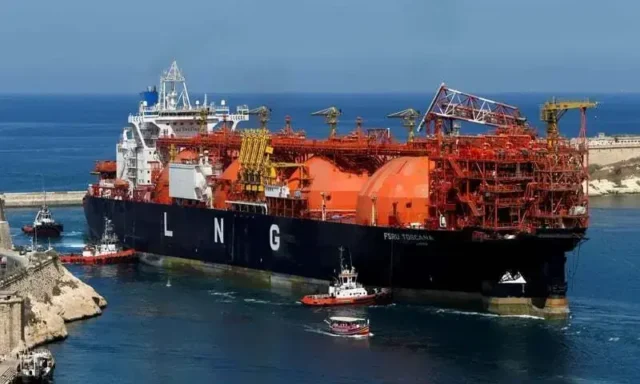
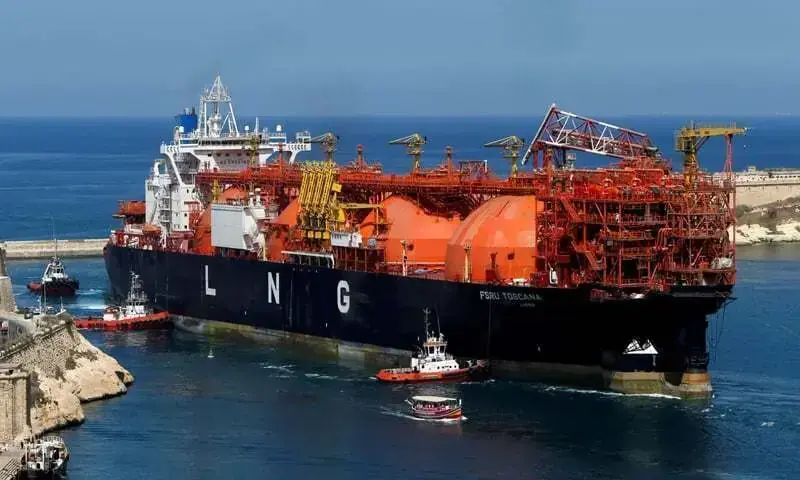
    ISLAMABAD: The Oil and Gas Regulatory Authority (Ogra) has notified an around 15pc increase in the price of Regasified Liquefied Natural Gas (RLNG) for sales at the distribution stage by the two Sui gas companies for the current month, mainly because of purchases from the international spot market at short notice amid supply disruptions caused by the US-Iran war.

    The latest price notification places the RLNG price for June 15pc higher than in May, almost 56pc higher than in March, and 73pc higher than in February. This has mainly resulted in a substantial increase in fuel costs for power generation, which is evident from the fact that the fuel cost for RLNG-based power generation in May worked out to Rs31 per unit, compared with Rs13.72 per unit in April.

    Karachi-based Sui Southern Gas Company Limited (SSGCL) serves consumers in Sindh and Balochistan, and its distribution-stage system losses stand at 12.55pc, compared with about 10.6pc a couple of months earlier. On the other hand, Lahore-based Sui Northern Gas Pipelines Limited (SNGPL) supplies gas to consumers in Punjab and Khyber Pakh­tunkhwa, and its distribution-stage system losses were also reported at almost 9pc, up from 7.47pc in October.

    At the transmission stage, according to the notification, the RLNG sale price for SNGPL increased by 14.85pc to $17.94 per million British thermal units (mmBtu) in June from $15.62 per mmBtu in May. The company’s transmission-stage price had stood at $10.45 per mmBtu in February.

    Inherently expensive cost additions in supply chain, unfavourable spot purchases continue to make RLNG even more expensive for end-users

    At the distribution stage, the sale price for SNGPL was, therefore, increased by 14.94pc to $19.5228 per mmBtu in June from $16.9847 per mmBtu in May.

    Similarly, the RLNG sale price for SSGCL at the transmission stage increased by 16pc to $16.368 per mmBtu in June from $14.093 per mmBtu in May. It had stood at $9.47 per mmBtu in December 2025. The sale price at the distribution stage for SSGCL also increased by 16.17pc to $18.64 per mmBtu in June from $16.042 per mmBtu in May. It had stood at $10.77 per mmBtu in December.

    Besides the unfavourable spot purchases, the inherently expensive cost additions in the supply chain continue to make the end-user RLNG price even more expensive. This is evident from the fact that the RLNG distribution prices of $18.64 for SSGCL and $19.5228 for SNGPL are almost $3.3 and $4.2, respectively, higher than the average delivered ex-ship price, because both LNG importers — Pakistan State Oil and Pakistan LNG Limited — as well as the port authorities charge profit margins on account of retainage and other margins at the rate of 3.77pc of the DES price, in addition to distribution losses of 8.97pc for SNGPL and 12.55pc for SSGCL.

    The basket RLNG price was based on a total of four cargoes each in June, May and April. Three of these cargoes were imported under two LNG contracts between PSO and QatarGas at an average price of about $13.144 per mmBtu in June, compared with $9.2 per mmBtu in May. In both June and May, the state-run PLL imported one cargo each at $19.134 per mmBtu and $18.4 per mmBtu, respectively.

    PSO has a long-term contract for up to 11 cargoes per month, but part of these supplies is usually diverted to the spot market owing to the country’s economic constraints, resulting in lower domestic energy consumption. However, even the usual seven to eight monthly cargoes could not be supplied because of Qat­ar’s inability to transport cargoes due to the closure of the Strait of Hormuz and the suspension of gas operations at the field.

    As a result, PLL, a special-purpose company created for LNG imports that had remained dormant for almost two and a half years, was reactivated by the government to procure LNG from the spot market as electricity shortages re-emerged. It has been importing, on average, one LNG cargo per month on short notice of 48 to 72 hours.

    Ogra said that of PLL’s cargo of 3.2 million mmBtu, two-thirds (2.4m mmBtu) would be supplied to K-Electric, while the remaining one-third (0.8m mmBtu) would be supplied to SNGPL.

    Published in Dawn, July 6th, 2026

    Popular Posts

    My Favorites

    Zelensky Steps Up Threats Against Belarus for Aiding Drone Attacks

    0
    Ukrainian officials say their northern neighbor is allowing its radio relay stations to be used to guide Russian attack drones more precisely.