









Chris Pappas Defeats Progressive Challenger in New Hampshire Senate Primary
Mr. Pappas, a moderate Democrat who has served four terms in the House, will face former Senator John E. Sununu, the Republican nominee, in November.
Mr. Pappas, a moderate Democrat who has served four terms in the House, will face former Senator John E. Sununu, the Republican nominee, in November.

BAHAWALNGAR – Bahawalnagar District Police arrested 1121 suspects during an ongoing campaign against criminals. According to the police spokesperson, Bahawalnagar Police under the leadership of District Police Officer Bahawalnagar Muhammad Imran, launched crackdown on criminals, traced and arrested 1121 suspects involved in various cases. The district police traced 07 dangerous gangs and arrested 13 suspects and recovered stolen property worth more than Rs 21.3 million from their possession and handed it over to the original owners.
In Crack down on illegal weapons, 43 suspects were arrested and 43 weapons were recovered from their possession.
Taking action against drug peddlers, 144 suspects were arrested and more than 37 kg of hashish, more than 01 kg of heroin, 4 kg 640 grams of ice, 2384 liters of alcohol and 121 liters of raw alcohol were seized from their possession.
In a crackdown on declared criminals, 80 category A and 340 category B declared criminals and 199 court fugitives were arrested. The district police is busy day and night to eliminate crimes. The public should also report criminal elements to 15 or the nearest police station, requested the district police officer.
China’s economic competition with the United States makes Chinese companies a legitimate target, the agency’s deputy director, Michael Ellis, said at a conference.

Islamabad: The Minister for Federal Education and Professional Training held a meeting with H.E. David Pine, Non-Resident High Commissioner of New Zealand to Pakistan, to discuss ways to further strengthen bilateral cooperation in education and skills development.
The Minister welcomed the Education Cooperation Arrangement signed on 6 August 2026 in Wellington, noting that the Arrangement provides a comprehensive framework for practical collaboration in school education, technical and vocational education and training (TVET), and higher education.
The meeting particularly focused on skills development, industry-responsive TVET, and strengthening institutional linkages between Pakistan and New Zealand. The two sides also discussed potential areas of cooperation in emerging and high-growth sectors, including information technology, services, and agriculture.
The Minister underscored the importance of translating the Education Cooperation Arrangement into concrete and sustainable initiatives that deliver meaningful benefits for Pakistani students, educational institutions, and the workforce. He emphasised the need for continued engagement and collaboration to identify priority areas and develop practical programmes that contribute to human capital development and economic growth.
H.E. David Pine reaffirmed New Zealand’s commitment to advancing mutually beneficial cooperation with Pakistan in the fields of education and skills development. Both sides expressed their resolve to maintain close engagement and pursue practical initiatives under the framework of the Education Cooperation Arrangement.
Britain, Canada and France on Tuesday announced sanctions on Israeli settlements in the West Bank, with Britain saying Israel had “turned a blind eye” to violence against Palestinians.

At a pivotal point in his professional career, Karim Benzema has posted a brief, lovely message from Makkah, a place attracting masses for spiritual reasons.
“Alhamdulillah for everything…” was captioned beside a photo of the former Real Madrid striker performing Umrah at Makkah’s Grand Mosque while donning ihram.
The former Real Madrid striker shared a picture of himself performing Umrah at the Grand Mosque in Makkah, wearing ihram, alongside the words “Alhamdulillah for everything…”
“Alhamdulillah for everything…” was written beside a photo of the former Real Madrid striker performing Umrah at Makkah’s Grand Mosque while donning ihram, which, in fact, Benzema has only recently used this phrase.
“Alhamdulillah for everything,” was how the Frenchman concluded his parting letter to the Saudi club after his departure from Al Hilal was confirmed earlier on August 31.
After only about six months with the Saudi team, the 38-year-old’s contract was amicably terminated by Al Hilal and Karim Benzema, leaving him without a club for the moment.
It was a short yet fruitful period. Benzema won the King’s Cup and made 16 appearances in all competitions, scoring 10 goals and dishing out 5 assists.
A sentimental return to Lyon, where he started his professional career, was also associated with Benzema. Although Benzema’s contractual status prevented the trade from moving forward, Lyon sporting director Matthieu Louis-Jean acknowledged that there was communication this summer through an intermediary.
In addition to that, Benzema has even received an invitation to visit Dubai.
The former Ballon d’Or winner was one of several well-known free agents asked by the Arabian Falcons of the UAE Second Division to train and play for the team without making a long-term commitment.
“Don’t sit on the sidelines; come and show what you’ve got over in Dubai,” said their boss, Jonjo Shelvey, a former midfielder for Newcastle and Liverpool.
The plan is for players to practice, gain competitive minutes, and then depart when the appropriate time comes. Benzema was listed on the invitation alongside players like Jadon Sancho, Paul Pogba, and Raheem Sterling.
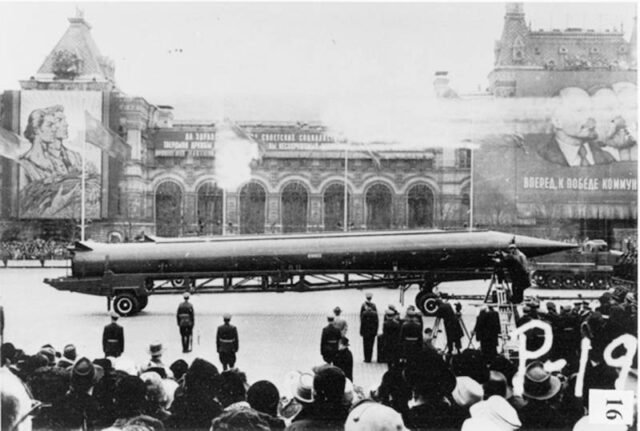

The Cuban Missile Crisis was a tense standoff between the United States and Soviet Union during the Cold War.

A few days ago, a junior associate on my legal team walked into my office brimming with excitement. He told me he had used one of the popular AI platforms to generate a perfectly formatted and legally sound draft of a Memorandum of Understanding (MOU).
I took a quick look at the MOU and noted that the AI platform had, for the most part, faithfully replicated our law firm’s style, from the letterhead and font to the formatting, alignment, and overall presentation of the document.
As much as I wanted to share his excitement, the millennial lawyer in me, trained by meticulous Baby Boomers and Gen X lawyers, couldn’t resist asking two questions.
“Do you think you could have drafted the MOU on your own?”
“If you rely on AI to do the drafting, how will you develop your drafting skills?”
Having successfully plunged my young colleague into an existential crisis (as all supervising lawyers should), I turned to the MOU. It required very few changes. AI had done the heavy lifting, saving us valuable time while leaving the questions I had posed unanswered.
I am old enough to be aware of a time before computers, before online legal databases, when lawyers dictated complex legal documents to stenographers typing away on manual typewriters. Every page had to be meticulously read and re-read, and every mistake corrected by hand before the draft could be sent to the client.
By today’s standards, the process sounds painfully slow and undeniably inefficient. Yet it demanded a remarkable level of discipline. It produced lawyers who possessed an extraordinary command of the law, exceptional drafting skills, and enviable vocabularies. They understood the significance of every word, every comma, and every semicolon they dictated. Precision was not merely desirable, it was essential, because correcting mistakes was laborious, time-consuming, and often impractical.
I joined the profession at a time when the typewriter was already a relic of the past. Yet I spent countless hours having my work reviewed by senior lawyers who would comb through my drafts, cutting and stitching sentences like surgeons, relentlessly questioning the legal basis of every proposition, challenging every assumption, and pushing me to think harder, research deeper, draft better, and develop the judgment that perhaps no template or technology can ever replace.
And perhaps this is where the real challenge lies. The concern is not that AI will replace lawyers; it is that overreliance on AI may stunt the development of the very skills that define a good lawyer.
This is why the legal profession must approach AI adoption thoughtfully.
Legal judgment, especially creativity in legal judgment, is forged through the process of grappling with ambiguity, questioning assumptions, making mistakes, defending positions, and learning from rigorous feedback. If AI increasingly performs the thinking before a young lawyer has learned how to think through a problem independently, there is a risk that efficiency will come at the expense of professional growth.
There is also the fundamental question of accuracy. An inexperienced lawyer may not have the ability to assess whether the output generated through an AI prompt is correct, complete, or legally sound. AI-generated responses often require careful scrutiny, challenge, and testing. It is not uncommon for an AI system, when its assumptions are questioned or its analysis is tested, to refine its response or arrive at an entirely different conclusion.
That process of interrogation requires something AI itself cannot provide: experience, legal knowledge, and professional judgment.
We have all encountered the sometimes-absurd results produced by AI hallucinations. Unsurprisingly, even leading organisations around the world have fallen victim to fabricated citations, inaccurate data, or non-existent references generated by AI systems. The lesson is not that AI lacks value, but that its output must always remain subject to informed human scrutiny.
It is precisely for these reasons that some law schools are beginning to rethink how students engage with technology. For example, as per reports, the University of Chicago Law School has prohibited the use of laptops and other electronic devices in many first-year classes, encouraging students to engage directly with the text, their notes, and the discussion rather than relying on technology. The objective is not to reject innovation, but to ensure that students first develop the habits of careful reading, critical analysis, and independent reasoning before technology becomes an aid rather than a crutch. Other law schools are embracing AI and teaching it as a necessary skill.
The ideal approach, in my view, lies somewhere in the middle.
The ability to read, understand, interpret, apply, and, where appropriate, challenge complex legal texts has always distinguished exceptional lawyers. Those abilities, in my view, cannot be downloaded, automated, or generated at the click of a button. They are developed through years of disciplined study, rigorous drafting, thoughtful supervision, and the humility to learn from mistakes.
After all, clients do not ultimately pay lawyers for perfectly formatted documents. They seek a trusted adviser who can understand complexity, challenge assumptions, and develop creative solutions where the law provides no clear answer. AI may transform how lawyers work, but those qualities remain at the heart of the profession and, may I submit, remain uniquely human.
As for my young colleague, he must learn that lawyering was, is, and will always remain a craft. And, like every true craftsman, the quality of your craft will only ever be measured by the dedication, discipline, and care you bring to perfecting it.
Fareed Yaldram
The writer is a Barrister-at-Law and Head of the Corporate / M&A Practice at Feras Al Shawaf Law Firm in Riyadh, Saudi Arabia.

For decades, Indian cinema has entertained audiences at home and abroad while helping construct national identity and project India’s culture. Historically, its appeal has rested on a breadth of genres, stories and creative voices capable of reaching audiences across cultural boundaries. Yet the rise of the Bharatiya Janata Party-led government has coincided with an expanding genre of nationalist films and over-the-top (OTT) productions. National security, cross-border terrorism and military honour have become recurring themes. When identity politics dominates entertainment, artistic expression and social commentary risk becoming secondary to narratives that amplify nationalism and reinterpret conflicts.
Cinema reflects political and social realities, but contemporary Indian productions increasingly adopt nationalist discourse. Films such as Bard of Blood (2019), Uri: The Surgical Strike (2019), The Kashmir Files (2022), Fighter (2024), Ranneeti: Balakot & Beyond (2024) and Dhurandhar (2025) share a pattern in which Pakistan, and particularly Muslims, are frequently represented as sources of instability or hostility. Right-wing media further reinforces these portrayals through television discussions. This process can turn entertainment into a vehicle for political messaging without necessarily appearing overtly political. Such framing places bilateral conflicts and internal threats within an ideological construction of national identity.
The commercial success of Uri: The Surgical Strike, released before India’s 2019 general elections, illustrates this trend. Its depiction of Indian military retaliation transformed a security operation into a narrative of nationalist pride, simplifying geopolitical fault lines into a binary between national heroes and external enemies. The Kashmir Files similarly resonated with the BJP’s political manifesto by focusing on the plight of Kashmiri Pandits and their return to IIOJ&K. Fighter, released in 2024, continued the emphasis on aerial warfare, military operations and patriotic sacrifice. In such productions, the state’s narrative becomes central to commercial storytelling, often at the expense of alternative perspectives.
India’s OTT expansion, driven by affordable mobile data and widespread internet access, initially raised hopes for greater narrative diversity. Although streaming platforms offer varied content, many prominent series have gravitated towards terrorism, espionage, intelligence operations and national security. Bard of Blood, Special Ops, Avrodh, State of Siege and IC 814: The Kandahar Hijack exemplify security-centred storytelling. While many draw upon real incidents, their framing, coupled with India’s populist political environment, can reinforce perceptions of Pakistan as a persistent source of threats.
These portrayals carry implications beyond entertainment. Media scholars have long argued that framing influences how audiences perceive and interpret political realities. Directors use shot selection, characterisation and cinematography to shape emotional responses and establish connections with their stories. Repeated associations between a country and violence can become embedded in public consciousness. Research on contemporary Indian cinema suggests that representations of social actors and events can reinforce nationalist sentiment, narrowing the space for alternative viewpoints. The concern is not that cinema addresses security threats, but that repeated, one-dimensional portrayals may discourage critical engagement with complex conflicts.
India is not unique in employing cinema as an instrument of soft power and political communication. Hollywood served as a tool of influence during the Cold War, and other countries continue to use popular culture to advance strategic narratives. What distinguishes the contemporary Indian entertainment ecosystem is the convergence of electoral politics, digital media expansion and nationalist discourse. Military victories, historical grievances and security threats have gained prominence during the Modi era. While states legitimately confront internal and external threats, problems arise when geopolitical conflicts are reduced to ideological binaries that privilege emotional mobilisation over critical reflection.
As Indian cinema and OTT platforms expand their domestic and global reach, they will continue shaping perceptions of South Asia. The challenge for filmmakers is not whether they may address national security or historical grievances, but whether they can do so while maintaining balance, artistic independence and historical responsibility. An approach allowing disagreement, ambiguity and competing experiences would better serve artistic creativity and the public’s understanding of a region marked by complicated histories. Cinema is most valuable when it encourages audiences to deliberate, question and reflect rather than merely affirm predetermined narratives. Its entertainment value should emerge from the complexity of social reality and the inclusion of multiple perspectives. In an age when screens shape political awareness as powerfully as newspapers, the line between constructive storytelling and statecraft has never been thinner.
Zaid Bin Inam
The writer is an academician and faculty member at NUML.
Secretary of State Marco Rubio — who is visiting Colombia, Ecuador and Peru this week — says he will talk to leaders about targeting drug-trafficking “terrorists,” and trade deals.