









5 Things to Know About Mike Mazzei, Oklahoma G.O.P. Candidate for Governor
The former state senator, who was endorsed by President Trump, spent millions of dollars of his own money on the race.
The former state senator, who was endorsed by President Trump, spent millions of dollars of his own money on the race.
Detailed accounts of the final hours of the negotiations show that, while the United States offered Canada what it said was the best deal of any country, what Canada had to give up in exchange was seen as unthinkable.

WASHINGTON: A pilot’s plane, en route to the Bahamas, made an emergency landing in the ocean close to a beach in Florida on Saturday; luckily, the pilot is safe.
Mobile footage has demonstrated the little aircraft’s crash-landing in Boca Raton, Florida, on August 22
“What the?” as he strolled along the shore, the man filming stated, adding, “Oh, that’s unexpected.”
The pilot revealed to CNN that she felt safer landing in the water in spite of trying to avoid buildings close to the coast,
“I don’t think that’s a plane that’s made to land on the water,” as the plane touched down in the ocean, the observer remarked, continuing, “That was wild.”
The pilot’s family owned the aircraft, and she began having engine problems while traveling to pick up her parents.
A dramatic scene unfolded off the coast of Boca Raton, Florida, when 23-year-old pilot Faith Tenkley was forced to make an emergency landing in the Atlantic Ocean on August 22.
Tenkley had departed from Page Field in Fort Myers and was flying alone toward Bimini in the Bahamas… pic.twitter.com/7QDGB2etys
— Mighty News (@Mighty__News) August 25, 2026
Rescuers managed to free the pilot before the jet began to sink after it had landed in the ocean.
The situation was handled by Boca Raton Fire Rescue and Boca Raton Police immediately after the incident occurred.
Boca Raton Fire Rescue, regarding the matter, commented that the woman was brought to the hospital as a precaution even though she was unharmed. On Sunday morning, August 23, the aircraft was taken out of the water.

The personalized cancer vaccine being developed by Moderna and Merck has boosted hopes that mRNA technology could open up a new avenue of treatment, but the available evidence is still limited.
Interim data from a large trial showed the experimental vaccine, when combined with Merck’s blockbuster immunotherapy Keytruda, helped reduce the risk of melanoma recurrence and spread in patients whose tumors have been surgically removed.
Here’s what to know about the treatment:
HOW DOES THE VACCINE WORK?
Known as intismeran autogene, the vaccine is designed to target mutations unique to an individual patient’s tumor.
Once surgeons remove a tumor or cancerous lesion, the companies sequence it, looking for unique cancer mutations. The companies use those to create a customized vaccine that targets up to 34 mutations unique to that specific patient’s cancer.
With up to nine doses of Keytruda, infused every six weeks, plus up to nine doses of the customized mRNA vaccine, the treatment trains the immune system to recognize and attack cancer cells.
WHAT ELSE IS IT BEING TESTED FOR?
Experts believe the treatment may work best in highly mutated cancers such as melanoma, where abundant tumor-specific mutations provide more targets for the vaccine to attack.
Cancers with high mutation rates, such as lung and colon cancer, could be promising targets because they may be more readily recognized by the immune system, Dr. Michael Atkins, deputy director of the Georgetown Lombardi Comprehensive Cancer Center, said.
It is not clear that the vaccine technology will work against other cancers, he added.
Merck and Moderna have several large trials, underway in patients with non-small cell lung cancer whose tumors have been surgically removed.
Moderna is also studying the intismeran/Keytruda combination in mid-stage trials of patients with bladder and kidney cancers as well as in early-stage trials in pancreatic and stomach cancers. Data readouts from numerous trials are expected in the next year or two, according to the company.
WHAT ARE THE MANUFACTURING HURDLES?
Each patient’s vaccine must be designed and manufactured from their own tumor data, making production far more complex than for traditional vaccines produced in large batches.
The tumor samples need to be tracked through sequencing, vaccine design, manufacturing and through delivery to make sure the correct vaccine goes to the right patient, said Dr. Ryan Sullivan, director of the Center for Melanoma at Mass General Brigham Cancer Institute.
That process needs to be scaled up by 10 to 100 times over once it is a commercial product, he said.
Moderna President Stephen Hoge said in an interview that the company can scale production to meet demand over the next few years.
WAITING FOR MORE DATA
The interim results of the ongoing study released on August 19 found the combination of Keytruda and intismeran met both its primary goal of reducing cancer recurrence and its secondary goal of preventing tumors from spreading to other parts of the body, compared with Keytruda alone.
However, the extent of the benefit remains unclear pending release of detailed results. Overall survival data, which will inform whether the combination treatment allows patients to live longer, were also not yet available.
Five-year data from a previous mid-stage trial presented earlier this year showed the vaccine cut the risk of cancer relapse in half, and reduced the risk that it would spread to new locations by 59% compared with Keytruda alone.
Extreme heat waves this summer have set off an early grape harvest in Champagne and elsewhere in France.
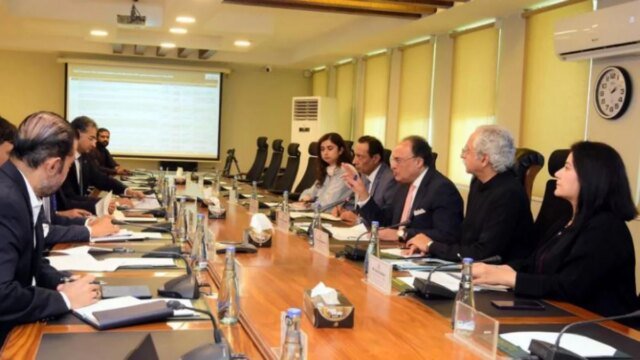
Federal Minister for Finance and Revenue, Senator Muhammad Aurangzeb, chaired the fortnightly meeting of the Access to Finance Steering Committee to review progress on initiatives to expand affordable and inclusive finance across housing, agriculture, SMEs, exports, information technology, renewable energy, and other priority sectors.
The committee noted significant progress across select Access to Finance initiatives since the close of FY26, alongside important legal, regulatory and institutional reforms strengthening the overall financing ecosystem.
The finance minister said the objective is to channel greater financial-sector capacity towards productive investment, enterprise creation, home ownership, agricultural productivity and exports, translating macroeconomic stability into stronger, private sector-led and inclusive growth.
The committee noted that total housing finance increased from around Rs.294 billion at the end of June to Rs.307 billion by mid-August.
Progress under the Wazir-e-Azam Apna Ghar Program – Ghar Ho To Apna accelerated significantly.
Since June, applications increased 52 percent to nearly 139,000, approvals rose 84 percent to over 46,000, approved financing nearly doubled from Rs144 billion to Rs279 billion, while loans disbursed increased 59 percent to over 7,600, amounting to more than Rs38 billion.
This momentum is being supported by a strengthened legal and regulatory framework to further propel mortgage-based lending. Reform initiatives include the State Bank of Pakistan’s revised Prudential Regulations for Housing Finance, including a 90:10 loan-to-value ratio, 65 percent debt-burden ratio, informal-income assessment models, simplified property valuation and documentation, digital processes and longer financing tenors.
The committee particularly highlighted the passage of the Financial Institutions (Recovery of Finances) (Amendment) Act, 2026 (FIRA) as a major structural reform strengthening the legal framework for recovery and enforcement of mortgage-based lending.
A stronger and more predictable recovery framework is expected to improve lender confidence, support greater availability of housing finance and help deepen Pakistan’s mortgage market.
The committee noted that as financing constraints are progressively addressed and demand for housing finance increases, the housing and construction industry must also step up on the supply side by bringing forward more quality and affordable housing units to meet growing demand.
This can create a broader multiplier across construction, cement and building materials, allied industries, SMEs, employment and overall economic activity.
Agriculture borrowers increased from around 3.26 million at end-June to 3.37 million by mid-August, adding approximately 115,000 borrowers, while agriculture financing remained around Rs1.26 trillion.
Under Zarkhez-e – Asaan Zarai Qarza, more than 58,000 farmers have registered. The scheme is designed to provide uncollateralised financing to smallholder farmers, including tenant farmers, primarily for agricultural inputs. Since June, bank approvals increased around 12 percent to nearly 16,700, approved financing limits reached over Rs7.2 billion, while loans disbursed increased around 13 percent to nearly 5,000.
The Committee stressed faster conversion of applications and approvals into financing to support agricultural productivity, rural incomes and financial inclusion.
On SMEs, formal financing stood at around Rs1.05 trillion, covering approximately 330,000 businesses.
The committee reviewed the ongoing credit-scoring pilot across 13 banks, aimed at improving credit assessment through proxy and alternative methods to assess cash flows and widening access beyond traditional collateral-based lending.
The medium-term ambition is to expand both agriculture and SME financing to Rs1.5 trillion by June 2027 and Rs2 trillion by June 2028, alongside substantial growth in their respective borrower bases.
The committee placed particular emphasis on connecting Access to Finance with the Government’s export-led growth agenda, reviewing enhanced financing and refinancing support for exporters and SMEs, including access to working capital and long-term investment finance.
It also welcomed the Performance Based Rebate on Incremental Exports (PRIE), effective July 1, 2026, under which exporters achieving growth of up to 10 percent are eligible for a 1 percent rebate on incremental exports, while growth above 10 percent attracts a 2 percent rebate. Particular emphasis is being placed on enabling export-oriented SMEs to access financing through banks under facilities administered by the Export-Import Bank of Pakistan (EXIM Bank).
The Finance Minister emphasized that SME finance, export refinancing, long-term investment finance and performance-based incentives must work together to enable businesses to invest, increase productive capacity, improve competitiveness and generate additional exports and foreign-exchange earnings.
Progress was also reviewed under the Pakistan Accelerated Vehicle Electrification (PAVE) Programme. By mid-August, more than 83,000 applications had been received, around 15,800 approved and nearly 4,000 loans disbursed. Since June, approvals increased by around 24 percent, disbursements by 34 percent, while electric vehicles delivered more than tripled from 471 to over 1,500.
The committee also reviewed the Prime Minister’s online digital housing portal and emphasized stronger integration among relevant institutions to simplify access to financing.
The Finance Minister emphasized that Access to Finance should increasingly operate as an integrated economic-enablement framework — combining legal and regulatory reforms, digitalisation, better credit assessment, targeted financing, risk-sharing, refinancing and performance-based incentives.
He directed regular bank-wise weekly and month-on-month monitoring of financing, borrower growth, approvals and disbursements, with implementation bottlenecks brought before the Steering Committee with clear recommendations for timely resolution.
He also called for wider public awareness through frequent communication so that farmers, SMEs, exporters, prospective homeowners and entrepreneurs are fully aware of available financing opportunities.
This, he noted, would also help generate greater momentum in private-sector credit offtake and encourage innovative financing solutions.
Concluding the meeting, Senator Muhammad Aurangzeb said access to finance is ultimately about expanding access to economic opportunity.
The Government’s objective is to enable households and businesses to own homes, expand farms and enterprises, invest in productive capacity, increase production and compete in international markets.
He stressed that the expanding Access to Finance ecosystem should translate into greater investment, stronger construction and agricultural activity, more competitive SMEs, higher exports, employment generation and sustainable, inclusive economic growth, and called for continued coordination among the Finance Division, State Bank of Pakistan, Securities and Exchange Commission of Pakistan, Pakistan Banks’ Association, relevant ministries, financial institutions and other stakeholders to accelerate delivery.

PESHAWAR: Khyber Pakhtunkhwa (KP) Special Assistant for Information Shafi Jan has said that they are coming to Islamabad on September 27 to bring down the system, claiming that more than 2 million people from the province will take part in the march.
Speaking about the planned march towards Islamabad on ARY News programme ‘Khabar’, Shafi Jan said the government’s unease would be visible on September 27.
He said that if 2 million people were present, the government would not be able to use violence against the protesters.
Talking about PTI founder Imran Khan’s non-transfer to Shifa International Hospital despite the Supreme Court’s order, Shafi Jan said the government had committed contempt of court by not implementing the court’s decision.
He alleged that the government had no intention of implementing the order from the beginning and claimed that Punjab Chief Minister Maryam Nawaz also wanted the decision not to be implemented.
Shafi Jan said Dr Faisal was kept at Shifa International Hospital while Imran Khan was taken to PIMS. He claimed that only the PTI founder’s blood pressure was checked at PIMS and an injection was administered in his eye.
He said PIMS is the largest government hospital in Islamabad, but its equipment was not functioning.
“We will present before the Supreme Court how the order was not implemented,” Shafi Jan said, adding that Prime Minister Shehbaz Sharif’s government had committed contempt of court.
He said the government would have to go and criticised its performance, saying that the government could not even provide security for Imran Khan’s transfer to Shifa International Hospital.
Canada suspended trade negotiations, triggering President Trump’s 50 percent tariffs on a range of Canadian goods. Mark Carney retaliated “dollar for dollar.”
A thriving ‘conflict economy’ is extracting minerals while the military and armed groups inflict abuse on civilians, according to a new report on the scale of recent violence in Myanmar.
The police fired water cannons at protesters in the state of Bihar, while the leaders of the ‘Cockroach’ student movement vowed to return to Delhi’s streets.