








Bills

Home Bills Page 9

US examines testosterone therapy for women
0


US health regulators weighing testosterone use in menopausal women at a public ‌meeting on Thursday were told by some experts that a female-specific product was needed, while others pointed to gaps in evidence on the hormone’s broader benefits and long-term safety.

The meeting, which the US Food and Drug Administration said could help guide future research and drug development, comes as a growing number of women are turning to testosterone to manage menopause symptoms.

In the opening ​hours, 10 speakers, including government officials and clinicians, discussed testosterone levels in women, potential uses to address menopause symptoms, and safety concerns.

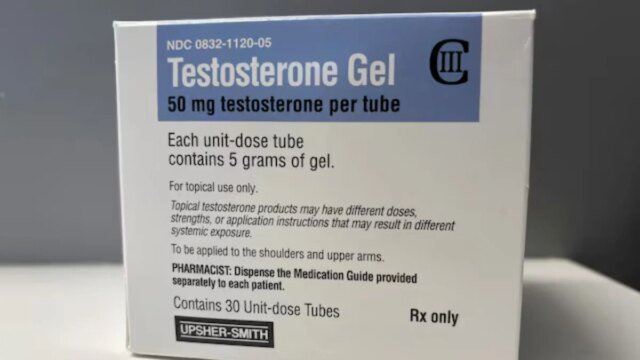
There is no ​FDA-approved testosterone therapy for women, despite years of off-label use to treat low sexual desire, known as hypoactive sexual desire disorder, ⁠or HSDD.

The UK, Australia, New Zealand and South Africa have approved or licensed testosterone products specifically for women.

Assistant Secretary for Health Admiral Brian Christine, in his opening ​remarks, said it was unacceptable that US women lack a testosterone therapy approved specifically for them while such treatments are available in Australia.

“Something’s wrong with that,” he ​said, urging the FDA to “listen to the women who need an approved testosterone product” and “get this done.”

Physicians who prescribe testosterone to women typically rely on low doses of products approved for men, often dividing existing products such as AbbVie’s AndroGel and Keenova Therapeutics’ Testim, or on compounded formulations.

Dorothy Fink, deputy director of the Eunice Kennedy Shriver National Institute of Child Health and Human Development, said ​women deserved testosterone options “formulated and dosed specifically for them.”

But some experts said the need for a female-specific product does not resolve questions about how broadly testosterone should ​be used.

Rajita Patil, director of the UCLA Comprehensive Menopause Care Program, said evidence supports testosterone only for postmenopausal women with HSDD, with insufficient data to recommend it for mood, cognition ‌or general ⁠well-being. Oral testosterone is not recommended because of unfavorable effects on cholesterol levels, she said.

Patil called for “generating the evidence necessary to fully and more comprehensively characterize the benefit and the risk.”

Testosterone has been reviewed by the FDA multiple times for use in women but has never been approved because of a lack of long-term safety data and concerns about cardiovascular and breast cancer risks.

The FDA’s request for public comments ahead of the meeting attracted hundreds of submissions, many from women describing improved libido, ​energy, and quality of life while using ​testosterone.

The public comment period following the ⁠FDA testosterone workshop closes on October 19.

EVIDENCE AND SAFETY GAPS

Interest in testosterone among menopausal women has grown alongside claims on social media that it can improve energy, muscle mass, bone health and cognition, though specialists say the evidence is only strong ​for HSDD.

The FDA has approved non-testosterone options like Sprout Pharmaceuticals’ Addyi and Cosette Pharmaceuticals’ Vyleesi for certain patients with HSDD.

“We ​believe postmenopausal women deserve ⁠access to additional treatment options to address concerns related to sexual function,” Cosette Pharmaceuticals said in an email.

Testosterone is generally not recommended for women with a history of breast cancer because it can be converted to estrogen in the body that can fuel some cancers.

Excessive testosterone exposure can cause acne and increased hair growth, physicians said, while rarer ⁠effects such ​as voice deepening and hair loss may be irreversible.

Studies show that testosterone therapy is generally considered ​safe for men with medically diagnosed low levels of the hormone when prescribed and monitored by a doctor.

Last year, the FDA removed the boxed warning about increased cardiovascular risk from testosterone products for men after ​reviewing post-marketing studies, though the products still carry warnings about increased blood pressure.

Russia and China Veto U.S. Bid to Renew U.N. Monitoring of Iran Nuclear Program

0


The conflict underscored the distance between world powers over the United States’ pressure campaign on Iran.

Major Iranian Airline Suspends Several Flights Abroad, Adding to Isolation

0


The carrier, Mahan Air, said it would stop flying to neighboring countries just over a week after the United States imposed sweeping sanctions on Iran’s aviation industry.

Diesel price rise by Rs3.47, petrol falls Rs0.43 per litre

0


The federal government on Thursday revised the ex-depot prices of petroleum products, increasing high-speed diesel (HSD) by Rs3.47 per litre while reducing the price of motor spirit (petrol) by Rs0.43 per litre.

According to a press release issued by the Ministry of Energy (Petroleum Division), the revised prices will be effective till Friday, September 18, 2026.

The ex-depot price of HSD has been increased from Rs421.45 to Rs424.92 per litre.

Meanwhile, the price of motor spirit (MS) has been reduced from Rs391.22 to Rs390.79 per litre.

The Petroleum Division said the price revisions were made under the petroleum pricing mechanism issued by the federal government.

It added that the changes were necessitated by global events, including fluctuations in Platts rates, premiums and other incidentals.

In the previous review, the government had raised the price of petrol to Rs391.22 per litre, while HSD will be available at Rs421.45 per litre.

Earlier in the day, oil prices eased about 3% on Thursday to a one-week low, extending losses as reports of additional Saudi crude cargoes through Oman eased supply concerns. However, prices stayed above $100 a barrel on fears the Middle East conflict could widen.

Brent crude futures were down $3.85, or 3.64%, to $101.98 a barrel at 1000 GMT, after touching their lowest level since September 10, while US West Texas Intermediate futures were down $3, or 2.93%, at $99.43 a barrel, their lowest level since Sept. 11. Both contracts fell about $3 on Wednesday.

Crude retreated from weekly highs after US Energy Secretary Chris Wright signalled a quicker return to service for Saudi Arabia’s East-West pipeline, while Saudi efforts to maintain shipments via additional loadings off Oman eased supply worries, said Tim Waterer, chief market analyst at KCM Trade.

Rising Seas Are Gobbling Up Beaches Around the World. A.I. Might Restore Them.

0


An experiment with roots at M.I.T. used A.I. and satellite images to grow a coastline in the Maldives. More projects are planned for Boston and Miami.

Man Suspected of Pushing Woman in Front of London Bus Is Found Dead, British News Media Say

0


Nicholas Brandram, 44, was arrested in June in connection with the attack in London. His family said there was “no credible evidence” linking him to the incident.

Wall St rises as oil slide offers respite after Fed rate hike

0


The major US stock indexes jumped on Thursday as retreating oil prices improved market sentiment, with the Federal Reserve’s first interest-rate hike under Chair Kevin Warsh underscoring the central bank’s commitment to managing inflation.

The policy decision, which addressed a chronic source of unease,prompted investors to return to favored sectors. Technology shares rose, with Nvidia and Amazon adding more than 2% each.

The gains will be crucial in the second half of September, historically a weak month for equities, with the benchmark S&P 500 losing 1.7% so far this month.

“For equities, the message is clear. The start of a hiking cycle can bring volatility, but volatility does not have to end a bull market,” said Brett Mitstifer, chief investment officer of private banking and wealth management at Flagstar Bank.

“If this cycle remains measured, disciplined investors should view market dislocations as opportunities to upgrade quality, not reasons to abandon risk altogether.”

At 11:42 a.m. ET, the Dow Jones Industrial Average rose 316.52 points, or 0.61%, to 51,778.04, the S&P 500 gained 80.05 points, or 1.06%, to 7,631.86, and the Nasdaq Composite was up 411.57 points, or 1.59%, to 26,390.96.

The small-cap Russell 2000 index added more than 1% to 2,891.45 despite its greater sensitivity to interest rates.

However, the Fed warned more hikes may be needed in the coming months to control prices. Uncertainty over how high interest rates could ultimately rise is likely to keep stocks and bonds volatile in the weeks ahead.

Traders see a near 51% chance of another increase when the central bank meets next, in October, compared with about 44% a day ago, according to CME’s FedWatch.

The yield on the benchmark 10-year U.S. Treasury also slipped, taking some pressure off equities. High yields on risk-free U.S. Treasuries typically dampen the appeal of stocks.

Eight ofthe 11 major S&P 500 sectors were trading higher. Utilities led gains with a 1% jump.

The S&P 500 financials index was flat and on course for its fourth consecutive day in the red.

Oil pulls back, Middle East risks persist

Meanwhile, oil prices dropped for the second straight day, with Brent crude futures down more than 2% to $103.43. US West Texas Intermediate crude futures fell about 2% to $100.66.

Crypto-linked stocks rose after the US securities regulator unveiled a five-year exemption for tokenized stock trading. Robinhood and Circle Internet Group rose about 3% and 4%, respectively, while Coinbase advanced 3%.

Shares of neocloud firms gained, with Nebius and IREN up about 2% each. Nebius said it will raise pay-as-you-go prices for leasing select Nvidia chips from October 1.

CoreWeave fell 4% after it announced plans to raise capital via stock and convertible bond offerings.

Fluence Energy tumbled more than 14% after lowering its revenue forecast for fiscal year 2026.

Gold miners rose following a 2% jump in bullion prices. The VanEck Gold Miners ETF added 3.5%.

Advancing issues outnumbered decliners by a 2.9-to-1 ratio on the NYSE and by a 3.03-to-1 ratio on the Nasdaq.

The S&P 500 posted 12 new 52-week highs and 15 new lows, while the Nasdaq Composite recorded 46 new highs and 87 new lows.

Government, petroleum dealers reach agreement on fuel relief package

0


The government and petroleum dealers on Thursday reached an agreement on the payment mechanism for the Rs100 per litre subsidy under the Petrol Relief Package, ending a deadlock that had threatened its implementation.

The agreement was reached during an emergency meeting between the Ministry of Petroleum and the Pakistan Petroleum Dealers Association (PPDA), convened to address dealers’ concerns over reimbursement of the subsidy.

According to the PPDA, payments due to petroleum dealers under the relief package will be processed through the State Bank of Pakistan and transferred to the respective dealers’ bank accounts within 48 hours. The government is expected to issue a formal notification regarding the payment mechanism shortly.

The meeting was held virtually and attended by PPDA Chairman Malik Khuda Baksh, Vice Chairman Tariq Hassan, Anwar Kamal and Malik Sher Khan, while PPDA Sindh President Ameer Khan participated through Zoom.

Following the agreement, the PPDA said petroleum dealers had started implementing the government’s relief package.

The development comes after the PPDA had earlier refused to implement the package, citing the absence of a clear mechanism for reimbursement of the subsidy.

Earlier on Thursday, PPDA Chairman Malik Khuda Baksh told Business Recorder that the Ministry of Petroleum had contacted the association and called an online meeting to brief dealers on the subsidy reimbursement mechanism and address their concerns.

The government has announced a Rs100 per litre subsidy for motorcycles, Chingchi rickshaws, rickshaws and cars with engine capacity of up to 800cc, registered after January 1, 2011, under the Petrol Relief Package.

The scheme was scheduled for nationwide implementation from September 17.

The PPDA had maintained that dealers were not taken into confidence before the package was announced and had sought consultations on a transparent payment mechanism.

Speaking at an earlier press conference, Khuda Baksh had said petrol stations would not sell fuel under the relief package unless an acceptable subsidy payment mechanism was agreed upon with the association.

The PPDA said the Petroleum Minister also assured dealers that consultations with all stakeholders would be strengthened and made more effective in the future.

The association expressed hope that timely implementation of the agreed payment mechanism would address dealers’ concerns and facilitate smooth implementation of the relief package nationwide.

As a New Oil Power, China Gains More Sway Over Energy Markets

0


The war with Iran revealed just how much influence the world’s biggest oil importer has over prices and other countries’ supplies of jet fuel, gasoline and diesel.

A New Play in Budapest Signals a Cultural Reawakening for Hungary

0


A one-woman show about the perils of authoritarianism draws on a memoir by the Hungarian-American writer Kati Marton. Under Viktor Orban’s government, it might not have happened.

Popular Posts

My Favorites

Mourners observe Ashura amid elaborate security arrangements

0
Elaborate security arrangements have been made countrywide today as scores of mourners take out Muharram 10 processions in observance of Yaum-i-Ashura. Yaum-i-Ashura is observed every...