






The world is entering one of the most uncertain periods of the modern era. The COVID-19 pandemic, global cost-of-living crisis, Russia-Ukraine war, growing geopolitical rivalry and renewed conflict in the Middle East have weakened economic resilience. In many cases, one crisis has struck before the world could recover from the previous one.
The central question is therefore no longer simply who will win a particular war, but whether the international community can prevent geopolitical confrontation from turning into a global economic and humanitarian catastrophe.
The latest Middle East conflict has again demonstrated the interconnectedness of the global economy. Energy markets, shipping routes, food prices, inflation, financial markets and international trade are closely linked. A disruption thousands of kilometres away can quickly affect households and businesses around the world.
The International Monetary Fund’s July 2026 World Economic Outlook projects global growth of 3.0 percent in 2026 and 3.4 percent in 2027. However, it warns that global disinflation has stalled and that the outlook remains vulnerable to renewed conflict and financial-market repricing. Global inflation had already reached almost 9.5 percent in 2022, while the pandemic and geopolitical tensions disrupted supply chains and increased living costs.
Energy remains at the centre of this vulnerability. Around one-fifth of global oil consumption normally passes through the Strait of Hormuz, making any disruption there a serious threat to international energy security. Alternative supplies, inventories and weaker demand can cushion the impact, but these buffers are limited.
For energy-importing developing countries, higher oil prices mean much more than expensive petrol. They increase transportation, electricity and production costs and ultimately push up food prices. Countries with weak currencies, high external debt and limited foreign-exchange reserves are particularly vulnerable.
Europe is also exposed. The IMF projects euro-area growth of only 0.9 percent in 2026 and 1.2 percent in 2027, while UK growth is forecast at 1.0 percent in 2026 and 1.3 percent in 2027. These figures do not indicate economic collapse, but they show how vulnerable slow-growing economies can become to another major shock.
Developing countries face the greatest risks. Higher energy and food prices can fuel inflation, weaken currencies, widen fiscal deficits and make external debt harder to service. A commodity-price shock can therefore trigger a chain reaction—from an energy crisis to inflation, debt distress, food insecurity and humanitarian suffering.
At the same time, the international order is becoming increasingly fragmented. Trade, technology, energy and investment are being shaped by strategic rivalry. More than 10,000 trade-distorting industrial-policy interventions were recorded globally between 2023 and 2025. Such fragmentation creates uncertainty, particularly for smaller economies dependent on international markets, investment and technology.
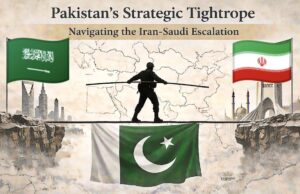
Major powers must therefore assume greater responsibility. The United States and China have a shared interest in preventing prolonged global instability despite their rivalry. The United Nations needs a stronger diplomatic role, while Europe and other powers should support meaningful negotiations over Ukraine. Regional powers must work towards de-escalation in the Middle East, alongside renewed efforts for a durable Israel-Palestine settlement.
Peace is no longer merely a moral objective; it is an economic necessity. Stable energy markets, investment, trade routes and sustainable development all depend on peace.
The world needs a new international compact centred on peace, economic resilience and cooperation. Geopolitical victories may be temporary, but the economic and human costs of conflict can last for generations.
Humanity has already suffered enough from pandemics, wars, displacement and economic uncertainty. The choice is increasingly clear: cooperation or fragmentation, diplomacy or escalation, economic stability or humanitarian suffering.
The world still has an opportunity to choose peace before the cost of another conflict becomes greater than it can afford. The writer is a faculty member at National Skills University Islamabad
Professor Nadeem Iqbal of National Skills University Islamabad can be reached at nadeem.iqbal@nsu.edu.pk and Drnadeemiqbal1@gmail.com