








In Fourth of July Speech, Trump Celebrates America and Derides Foes
A centerpiece address for the nation’s 250th anniversary celebration devoted time to American history, but had all the hallmarks of a Trump rally.
A centerpiece address for the nation’s 250th anniversary celebration devoted time to American history, but had all the hallmarks of a Trump rally.
Sara Duterte, who has said she would run for president, could be barred from politics over allegations of corruption and for making death threats against President Ferdinand Marcos Jr.
The Vatican has excommunicated the priesthood of a rebel Catholic faction. Many of the priests’ followers have refused to renounce them.
Here’s the latest.
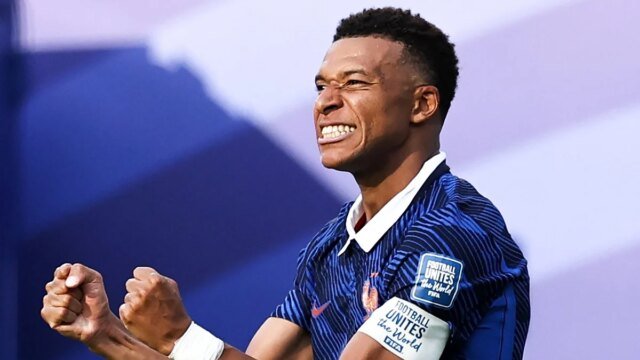
France needed a second-half Kylian Mbappe penalty to break down a stubborn Paraguay side on Saturday, winning a niggly World Cup last-16 clash 1-0 to set up a quarter-final showdown with Morocco.
Paraguay’s efforts to get under the skin of France’s superstars worked for three quarters of a game played in front of 68,324 fans in Philadelphia in heatwave conditions.
However, the quality in the French ranks eventually shone through, with Mbappe converting from the spot on 70 minutes after Desire Doue was brought down.
This was not an attacking masterclass by the French like they had produced in their previous games, but Paraguay did not allow them to play that way.
It was very much a mismatch, though, with Les Bleus having almost all of the ball and Paraguay not managing a shot on target until the 90th minute.
Mbappe’s brilliant World Cup on a personal level continued as he rejoined Lionel Messi as the tournament’s joint-top scorer with seven goals.
The Real Madrid striker now has 19 World Cup goals in total — from 19 appearances — meaning he is just one behind Messi’s overall record of 20.
Didier Deschamps’ team will now return to their Boston base to prepare for a last-eight clash in nearby Foxborough next Thursday against the Moroccans, who beat Canada 3-0 earlier.
It was a sweltering day in Philadelphia, with temperatures of 38 degrees Celsius (100 Fahrenheit) and extreme weather warnings in place in case of storms.
France’s last visit to Lincoln Financial Field, during the group phase, was affected by storms, as rain and thunder led to a two-hour delay during their 3-0 win over Iraq.
July 4 celebrations
This time there were no interruptions to a game played on the 250th anniversary of US independence, and in the city where the Declaration of Independence was signed in 1776.
A pre-match concert on the pitch featured a rendition of the US national anthem by the actress Idina Menzel, a performance by hip-hop band The Roots, and a US Air Force flyover.
A fireworks display in the city to mark July 4 was not due to take place until later, and the anticipated French pyrotechnics on the pitch were contained for long spells by the Paraguayans.
Ranked 41st in the world, Paraguay had ousted Germany on penalties in the last round and were aiming to claim another huge scalp here.
They played with a back five, defended with a low block, and were quite happy to live up to some South American stereotypes with a cynical approach at times.
That led to Mbappe’s frustrations getting the better of him as he got involved in a shoving match with Andres Cubas. Moments later, Matias Galarza had a little lash out at the France captain off the ball.
France had practically all of the ball but struggled to do anything with it, being restricted to shots from long range.
Manu Kone had one attempt deflected just wide midway through the first half and another tipped over by Orlando Gill not long after the restart.
Paraguay’s attempts to frustrate France were working, but the dark arts would only get them so far.
While Michael Olise and Ousmane Dembele were struggling to influence the game, Deschamps opted to remove Bradley Barcola and put Doue on the left wing in his place.
That was just after the hour mark, and Doue quickly made an impact.
When he attempted to dribble his way through a sea of Paraguayan defenders, he went down under contact from Diego Gomez. The foul was clear and the Uzbek referee pointed to the spot after a review.
Dembele protected the penalty spot as several Paraguay players tried to rough it up. Mbappe then stepped forward and slotted in.
Having won on penalties in the last round, Paraguay’s resistance was broken by one this time.
It was not a vintage France performance, but Mbappe almost scored again in stoppage time, and they have taken another step towards their goal.
In 1998 they needed a golden goal to beat Paraguay at the same stage of the competition. And they went on to win that World Cup.
Overshadowed by President Trump’s threats to seize Greenland, a Danish territory, the event removed U.S. officials from the program and saw protests arrive.
Gavin Newsom and Wes Moore, potential 2028 contenders, cast President Trump’s record as a betrayal of American ideals, while the president disparaged their party as extreme.
Since RSS rose to pre-eminence in India and its control of political power in 2014, the Muslim community in India has been systematically marginalised and dehumanised. Since this aspect is not discussed much in Pakistan, there is a need to analyse these trends within India and discuss the structural targeting of 250 million Muslims in India.
Professor Tanweer Fazal is a prominent Indian sociologist and has taught at Jawaharlal Nehru University as well as the Department of Sociology at the University of Hyderabad. He is the author of several key works, including Practices of the State: Muslims, Law and Violence in India and Nation-state and Minority Rights in India.
At the core of Professor Fazal’s work is his theory of ‘otherisation’ and ‘de-nationalisation’ of Muslims through a structured project of Hindutva. Fazal argues that ‘otherisation’ is primarily a deliberate project, rather than something that is inherently embedded in a culture. It involves mobilising economic, cultural, historical, and political resources to marginalise specific communities.
Fazal’s concept of “denationalisation” describes a systematic process whereby the Indian state, particularly since 2014, has actively sought to delegitimise the citizenship and belonging of a section of its Muslim population. This state-sponsored identity flattens the diverse Muslim community into a homogeneous group, portraying them as an “unruly margin” that needs to be “tamed” and “civilised”.
State actions, such as the Citizenship Amendment Act (CAA) and the National Register of Citizens (NRC), are testament to these “exclusionary mechanisms”. The process of otherisation is not fixed; it shifts and adapts to different contexts. It manifests differently for various groups, such as the violent ‘otherisation’ of Bangladeshis in Assam. The NRC’s final list excluded nearly 1.9 million people in Assam, effectively stripping them of citizenship and rendering them stateless. The CAA is an “exclusionary mechanism” which grants citizenship to non-Muslim refugees from Pakistan, Bangladesh, and Afghanistan but makes one single exception: it explicitly excludes Muslims.
The legal and political handling of cow slaughter is another mechanism of denationalisation. Anti-cow slaughter laws in several states have extended legitimacy to cow vigilantes (gau-rakshaks), who lead lynch mobs against Muslims. This state-sanctioned violence reinforces the image of Muslims as outsiders who are a threat to the “sacred” Hindu nation. The use of stringent laws like the Unlawful Activities (Prevention) Act (UAPA) to silence dissent has been widely used against Muslims. Young Muslims have been incarcerated under the UAPA merely for opposing the CAA and speaking against its enactment.
The psychological fearmongering impacts the Muslim psyche in three domains: political, neighbourhood, and market. When PM Modi makes a comment about the ‘puncture wala’ and Himanta Biswas Sarma says that ‘Miya ko tight karna hai’, it acts as a slur and stigma as well as a dog whistle. In UP, there is a patronised movement to make sure that halal food labels will not be allowed. Hindus are being sent messages that they should not buy from Muslim shops; thus, cultural otherisation is being injected into the market.
Politics itself is a very powerful instrument. After 12 years of portraying Muslims as villains and demons, the impact is visible. On top of that, hateful election speeches, Godi media discourse, and organised and unorganised social media have created a dangerous and pernicious environment.
More recently, a Special Intensive Revision (SIR) has been conducted by the Election Commission of India to verify and revise electoral rolls. This resulted in 90 lakh voters in West Bengal being identified as suspects, mostly Muslims. Muslim-majority villages, one after another, were disenfranchised. This is the new structure of the de-nationalisation of Muslims, a slow-motion legal genocide.
Another trend is the celebration of anti-Muslim perpetrators; the acquittal of the assassins of Bilqees Bano is a case in point. This case exemplifies arguments about “otherisation” and “denationalisation” in the following ways:
The victims were burned alive, yet the state showed little urgency in prosecuting the case or appealing the acquittal. This is deliberate dehumanisation.
The Gujarat government’s refusal to challenge the acquittal signals that the state does not consider violence against Muslims a crime against the nation. When the state abandons justice for minorities, it effectively delegitimises their citizenship. The state was willing to grant remission to the convicts (Hindus) but has historically been harsh in prosecuting Muslims under laws like the UAPA. For ordinary Muslims, the acquittal reinforces the observation that they live in a “state of perpetual fear”, not just from mobs but from a justice system that does not guarantee their protection.
Another aspect is the breaking away of secular leaders and their joining the Hindutva gang. The Muslims have a ‘Price of Entry’. For a Muslim leader from a secular party to be accepted into the BJP, they must perform a public act of “ideological cleansing”, denounce their secular past, and aggressively embrace Hindutva symbols. This is not integration; it is co-optation.
When leaders like Himanta Biswa Sarma, who once sat in secular gatherings, begin championing the CAA and the Ram Temple, it sends a signal to the masses that even former secularists now view these as legitimate. While Hindu leaders from the Congress can join the BJP without abandoning their religious identity, Muslim leaders who join must visibly “otherise” their own community by criticising Muslims, supporting laws that exclude them, and calling for their “reform.” This is a form of internalised denationalisation, where minority leaders must prove their “nationalism” by rejecting their own community.
If the CAA, NRC and SIR were not enough, the Modi government has brought a new factor into this whole project: a ‘Demography Commission to ascertain unnatural growth in certain communities’. Initial estimates suggest that it will target Occupied Kashmir, West Bengal, Assam, the tribal belts of the North East, Telangana, Andhra Pradesh, Uttar Pradesh, Karnataka, and Kerala.
So, the Hindutva hate gang is now going to target Muslim-concentration areas to make it a crime to have more babies. Where will this hate train lead India? Most probably to the Olduvai Gorge.
Adeela Naureen and Waqar K Kauravi
The authors are freelance journalists. They can be reached at adeelanaureen@gmail.com and waqarkauravi@gmail.com
The safety of medicines is directly linked to the safety of human lives. In an era where technology is transforming every sector, the pharmaceutical industry can no longer depend only on traditional monitoring systems. The introduction of medicine barcode tracking represents a major step towards creating a transparent, accountable, and secure healthcare supply chain.
Pakistan is now moving towards a significant digital reform in the pharmaceutical sector. Federal Health Minister Syed Mustafa Kamal has announced that the government will launch a nationwide barcode and QR code verification system for medicines within the next 60 days. Under this initiative, citizens will be able to scan medicine packs through their mobile phones and verify whether the product is genuine, registered, and safe for use.
This development comes at a time when counterfeit and substandard medicines remain a serious public health concern. Fake medicines not only cause financial losses for patients but can also lead to treatment failure, complications, and avoidable deaths. For patients suffering from serious illnesses, receiving a fake or ineffective medicine can have devastating consequences. A digital tracking system can provide a powerful solution by making every medicine traceable from manufacturing to final consumption.
The proposed system will require pharmaceutical companies to place standardised 2D barcodes and serialisation data on medicine packaging. Each medicine pack will carry a unique digital identity containing important information, including manufacturing details, batch number, expiry date, price, and verification status. By scanning the barcode through a mobile device, consumers and healthcare providers will be able to confirm the authenticity of medicines.
The federal cabinet has already approved the nationwide Track & Trace System for pharmaceutical products, along with necessary amendments to the Drug Labelling and Packing Rules, 1986. This regulatory change reflects a shift from conventional monitoring towards a technology-driven approach where every stage of the medicine supply chain can be monitored.
Currently, the pharmaceutical supply chain involves multiple stages, including raw material suppliers, manufacturers, distributors, wholesalers, pharmacies, hospitals, and patients. At each stage, there are risks of illegal substitution, poor storage conditions, counterfeit products, or unauthorised distribution. A barcode tracking system creates a digital record of movement, allowing regulators to identify where a medicine was produced, where it travelled, and where it was sold.
One of the biggest advantages of this system will be strengthening the fight against counterfeit medicines. Illegal manufacturers often copy packaging and labels of well-known pharmaceutical brands, making it difficult for ordinary consumers to identify fake products. With QR code verification, patients will have a direct method to check authenticity instead of relying only on the packaging appearance.
The system will also improve regulatory oversight. Drug authorities will have access to better data regarding medicine production, distribution, and availability. Instead of depending mainly on inspections and paperwork, regulators will be able to use digital information to identify suspicious activities and take timely action against companies or individuals involved in illegal practices.
For pharmaceutical companies, barcode tracking can improve inventory control and reduce losses. Manufacturers will be able to monitor product movement, manage recalls more efficiently, and identify supply chain problems. If a specific batch is found to have a quality issue, authorities can quickly locate affected products instead of removing medicines from the entire market.
Hospitals and healthcare professionals can also benefit from this technology. Barcode verification can reduce medication errors by helping staff confirm that the correct medicine is being provided to the correct patient. In healthcare systems where patient safety is a major concern, such digital checks can create an additional layer of protection.
However, successful implementation will require careful planning. Developing a nationwide digital infrastructure, training stakeholders, and ensuring participation from small pharmacies and pharmaceutical companies will be important challenges. The system must also ensure data security, prevent misuse, and maintain the accuracy of information.
Public awareness will play a crucial role in the success of this initiative. Citizens must be educated about how to use the verification system and why checking medicine authenticity is important. A technology platform becomes more effective when ordinary people actively participate in its use.
The pharmaceutical industry is one of Pakistan’s most important sectors, and improving trust in locally manufactured medicines is essential. A transparent tracking system can not only protect patients but also improve the reputation of responsible pharmaceutical companies.
The introduction of medicine barcodes and QR verification is more than a technological upgrade; it is a major healthcare reform. A simple scan on a mobile phone could give patients confidence that the medicine they are taking is authentic, safe, and approved.
Pakistan’s healthcare challenges require modern solutions, and digital medicine tracking is a positive step towards a safer pharmaceutical environment. If implemented effectively, this system can transform medicine regulation, reduce counterfeit products, and bring greater accountability to the healthcare system. The barcode on a medicine pack may appear small, but its impact on public health could be enormous.
Dr Zeeshan Khan
The writer is a personal finance and financial literacy enthusiast with an investing experience in financial markets.
He tweets @DrZeeshanKhanA1
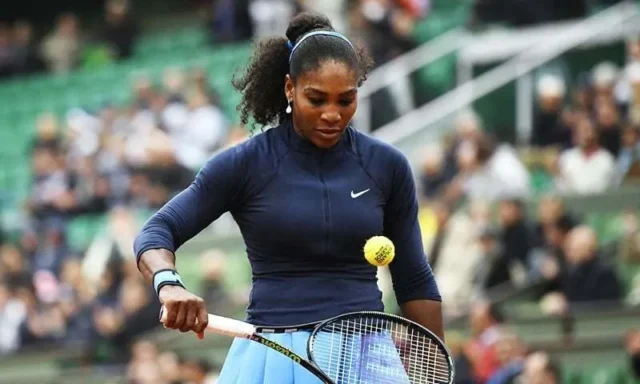
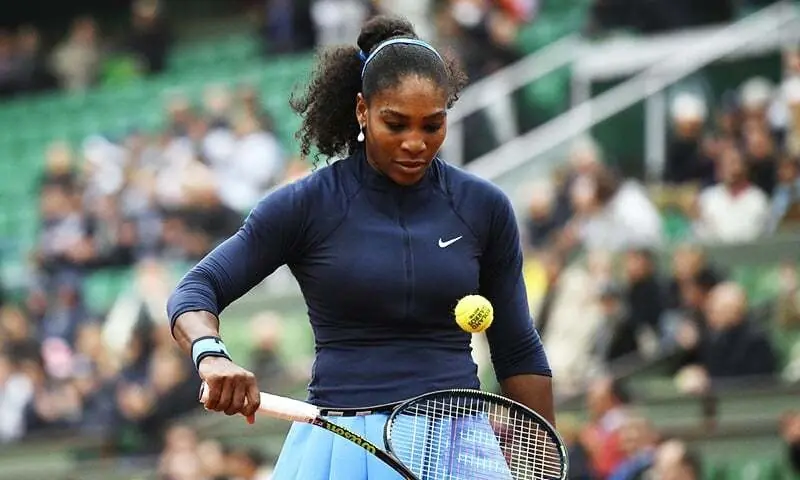
Serena Williams’ Wimbledon comeback is over after the American legend pulled out of the doubles due to a knee injury on Saturday.
Williams and her sister Venus were due to play in the first round on Saturday, but Serena announced just hours before the match that her knee had not healed enough to play.
“I’m heartbroken to have to withdraw from doubles,” the 44-year-old said on Instagram.
Serena, a 23-time Grand Slam singles champion, suffered the injury during her defeat against Australia’s Maya Joint in the first round of the Wimbledon singles on Tuesday.
That was her first singles match since the 2022 US Open after four years in retirement.
The sisters, who won the Wimbledon doubles six times, were scheduled to face Solana Sierra and Camila Osorio after being given a wild card entry into the event.
But no court was specified by tournament organisers in the order of play, raising the possibility that seven-time Wimbledon singles winner Serena could withdraw.
To the disappointment of her legion of fans, Serena did just that, revealing the fluid on her injured knee made it impossible to continue her sensational return to Wimbledon.
“Coming back to compete again has been a gift, and the opportunity to play alongside Venus once more meant the world to me,” she said.
“I did everything I could to be ready, but unfortunately my knee just isn’t ready to compete.
“The photo of the syringes shows the fluid they drained from my knee after my singles match…yikes!” Serena made an astonishing return to tennis at Queen’s Club last month, where she played in the doubles with Canadian Victoria Mboko.
But an injury to Mboko curtailed Williams’ run in the Wimbledon warm-up event after the pair won their first match.
Serena then crashed out in the first round of the Berlin doubles with Karolina Muchova before accepting Wimbledon’s offer of a wild card into the singles last week.
Serena had been motivated by a desire to play in front of her two young daughters Olympia and Adira, but they saw their mother feature in just one match at Wimbledon.
She competed gamely in her three-set defeat against Joint – a player 24 years younger than the American – on a packed Centre Court.
She did not fulfil her scheduled post-match press conference and her agent later said that was due to the knee injury, setting off speculation she would have to quit the doubles.
Williams posted footage of her limping in a heavy bandage, as well as some syringes full of fluid, as she confirmed her withdrawal.
“The good news is my knee shouldn’t swell or collect that much fluid again.
The bad news is that, as hard as I tried, I just wasn’t able to get it ready for doubles,” she said.
“I’m especially grateful to tournament director, Jamie Baker, and the entire tournament team for giving me every opportunity to play here.” Now questions will be asked about her ability to recover in time for the US Open later this year, while it is far from certain how much longer Serena’s comeback tour will last.
Hinting she is not finished yet, Williams said: “Thank you to the fans for your incredible support and for making this comeback so meaningful. All I can say is stay tuned to a city near you… “