








Four Years Ago, a Crypto Boss Went Missing. Now His Successor Has.
The mysterious collapse of a European cryptocurrency exchange helps to explain why the industry hasn’t shaken off its reputation as a magnet for criminals.
The mysterious collapse of a European cryptocurrency exchange helps to explain why the industry hasn’t shaken off its reputation as a magnet for criminals.
The couple lost their publicly funded security after deciding to leave Britain in 2020, deepening their split with the royal family.

We have all heard that dowry is a social evil. But have we considered the financial burden that men in Pakhtoon culture face when it comes to marriage?
In many areas, much of the financial burden falls on the groom and his family. After a proposal is accepted, the groom may be expected to pay a large amount of money. In some cases, the mahr is set as high as one million rupees, with people saying that the money will later be returned through dowry and household goods.
In a period of high inflation, saving such an amount is extremely difficult for a young man whose salary is largely spent on household expenses. As a result, many young men cannot marry until their thirties because they are unable to meet these financial demands.
Sadly, this tradition also affects girls. When young men feel that marriage is financially impossible, they stop seeking proposals, delaying marriages. In some cases, even after nikah, rukhsati is delayed until the full amount is paid. Money thus becomes a barrier between families.
Who is responsible?
The responsibility lies with all of us: parents who demand excessive mahr and gifts, elders who remain silent about harmful traditions, and a society that compares one wedding with another. Marriage has become a display of status rather than a simple religious bond. Media and social pressure also encourage extravagant weddings.
Islam teaches us to make marriage easy, and the life of Prophet Muhammad (PBUH) provides an example of simplicity. When social customs conflict with religious principles, we must reconsider them.
The solution is in our hands. Religious scholars, tribal elders and parents should promote simple weddings and keep mahr reasonable. Young people should also resist unnecessary financial demands.
The question is whether we will keep marriage a simple religious bond, as Islam teaches, or turn it into a financial trial that takes years to overcome. If we want the former, we must speak openly about these traditions and help young people begin married life without excessive financial pressure.
ALINA AFREEN,
Karachi.
In an interview, Jamieson Greer, Trump’s trade representative, laid out details of the trade offer that the United States made to Canada before talks crumbled.
They took on topics as diverse as fall of the Aztecs, the French Revolution, the assassination of Abraham Lincoln, and history’s greatest monkeys. The rest is history.
A moderate Republican from Kansas, she served three terms before tiring of political strife. “I couldn’t get elected today,” she said in 2013.
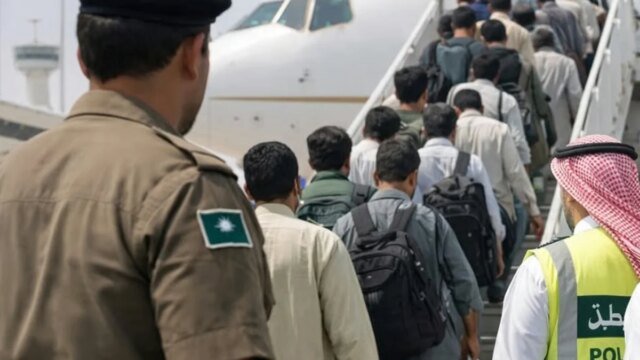
RIYADH: Saudi security officials detained 14,260 illegal immigrants in a single week. The Ministry of Interior disclosed on Saturday that the arrests were made during joint inspections conducted by security forces in cooperation with relevant government authorities between August 13 and 19.
The arrests included 6,900 violators of the Residency Law, 3,982 violators of the Border Security Law, and 3,378 violators of the Labor Law.
During this period, 18,808 offenders were referred to their diplomatic missions to obtain travel documents, 5,386 were directed to complete their travel bookings, and 13,724 unlawful residents were deported.
Additionally, 1,524 individuals were apprehended while attempting to enter the Kingdom illegally—63% of whom were Ethiopian nationals, 36% Yemeni, and 1% of other nationalities. Meanwhile, 38 persons were caught attempting to cross out of the Kingdom illegally, and 24 individuals were detained for providing violators with transportation, housing, or employment.
Currently, 31,922 expatriates—29,961 men and 1,961 women—are undergoing legal enforcement proceedings.
The Ministry of Interior warned that anyone aiding illegal entry into the Kingdom, facilitating transport, or providing shelter and other services faces up to 15 years in prison and fines of up to SR 1 million. Vehicles and properties used to assist violators are also subject to confiscation.
The ministry urged the public to report any violations by calling 911 in Makkah, Riyadh, and the Eastern Province, or 999 and 996 in other regions of the Kingdom.
The Punjab government’s decision to recover outstanding traffic challans across the province through the Safe City surveillance network is a welcome step that could significantly improve traffic-law enforcement. If a vehicle violating traffic laws in one city is later identified by cameras in another, outstanding challans can be recovered from the offender. The resulting revenue, however, will go entirely to the public exchequer.
This raises a broader question: should officers who enforce these laws receive anything beyond their regular salaries for exceptional performance?
An officer such as Azhar Gujjar, or any other hardworking traffic police official, spends long hours enforcing the law under difficult conditions. If an officer helps recover Rs1 million in outstanding fines, a modest performance-based incentive could be considered. Even a reward of Rs100,000, subject to transparent rules, proper auditing and safeguards against abuse, could encourage efficiency and recognise exceptional public service.
Traffic police do far more than issue challans. They regulate traffic, respond to emergencies, assist during security operations and manage the movement of VIPs and public officials. Traffic wardens can often be seen standing for hours at busy intersections, sometimes in harsh weather, performing duties essential to keeping cities moving.
As a lawyer practising in Lahore, I have generally found traffic police officers respectful and cooperative. I also represent a traffic police sub-inspector in a service matter before the Service Tribunal following his suspension. These experiences have reinforced my view that the men and women serving in uniform are often not the real problem.
The same applies to the Punjab Police more broadly. The issue is not necessarily the quality of the people serving in these institutions, but the system in which they work.
Police officers must register cases, investigate them, prepare challans and pursue proceedings until trial. These duties involve travel, documentation and other expenses. When an officer earning around Rs70,000 a month is expected to cover substantial investigation costs from his own pocket, the system places him in an extremely difficult position.
This is where institutional underfunding can create the very problems for which individual officers are later blamed. If the state wants better investigations and more effective enforcement, it must properly fund these functions.
This does not mean excusing corruption. Any officer who takes money illegally must be held accountable. However, accountability must go hand in hand with institutional reform. Punishing individuals while leaving systemic weaknesses untouched will not solve the underlying problem.
Traffic and police officers should not be viewed merely as revenue collectors or instruments of enforcement. They are public servants working within a system designed and funded by the government. If the state expects them to collect millions in fines, investigate cases, maintain traffic discipline and perform security duties, it should also provide adequate resources, reasonable working conditions and fair incentives for exceptional performance.
A strong police force is not built by increasing targets alone. It is built by investing in the people expected to achieve them. Better policing requires accountability, adequate funding, proper resources, recognition and institutional support.
SYED REHMAN HAYDER,
Chiniot.
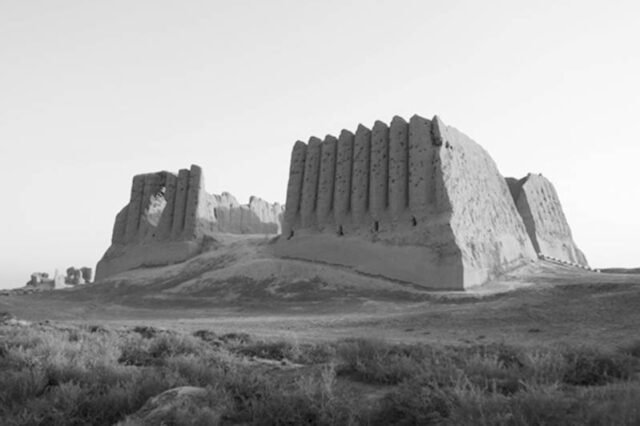

Great Kyz Kala, located in modern-day Turkmenistan, is an ancient structure that once served as a royal palace in the Parthian Empire.
Facing pressure in the United States and Europe, Shein is struggling to find new ways to grow ahead of its much-delayed initial public offering.