







Bills

Home Bills Page 7

5 Things to Know About Darline Graham, Republican Senate Hopeful in South Carolina

0


The sister of Senator Lindsey Graham was endorsed by President Trump to serve out the remainder of his term. Now she is running in a special primary election.

Deported from the U.S., Trapped in a Prison in Africa

0


Roberto Mosquera, a Cuban immigrant who has lived in the U.S. since 1980 and completed a prison sentence in 1996, was arrested by ICE last year and sent to a prison in Eswatini, a country in Africa he’d never heard of. After a hunger strike, Mosquera obtained a phone and talked with Nicholas Casey of The New York Times Magazine, to share what is happening there.

Pakistan-Bangladesh Relations: A Strategic Reset

0


Pakistan–Bangladesh relations have historically fluctuated, with periods of cordial engagement and diplomatic strain since the creation of Bangladesh in 1971. However, changing regional dynamics, economic interests, and shifting geopolitical alignments in South Asia are creating new opportunities for both countries to reassess their relationship.  

This insight provides an overview of Pakistan–Bangladesh relations in both historical and recent years across key sectors, including trade, diplomacy, and connectivity. It argues that recent developments represent a strategic reset, indicating the potential for closer bilateral cooperation and regional engagement. 

Bangladesh has long maintained cordial relations with India, particularly under the leadership of former Prime Minister Sheikh Hasina. However, in August 2024, a student-led movement culminated in her ouster from premiership, and Muhammad Yunus assumed charge as a caretaker leader ahead of the 2026 general elections. The current government is now headed by Prime Minister Tarique Rahman, who has adopted a more pragmatic, multi-vector foreign policy, including recalibrating relations with Pakistan as part of broader regional diplomacy.  

In 2025, high-level diplomatic engagement resumed between the two countries, with Pakistan’s foreign minister, Ishaq Dar, visiting Dhaka after a 13-year gap.  Both sides discussed trade normalisation, visa facilitation, cultural exchanges, and institutional cooperation. Six memoranda of understanding (MOUs) were signed on 24 August, 2025 in Dhaka to strengthen ties in various sectors. 

In addition, Islamabad and Dhaka agreed to revive the long-dormant Joint Economic Commission (JEC) in August 2025, last convened in 2005, as a step toward strengthening trade and investment ties. Therefore, trade, in particular, has emerged as a practical way to expand mutually and serve as a significant empirical indicator of the developing relationship.

The successful Karachi–Chittagong maritime trade in 2024 proved that direct routes can cut transit times by more than 50%. Previously, trade between Karachi and Chittagong largely relied on transshipment through Colombo, where cargo containers were unloaded and transferred onto another vessel before reaching their final destination. In contrast, the newly established direct trade route enabled uninterrupted cargo movement between the two ports. Consequently, shipment time has reportedly decreased to nearly 11 days, significantly improving trade efficiency, reducing logistics costs, and strengthening economic connectivity between Bangladesh and Pakistan.

This route also supports China’s BRI logistics corridors, connecting Gwadar Port to Chittagong and integrating South Asia with ASEAN countries, providing access to markets worth $3.5 trillion across ASEAN and the Middle East. 

Both countries are also improving their defence relations; a notable example is Bangladesh’s participation in Pakistan’s Multinational Maritime Exercise “AMAN-2025” (February 2025). Previously, Bangladesh also participated in the 2007, 2009, and 2013 AMAN Series. Bangladesh also attended as an observer in the Pakistan Air Force’s “Indus Shield 2024” air exercise. The potential acquisition of Pakistan’s JF-17 Thunder fighter jets under Bangladesh’s Forces Goal 2030 military modernisation plan represents another decisive turn. Bangladesh has sent pilots and technicians to the Pakistan Air Force Academy for professional military training.  

Educational exchanges are significant, as over 400 Bangladeshi students are currently studying in Pakistan through OIC and COMSTECH scholarships. The Pakistan–Bangladesh Knowledge Corridor, a $500 million initiative launched in 2025, will offer 500 scholarships over five years to strengthen academic ties and foster long-term relationships.  

Climate Cooperation is another area that needs attention, as both states are highly vulnerable to climate change and experience major flooding every 3-4 years, resulting in significant human and economic losses. From 2010 to 2024, Pakistan’s annual climate-related losses reached about US$3.2 billion, and Bangladesh’s losses were approximately US$2.8 billion.   

The Pakistan-Bangladesh strategic reset is driven by evolving regional and global geopolitical realities. Since the political transition, Dhaka has renewed its engagement with Islamabad, pursuing a more diverse foreign policy, and the geopolitical implications of this rapprochement extend beyond bilateral relations.  

For India, closer ties between Pakistan and Bangladesh diminish New Delhi’s previously dominant influence in Dhaka and create new strategic uncertainties along its eastern frontier. China benefits by expanding its Belt and Road connectivity efforts through increased engagement with both Pakistan and Bangladesh, thereby enhancing its regional presence. 

For the US, Bangladesh remains an important Indo-Pacific partner, and Dhaka’s efforts to maintain strong relations with Washington while simultaneously engaging Beijing and Islamabad illustrate a hedging strategy rather than exclusive alignment with any single power, reshaping South Asia’s geopolitical landscape.  

While bilateral engagement has entered a new phase of diplomatic and economic engagement, historical legacies and socio-political issues, such as the presence of a large Bengali diaspora in Pakistan, estimated at 1.6 to 2 million people, and the unresolved status of Urdu-speaking Biharis (stranded Pakistanis) in Bangladesh, roughly 300,000 to 500,000, continue to shape public discourse and bilateral sensitivities.   

A forward-thinking reset should therefore prioritise economic cooperation, connectivity, and people-to-people contact. By separating historical grievances from contemporary strategic interests, both states can transform into a functional partnership grounded in regional interdependence rather than past contestation. In this context, historical sensitivities must be addressed through scholarly dialogue, promoting mutual acknowledgment of shared suffering and avoiding blame-centric narratives or unilateral expectations.

The system is cracking. Is PM Shehbaz next?

0


Prime Minister Shehbaz Sharif faces no immediate threat to his survival in office. But the political mood around his government has begun to change. The criticism now goes beyond performance. Doubts are growing about whether the present setup can deliver at all.

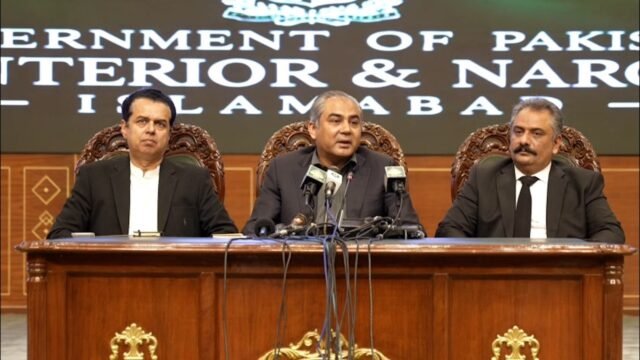
Interior Minister Mohsin Naqvi said recently that the system had effectively collapsed and could no longer deliver. His remarks were striking not because opposition politicians have not said similar things before, but because Naqvi sits at the heart of the current setup.

Sohail Warraich has pushed the argument further.

In a recent vlog with journalist Mansoor Ali Khan, Warraich, the veteran political commentator, argued that Shehbaz had failed to build a political narrative and had traded politics for proximity to the powers that be. In his Jang column, he delivered a sharper indictment, pointing out that Shehbaz has spent the better part of two decades at the top of government, first in Punjab and now twice as prime minister, while the basic questions of governance and delivery remain unresolved.

That critique cuts unusually deep because delivery has always been Shehbaz’s main political claim.

He has never possessed Nawaz Sharif’s political symbolism or Imran Khan’s populist appeal. His case has always been managerial. Long meetings. Tight monitoring. Infrastructure. Administration. Getting things done.

If that diagnosis gains ground, Shehbaz becomes particularly vulnerable to the obvious question.

If the machinery has broken down, who has been running it?

That question is becoming more potent as calls for new provinces, smaller administrative units and stronger local governments gain momentum.

Real decentralization means moving money and political authority away from provincial capitals. That immediately threatens the interests of chief ministers, provincial governments and legislators who have spent decades building political influence around control over development spending.

Strong local governments require money. Provinces are already under fiscal pressure. If meaningful financial authority is shifted to districts, cities and municipalities, somebody higher up the political chain has to surrender it.

That is also why meaningful devolution has been repeatedly promised since 2008 but rarely allowed to threaten the authority of provincial governments.

Pakistan’s elected system makes that far harder than it was under Pervez Musharraf.

Musharraf could push substantial powers downward because, when his devolution project began, there were no elected national and provincial assemblies competing for money and authority. He governed through a military-led federal structure, governors and technocratic administrations. That political luxury no longer exists.

Today, MNAs and MPAs face constant pressure to deliver roads, drainage, jobs, electricity schemes and other constituency favors. Strip away their development budgets and empower mayors and district governments instead, and a large part of the patronage system on which parliamentary politics operates begins to unravel.

For PML-N, that problem is especially acute.

Its lawmakers in Punjab are already defending seats against a PTI vote that has not receded. Many of them depend on access to provincial government resources to retain influence in their constituencies. A strong local government structure would weaken that relationship and reduce the advantages of holding power in Lahore.

PTI remains constrained institutionally, but the political conversation has begun moving into territory favorable to it. Every public declaration that the existing system has failed gives the party fresh material for its argument that the post-2024 political arrangement lacks legitimacy and popular support.

The greater the debate becomes about redesigning the system, rather than simply improving the government’s performance, the easier it becomes for PTI to argue that the present political order has exhausted itself.

For PPP, however, the same reform debate may be even more threatening.

Bilawal Bhutto-Zardari’s recent warning that the political “tick tock” had begun came amid tensions with PML-N and cannot simply be read as evidence that PPP is preparing to topple Shehbaz. But it reflects a broader shift.

PPP can see the governing arrangement becoming less settled. It also knows that some of the structural changes now being discussed could threaten its own political foundations.

Any serious discussion of new provinces, administrative divisions or powerful metropolitan governments collides with the party’s traditional control over Sindh. Karachi has always presented PPP with a peculiar political problem. It governs the province, but its electoral hold over Pakistan’s largest city has historically been far weaker than its dominance in rural Sindh.

A genuinely empowered Karachi government, particularly one with substantial fiscal autonomy, would weaken the provincial government’s control over the city. More radical proposals to redraw administrative boundaries or create new provinces would go further still, raising questions that strike at the foundations of PPP’s political power.

That gives the party two competing incentives. It wants to distance itself from PML-N’s political liabilities while making sure that any redesign of the system does not erode its own control over Sindh.

None of this means Shehbaz is about to lose office. But political trouble begins well before a no-confidence vote, when allies start hedging, old assumptions come under question and previously disruptive ideas acquire powerful sponsors.

The people now declaring that the system has broken down are the people running it.

Investigators say chemical, DNA reports not ‘conclusive’ enough to determine direction of Mir Raza Ali probe

0


Investigators probing the murder of young business owner Mir Raza Ali on Tuesday received the chemical examiner’s report and one DNA report, but said the findings were not yet “conclusive” enough to determine the direction of the investigation, Dawn has learnt.

Owner of eatery Wafflix, Ali had gone missing on July 28, and his body was found a day later with a gunshot wound in bushes in Karachi’s Gulistan-i-Jauhar.

Investigators are also awaiting the findings of other samples and the police surgeon’s final report in light of the laboratory findings.

The DNA report confirmed the identity of the deceased, ruling out theories circulating on social media that someone else might have been killed.

Informed sources told Dawn that the chemical analysis of samples taken during the first post-mortem examination had revealed three key findings. First, it confirmed the presence of gunshot residue on the back of the perforation in the deceased’s shirt, indicating an entry wound. Second, traces of acid were found on his shirt. Third, the chemical examiner’s report detected bupivacaine, an anaesthetic and painkiller, in his blood.

The sources said several samples had been collected during the exhumation of the body, carried out around 12 days after his death on a court’s order following an application by the family.

Meanwhile, the sources said the investigation team formed by Sindh IGP Javed Odho and headed by DIG Crime and Investigation Amir Farooqi had decided to conduct geofencing in areas surrounding the crime scene to detect the possible movements of pedestrians and people travelling in cars or on motorcycles.

The team would also obtain the call data record of the victim’s mobile phone, they said.

Moreover, on the request of the family’s lawyer, Jibran Nasir, two new members — DSP Siraj Lashari of Hyderabad and Karachi South police inspector Mohammed Ali — had been included in the investigation team.

They also said the chemical examiner’s report detected traces of acid on the victim’s shirt, but there were no acid burns on his body. Similarly, the presence of painkillers in his body did not suggest that he had been administered an anaesthetic before being killed.

The sources said investigators were still “confused” about the entry and exit wounds caused by the gunshot, which had generated considerable debate. According to them, the first post-mortem report showed a bullet wound on the chest from the front, while the second report suggested that he had been shot from behind.

They said there was a 38mm wound on the chest, along with burn marks on the shirt, while the wound on the back was 7mm in size and showed no signs of burns on the shirt.

“We are not challenging anything at this stage, but there is still confusion among investigators,” a source familiar with the investigation said.

The sources further added that the victim’s kitchen was located in the same area where his body was found, but it had been closed at the time of his death.

Meanwhile, the secretary of the investigation team and SSP RRF Mohammed Ali Raza, along with other investigators, visited the crime scene. The complainant, the victim’s father Mir Husain, and the family’s lawyer, Jibran Nasir, also joined them.

‘Neither depressed nor deprived’

Speaking to the media, Nasir alleged that the deceased’s only digital footprint, his smartwatch, had remained in the possession of SSP SIU Samiullah Soomro for eight days without any memo, which he said amounted to manipulation of evidence.

“Ali had deleted applications from his phone; his only digital footprint was his smartwatch. However, SSP Soomro kept it with himself for eight days and distributed information extracted from it to the media,” he said. “Isn’t this criminal conduct by SSP Soomro?”

The lawyer alleged that police had taken the smartwatch from the family a couple of days after the killing but had not prepared any memo for it, which he said demonstrated the officers’ lack of sincerity.

Jibran said Ali had remained missing for around 12 hours after he was last seen and had allegedly been subjected to torture during that period before his death.

“After finding acid on his clothes, we fear that he may have been forced to consume acid,” the lawyer said.

“He was neither depressed nor deprived. He was martyred and oppressed,” he said, warning the police and government against treating the death as a suicide.

He criticised the Sindh government for including East SSP Zubair Nazir Sheikh in the initial investigation team, alleging that the Sindh High Court had ordered an inquiry against the officer over a Rs500 million extortion allegation.

“The Sindh government included such people in the investigation team,” he said.

Nasir also alleged that another officer on the initial team, SP Usman Sadozai, had been in Azad Jammu and Kashmir for the past two weeks and had not returned to Karachi. He questioned how the officer had been attending meetings of the investigative committee.

Nasir further criticised the Gulistan-i-Jauhar police for failing to notice the acid and other evidence and initially portraying the death as a suicide.

He alleged that efforts were being made to protect someone he described as “powerful, brutal and oppressive”.

The lawyer alleged that Ali’s killers were professionals who had tried to conceal his identity by pouring acid on his face and thumbs and setting the crime scene on fire.

He said it was possible that Rs300 million had been debited from Ali’s account by someone to portray it as a financial loss and create the impression that he had committed suicide after suffering a heavy loss.

Nasir said he had met the new investigation team along with the deceased’s family and had also visited the crime scene on Tuesday.

Education Quality

0


Education is the foundation of national progress, yet many students in Pakistan continue to face barriers that limit their 
opportunities.

A major challenge is the unequal standard of education between urban and rural areas. Millions of children remain out of school, while many public schools lack trained teachers, libraries, science laboratories, computer facilities and adequate classrooms. Outdated teaching methods that emphasise memorisation over critical thinking further hinder learning in an increasingly digital world.

The government should increase investment in education by improving school infrastructure, training teachers, modernising the curriculum and ensuring equal access to quality education. Schools must also encourage creativity, problem-solving and responsible use of technology to prepare students for future careers.

Education is not an expense but an investment in Pakistan’s future. By strengthening our education system today, we can build a skilled, responsible and prosperous generation tomorrow.

MUHAMMAD HASSAN,

Karachi.

Ex-Marine Robert Gilman Is Freed by Russia After 4 Years in Prison

0


The Kremlin released Robert Gilman, whose family and an advocacy group had said he was in dire physical condition, on “a humanitarian basis,” President Trump said.

Privatisation Commission approves financial adviser for outsourcing Karachi, Lahore airports

0


ISLAMABAD: The Privatisation Commission on Tuesday approved the appointment of a financial adviser for the outsourcing of Lahore and Karachi airports.

In a statement, the commission said its board of directors had approved a “consortium led by EY-Parthenon as the top-ranked interested party” for appointment as financial adviser for the outsourcing of Allama Iqbal International Airport, Lahore, and Jinnah International Airport, Karachi.

The board also constituted a negotiation committee to finalise the Financial Advisory Services Agreement (FASA) with the successful consortium, the statement added.

Meanwhile, the commission appointed the Manila-based Asian Development Bank (ADB) last month as financial and transaction adviser for the outsourcing of New Islamabad International Airport.

The commission said its board also took up the privatisation of Lahore Electric Supply Company (Lesco) and Multan Electric Power Company (Mepco) as major transactions, necessitating the appointment of financial advisers in accordance with the applicable regulations.

Following the approval, the commission would initiate the process of appointing financial advisers for the two transactions, the statement said.

Lesco and Mepco constitute the fourth batch of power distribution companies (Discos) identified for privatisation by the government, while the privatisation process for the three earlier batches is already at different stages.

Faisalabad Electric, the first Disco in the first batch, has recently attracted a dozen local and international investors, with formal expressions of interest (EOIs) currently under review by the commission.

The deadline for submission of EOIs for two other Discos in the first batch is two months away.

Colombia earthquake death toll surges to 224 as search for survivors continues

0


The death toll from a devastating earthquake that flattened dozens of buildings in western Colombia jumped to 224, local authorities said on Tuesday as emergency workers dug through the wreckage for survivors.

Rescue efforts carried into a second day as emergency workers dug through collapsed buildings and flattened homes, amid expectations that the death toll from the country’s most powerful earthquake in decades could rise.

The 7.4 magnitude earthquake, the most powerful to strike the South American country in decades, tore through Colombia’s coffee-growing heartland early on Monday, reduced multi-story buildings to rubble in cities such as Pereira and Cali, and caused one of the spires of a cathedral in the city of Manizales to collapse.

Emergency teams aided by police, soldiers and volunteers worked through the night with excavators and, at times, their bare hands, hunting for survivors beneath debris.

Rescuers work at the site of a collapsed building following an earthquake, in Cali, Colombia, August 10, 2026. — Reuters

Jose Fernando Usma, head of search and rescue for the Quindio branch of the Colombian Red Cross, said rescuers had detected sounds and some signs that could indicate survivors beneath the rubble, and were assessing damaged structures and removing debris to reach people trapped deeper inside.

“We still have a big window of time. We have approximately 24 more hours to have hope of life,” he said.

In Cali, home to about 2.2 million people, at least 95 people were killed. Dozens of buildings were left leaning precariously or destroyed outright, forcing residents into the streets.

Several of the top floors of one of the city’s hospitals — some dedicated to pediatric care — collapsed upon themselves, leaving some patients trapped and forcing some 600 others to be tended to on a street strewn with rubble, hospital director Irne Torres Castro told Caracol television.

Carmen Yasmin Garcia, 43, a Cali resident volunteering with rescue teams, said on Monday afternoon that her group had freed seven people from a collapsed building, but four others and a dog remained trapped.

“A moment ago there was scratching, but now we can’t hear anything; we still have faith that the dog is alive and we can get these people out,” Garcia said.

“We need people with sticks and spades, the more people lending a hand the better.”

In Pereira, the capital of the hard-hit Risaralda region, authorities reported 72 deaths, while officials in neighbouring Valle del Cauca, which includes Cali, reported 38 fatalities.

Pereira also bore some of the most visible destruction, with entire residential blocks reduced to piles of concrete and twisted steel. Video posted on social media and verified by Reuters showed the city’s airport violently swaying during the quake, with large chunks of the ceiling collapsing as people took shelter.

Another 13 people died in Choco, the rural province closest to the quake’s epicenter.

Security forces headed to Cali

President Abelardo De La Espriella, who assumed power just days ago, said 1,000 members of the security forces would be deployed to the city by dawn, following reports of looting.

Cali, as well as Pereira, implemented curfews on Monday night.

“Our intention is to cooperate in any way necessary. Here, there are no distinctions or ideological divisions when it comes to defending our people or showing solidarity,” De La Espriella told journalists on Monday evening.

The disaster has drawn comparisons to a deadly 1999 earthquake that devastated the same coffee-growing region, killing more than 1,000 people, as well as to catastrophic quakes that killed more than 6,300 in neighboring Venezuela in June.

EU providing support: Kallas

European Union foreign policy chief Kaja Kallas said on Tuesday the EU was providing funding to support the rescue efforts.

“The EU has mobilised Copernicus, our satellite service, to support rescue and relief operations. We are providing funding to support the response, including through the Red Cross,” Kallas posted on X.

“We have also activated the EU’s crisis consular assistance mechanism to support EU citizens caught in the disaster,” she said.

Meanwhile, Prime Minister Shehbaz Sharif also expressed deep grief over the loss of lives and widespread devastation in Colombia.

“Deeply saddened by the tragic loss of lives and widespread devastation caused by the powerful earthquake in Colombia. On behalf of the people and government of Pakistan, I extend my heartfelt condolences to President Abelardo De La Espriella, the people of Colombia, and all the families who have lost their loved ones.

“Our thoughts and prayers are with the injured and all those affected by this tragedy. Pakistan stands in solidarity with the people of Colombia in this difficult hour,” he wrote on X.

Deputy Prime Minister and Foreign Minister Ishaq Dar also expressed his “heartfelt condolences and sympathies” to the bereaved families of the victims.

“Pakistan stands in solidarity with the government and people of Colombia as they navigate this difficult time,” he said on X, wishing those injured in the quake a swift recovery.

Pakistan and United States renew Fulbright-HEC partnership

0


The Government of Pakistan and the United States have renewed their cooperation in higher education through a new five-year agreement between the Higher Education Commission (HEC) and the United States Educational Foundation in Pakistan (USEFP).

The agreement covers the 2026-27 to 2031-32 financial years and will support a range of programs, including Fulbright master’s and PhD scholarships, visiting scholar opportunities, the Foreign Language Teaching Assistant (FLTA) program, and the Hubert H. Humphrey Fellowship.

Under the agreement, 66 PhD scholars are expected to receive support over five years, alongside opportunities available through the other programs.

The initiative will continue to enable Pakistani scholars and academics to pursue advanced education, undertake high-quality research, strengthen professional expertise, and contribute to Pakistan’s socio-economic and institutional development upon their return.

HEC has committed to providing at least $4.54m annually, with total funding capped at Rs. 6.48 billion over the five years.

The agreed payment schedule provides for USD 2 million by June 30, a further USD 2 million by January 31, and the remaining balance by April 30, subject to the timely release of government funds.

Any interest earned on HEC funds held by USEFP will be reinvested in student grants, according to the agreement.

The renewed scholarship agreement follows the revival of the Pakistan-US Higher Education Working Group after a gap of almost 14 years.

The Working Group has provided an important institutional platform for sustained engagement between the two countries on higher education, scholarships, academic mobility, skills development, research collaboration, and other areas of mutual interest.

The Ministry of Federal Education and Professional Training said the renewed Fulbright-HEC partnership was one of the outcomes of the renewed engagement.

The selection process under the renewed agreement will remain strictly merit-based, with no fixed quotas for any particular group, region, or category.

HEC will participate directly in the selection panels and contribute to identifying priority fields of study aligned with Pakistan’s national development and strategic priorities.

This collaborative approach will ensure that the program remains responsive to emerging national requirements while maintaining the highest standards of academic merit, transparency, and inclusivity.

To strengthen oversight and assess program effectiveness, a Joint Review Committee, comprising representatives of the partner institutions, will meet twice annually to review program performance and impact.

USEFP will also provide HEC with annual audited financial statements, while relevant records will remain open for review by HEC upon reasonable notice, reinforcing transparency, accountability, and sound financial governance.

The renewed partnership also envisages broader cooperation beyond scholarship opportunities. HEC and USEFP will undertake joint visibility and awareness initiatives across Pakistan, drawing upon HEC’s extensive network of higher education institutions to expand outreach and ensure greater awareness of international academic opportunities.

The agreement further provides scope for exploring future collaboration in faculty and administrator exchanges and other academic and educational initiatives.

The new agreement builds upon the original Fulbright-HEC PhD partnership signed in February 2016, under which USD 25.786 million was committed to support 125 Pakistani scholars during FY 2016–20.

The signing ceremony for the renewed agreement was rescheduled from its original date following the passing of the father of Dr. Peter Moran, Executive Director of USEFP.

Minister of State Ms. Wajiha Qamar reaffirmed that education remains one of the strongest and most enduring bridges between Pakistan and the United States.

She emphasized that the revival of the Pakistan–U.S. Higher Education Working Group and the renewal of the Fulbright-HEC partnership demonstrate both countries’ commitment to moving from dialogue to tangible, long-term outcomes for students, scholars, universities, and institutions.

Popular Posts

My Favorites

President Zardari gives assent to finance bill outlining Rs18.8tr budget for...

0
President Asif Ali Zardari gave his assent on Friday to the Finance Bill, 2026, which outlines the budget for the upcoming fiscal year with...