









favorite article 423720
favorite article 423720
favorite article 423720
Daniel Kinahan, accused of leading a family crime syndicate, was flown home from Dubai on an Irish government jet on Sunday.
Fire activity has increased sharply in British Columbia, with thousands evacuated from their homes just weeks after smoke from blazes in Ontario choked the East Coast.
President Trump’s Board of Peace announced an agreement last month that aimed at Hamas’s giving up its weapons alongside an Israeli withdrawal from Gaza.
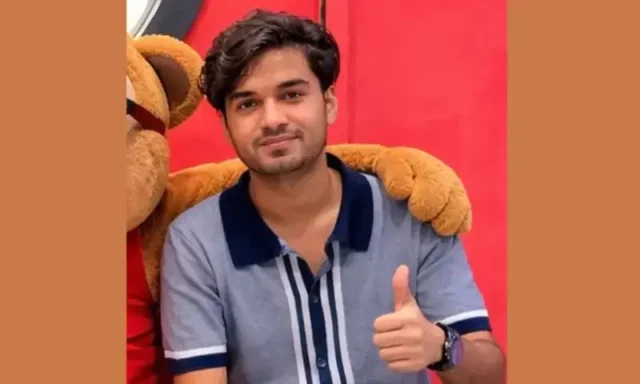
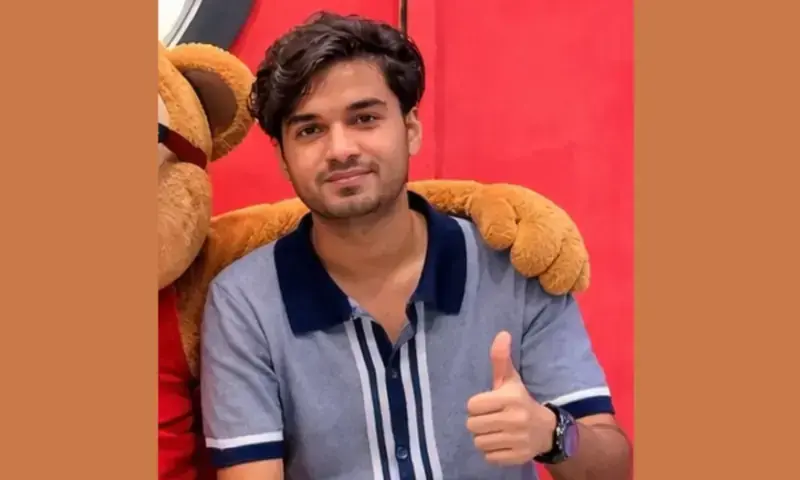
KARACHI: The Sindh government has decided to seek a judicial probe into the killing of 25-year-old businessman Mir Raza Ali, Home Minister Ziaul Hassan Lanjar said on Sunday.
Ali’s body was found in Karachi’s Gulistan-i-Jauhar last month, a day after he went missing on July 28. While his family is convinced that he was kidnapped, tortured and murdered, police had previously been building the case around the possibility that he died by suicide.
However, after injury details from a second postmortem ruled out the possibility of suicide, a murder charge was added to the case on Sunday.
“A decision has been taken to conduct a judicial inquiry into the murder case of Mir Raza Ali Khan,” the Sindh home minister said in a statement issued by his office.
According to the statement, Lanjar, along with Karachi Mayor Murtaza Wahab, visited Ali’s residence to meet his parents. They assured the family that they would be provided complete justice.
Lanjar said the judicial commission would be constituted under the leadership of a Sindh High Court judge on the recommendation of the Sindh chief minister.
During the meeting, Lanjar briefed Ali’s parents in detail about the progress of the case and the investigation, the statement said.
“The investigation team will maintain full contact and cooperation with the deceased’s parents,” the minister was quoted as saying. “A transparent and impartial investigation into the case will be ensured.”
He affirmed that all requirements of justice would be fulfilled and no leniency would be shown to anyone responsible.
Meanwhile, the Karachi mayor noted that Sindh Chief Minister Murad Ali Shah chaired a four-hour-long meeting during which “all aspects of the incident and the investigation were reviewed in detail”.
The decision of a judicial inquiry comes after Faryal Talpur, the chairperson of Sindh Assembly’s Standing Committee on Home, recommended that CM Murad constitute a judicial commission for a “transparent, impartial and comprehensive investigation” into the case.
Taking notice of Ali’s murder, she said the proposed commission should examine all aspects of the incident and bring the facts to light.
“Legal and disciplinary action should be taken without discrimination against those found responsible in light of the commission’s findings,” Talpur added.
She further stressed that justice for the victim’s family must be ensured at all costs and that the public should be transparently informed of all facts surrounding the case.
“No negligence or bias will be tolerated in meeting the requirements of justice,” she said, adding that providing justice to the bereaved family and maintaining public confidence in the justice system were fundamental responsibilities of the government and relevant institutions.
In another development, Karachi Additional IG Azad Khan transferred the investigation into Ali’s murder to Zaman Town Police Station from Ferozabad Police Station, where the case was registered.
According to a statement by the police spokesperson, the investigation of the case has now been entrusted to SIO/Inspector Chaudhry Ghazanfar Ali of Zaman Town Police Station.
“Under the order, Inspector Ghazanfar will complete the investigation under the supervision of the investigation team constituted by the Sindh IG,” the statement said.
“The Karachi additional IG has directed that the investigation be completed in accordance with the requirements of justice, transparency and law, and that the report be submitted to the relevant court,” it added.
Moreover, the additional IG also ordered the immediate suspension of Sharea Faisal sub-divisional police officer (SDPO) Muhammad Arshad Afridi and Gulistan-i-Jauhar Station House Officer (SHO) Kamran Qureshi.
They were suspended over “failure to preserve the crime scene and carry out proper crime scene investigation”, AIG Khan told Dawn.
According to a statement released by the police spokesperson, the AIG also ordered SHO Qureshi’s reversion to a lower rank.
“The full implementation of rules, regulations and accountability principles in departmental affairs would be ensured,” the statement said.
“Action will be taken in accordance with the law and rules in case of any violation of discipline by an officer.”
Earlier on Sunday, an order released by the Sindh inspector general of police’s (IG) office notified the reconstitution of the investigating team probing Ali’s death.
It also showed that the murder charge had been added to the first information report (FIR) on his father’s complaint.
The order, seen by Dawn, said the new investigating team was formed in light of Ali’s second postmortem report, which contradicted the one released after his first postmortem, to “supervise the investigation of FIR no. 795/2026 u/s 365/ 302/ 201 of the PPC”.
Initially, the FIR was registered only under Section 365 of the Pakistan Penal Code (PPC), which pertains to kidnapping.
Of the newly added provisions, Section 302 pertains to murder and Section 201 to hiding the evidence of an offence or giving false information to screen the offender.
The case would now be probed by a five-member team led by Sindh Deputy IG (Crime and Investigation) Amir Farooqui and comprising Rapid Response Force Al-Falah SSP Syed Muhammad Ali Raza, Korangi SP (Investigation) Qais Khan, Central SP (Investigation) Anam Tajjamul and Zaman Town SIO Ch. Ghazanfar, the police order said.
It added: “The team shall undertake a comprehensive and impartial investigation into the case from all relevant angles. The team shall identify, collect, preserve and examine any new or additional evidence and shall thoroughly examine and analyse all physical, technical, circumstantial and forensic evidence collected during the investigation.
“The team shall make all out efforts to work out the case and submit a report to the court concerned within the stipulated period. The team may co-opt any officer to assist in the investigation. Progress shall be reported on a day-to-day basis.”
On Saturday, the lawyer for Ali’s family, Jibran Nasir, had demanded that the first investigation probing the case be replaced, after a fresh post-mortem examination conducted following the exhumation of Ali’s body found that he had been shot in the back — evidence that ruled out the possibility of suicide.
Speaking to the media, he reiterated the allegation that Ali had been tortured before being murdered.
“This was murder following torture — the murder of a happy, ambitious and educated young man from Karachi,” he alleged.
The family’s lawyer also criticised senior police officials, alleging that they “do not want to investigate, but rather humiliate, harass and exhaust the family”.
Advocate Nasir added that he and the family had “no faith” in the investigation team and that they wanted the entire team changed.
Ali, an Institute of Business Administration graduate and the owner of eatery Wafflix, had gone missing on July 28. The 25-year-old’s body was found a day later with a gunshot wound in bushes near Shahi Qila Ground in Gulistan-i-Jauhar.
The latest developments in his case follow a controversy between the Karachi police surgeon and investigators over alleged loopholes in the medico-legal report regarding Ali’s first post-mortem examination.
Karachi Police Surgeon Dr Summaiya Syed told a private news channel on Tuesday that the post-mortem findings of Ali’s body had raised several questions, as some observations in the report did not appear to match the available photographs.
The police surgeon, whose assessment was based only on the post-mortem report and photographs as she had not examined the body herself back then, had said the reported entry wound, bullet trajectory and exit wound did not correspond with one another.
The police surgeon noted that entry wounds were typically smaller than exit wounds in firearm cases. She also said that gunshot residue, commonly found on the hands in suspected suicides, was not tested for in this case.
Her interview prompted the police authorities to issue a statement, terming such observations as having the potential to adversely affect the ongoing investigation.
The statement, however, said that exhumation of the dead body could be done on the medical board’s recommendation for further clarification by a committee of medico-legal experts with the court’s permission.
On Thursday, a judicial magistrate had allowed the exhumation of the body on an application filed by Ali’s father, Mir Hussain Ali, directing the police surgeon and the Sindh health secretary to constitute a medical board for the exhumation.
The Sindh health department then constituted an eight-member board, with Dr Syed as the convener. Prof Dr Naseem Ahmed of Dow University of Health Sciences, Dr Farah Waseem of Jinnah Sindh Medical University, Amir Hassan Khan of Citizens Police Liaison Committee, Additional Police Surgeon Dr Sirichand, Dr Kamran Khan and Dr Daniyal Mirza of Jinnah Postgraduate Medical Centre, and Dr Mohammed Yaseen, the admin in-charge of the police surgeon office, were the other members of the board.
However, in the early hours of Friday, the board was reconstituted through an order issued by the director general of the Sindh health department.
While Dr Syed remained the convener of the new five-member board, its members were changed to Prof Dr Zakiuddin from DUHS, Prof Dr Kazi Akbar and Prof Dr Abid Hussain Chang from Liaquat University of Medical and Health Sciences, and Hyderabad Police Surgeon Dr Waseem Khan.
On Friday morning, Ali’s family was present at the Tariq Road graveyard for the exhumation, which was deferred after they objected ti the new board. Standing alongside Ali’s father, Nasir had accused the authorities of trying to bury the facts and held the police, health department and the Sindh government responsible for the delay.
The Sindh government then restored the original medical board on Friday, following which Ali’s body was exhumed on Saturday.
After a second postmortem of the body, Dr Syed told Dawn, “We have collected samples for identification, chemical analysis and gunshot residue. The cause of death is reserved for laboratory reports.”
Regarding the autopsy, she said that multiple injuries were found on the head and face. “Fractured rib on the back, which is the entry wound of the gunshot [that] exited from the front,” she said.
She said the body bore “injuries in right flank and feet [and] congealed black substance present in mouth and throat”.
The appointment of Mohsen Rezaei as secretary of the Supreme National Security Council suggests that Iran’s old guard is consolidating power.
Dr. Abdul El-Sayed’s call with the former president comes as he tries to win over wary Democrats in Michigan’s high-stakes Senate race.
Inspired by Ukraine’s battlefield gains, Taiwan is betting on drones to deter a potential Chinese invasion.
Gustavo Gordillo, a leader of the New York D.S.A., wants to reach new voters. But in interviews with conservative media, the backlash can be sharp.
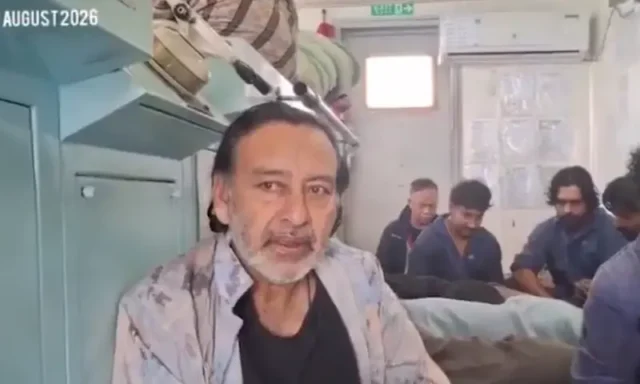
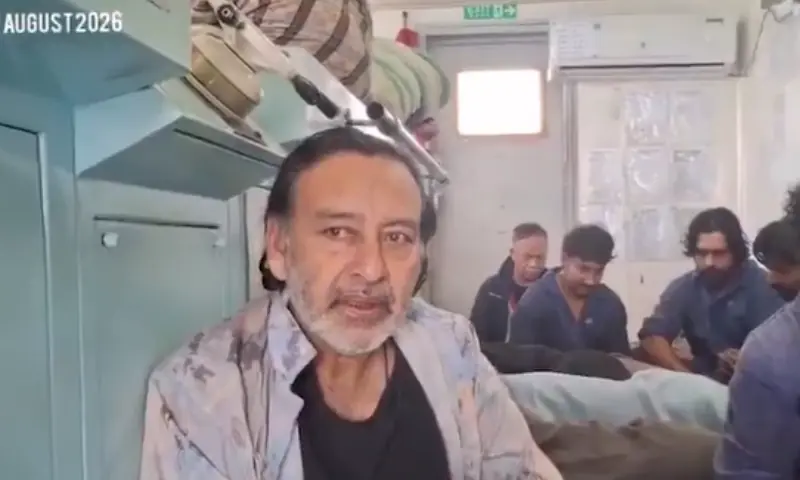
More than 100 days after being taken hostage by Somali pirates, crew members on board MT Honour 25 have released another distress message in which they appealed directly to the Pakistani government for their release, it emerged on Sunday.
The Honour 25 — a Palau-flagged oil tanker carrying 17 to 19 crew members, including 10 Pakistanis — was hijacked by armed pirates off the coast of Puntland, Somalia on April 21. Despite over three months passing, there has been no progress either in negotiations or the payment of the ransom, said to be around $3 million, for the recovery of the hostages, despite concerns abounding about their declining health.
In two video messages broadcast on DawnNewsTV and dated August 7, the Pakistani hostages and foreigners can be seen in a state of extreme distress, with most looking sick and weak.
They requested that the Pakistani government talk to the Somali pirates and take steps to release them.
Yasir Khan, a hostage aboard the ship, said that many of the crew members had fallen ill and had no access to medicine.
He appealed to the government, Prime Minister Shehbaz Sharif, Foreign Minister Ishaq Dar and Maritime Affairs Minister Junaid Anwar Chaudhry to secure their release “before it is too late” and before they suffered more.
He also appealed to Jamaat-i-Islami (JI) chief Hafiz Naeemur Rehman to “please do something for us”, noting he had already made many efforts in this regard.
Hussain Yousuf, another Pakistani hostage, said, “More than a hundred days have passed and still nothing is known about what is happening to us, or what will happen to us.”
He requested the prime minister, as well as Chief of Defence Forces (CDF) and Chief of the Army Staff Field Marshal Asim Munir, to take action before “very bad news” arrived.
Speaking to Dawn on Sunday, Foreign Office (FO) Spokesperson Tahir Andrabi expressed his grief and regret that the hostages had not yet been released.
He said that an inter-ministerial process was underway on the issue, involving the Ministry of Human Rights, the Ministry of Maritime Affairs and other relevant agencies, who were all continuously monitoring the situation.
“The main challenge is that these individuals are being held in an autonomous region of Somalia,” Andrabi said.
“The operational steps required to secure their release are particularly complex and difficult. The process of negotiating with their captors is also a major challenge.”
He noted that the situation was further complicated by the tribal system and various influential figures in Somali society, among whom were the pirates also involved in kidnapping the crew of the Honour 25.
“However, we hope for a better outcome,” he added, highlighting that Pakistan was in “constant contact” with Somalia’s government, authorities and relevant international organisations.
The FO spokesperson expressed his sympathy for the families and loved ones of the hostages, saying the government understood their pain and concern.
“This matter remains a priority and under our constant monitoring,” Andrabi said, adding that “all possible efforts” were being made to ensure the early repatriation and release of the hostages with the cooperation of relevant ministries and agencies.
Besides the 10 Pakistani crew members, the hostages also include seven Indonesians, including the captain, as well as an Indian and a Sri Lankan.
Since the hijacking, the crew has made several emotional videos and audio appeals, while reporting that they have run out of clean water, food and medicine.
The Pakistani hostages are victims of an “ownership crisis”, as it is not clearly established who owns the ship and the man previously thought to be an owner was later revealed to be more likely a middleman who hired them.
Earlier, under the supervision of the Somali pirates, there were several videos and phone calls to the families of the hostages to pressure them to pay the ransom. But after mid-June, the messages had stopped, until Saturday’s latest appeal.