









AllPolitic

Home AllPolitic

Indian authorities arrest staff accused of theft from temple built on site of razed Babri mosque

0


Indian police have arrested eight people over allegations of theft and misappropriation of offerings at a temple that has been at the centre of Prime Minister Narendra Modi’s Hindu-first politics, authorities said.

The Ram Mandir temple in northern Uttar Pradesh state, built on grounds where a mosque stood for centuries before being torn down by Hindu zealots, was inaugurated in 2024 with great fanfare by Modi himself.

Allegations regarding irregularities in the handling of donations led to a criminal case being registered on Thursday, with police arresting eight people, including temple employees, according to a government statement issued late on Thursday.

Most of them were involved in counting or handling cash and valuables donated by devotees, including gold and silver, media reports said.

The government has not disclosed the scale of the alleged embezzlement.

Opposition parties and media reports say it could amount to more than $20 million.

“It is so shameful that a shrine of such supreme importance is being discussed for all the wrong reasons,” said Viti Saxena, a 44-year-old homemaker who had donated to the temple.

“I now wonder if that actually went into the temple coffers or not. It is a matter of global shame now,” Saxena told AFP. “The faith of countless Hindu believers is shaken.”

The eight arrested face charges of criminal breach of trust, theft, criminal conspiracy and corruption, the government statement said.

Uttar Pradesh Chief Minister Yogi Adityanath, whose state government had established the special investigation team looking into the case, was quoted in the statement as having vowed that “no guilty person will be spared”.

The construction of the temple cost an estimated $240m, all of which was sourced entirely from public donations, according to the trust managing the site.

Devout Hindus believe that deity Ram was born in the town of Ayodhya — home to the temple — more than 7,000 years ago, but that the Babri mosque was built over his birthplace by a 16th-century Muslim emperor.

India’s ruling Bharatiya Janata Party (BJP) — then in the opposition — played an instrumental role in public campaigning that eventually led to the mosque’s demolition in 1992.

It helped propel Modi’s BJP as an unstoppable electoral juggernaut, eventually displacing the secularist Congress party that had governed India almost without interruption since independence from Britain.

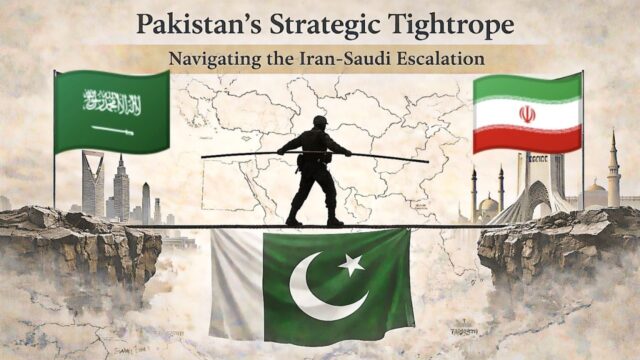
Pakistan’s Strategic Choice: Balancing Relations between Saudi Arabia and Iran

0

Pakistan’s foreign policy centers on balancing competing interests within the Muslim world. Its ties with Saudi Arabia are based on religious connections, highlighted by the presence of Islam’s holiest city, Makkah. The economic dependence also plays a role, with financial assistance, debt rollovers, and remittances from about 2.6 million Pakistani workers in the Kingdom contributing significantly. This long-standing partnership was formalized and strengthened through a defense agreement signed in 2025. On the other hand, Pakistan’s relationship with Iran is influenced by geography, sectarian ties, and the need to manage shared border security.

Power and security are essential concerns, pushing states to respond to threats rather than act on ideology or morality. States driven by the need for survival and security, seek hard-power mechanisms and external alliances to protect their interests. In this context, Pakistan’s foreign policy choices transcend mere religious and cultural ties; they focus on managing security and survival in a fluctuating regional landscape. The concept of neutrality and balancing offers a useful perspective. It is a practical foreign policy approach that combines two strategies. Neutrality lets Pakistan avoid siding openly with one bloc against another, reducing the chance of direct confrontation. At the same time, balancing allows Pakistan to maintain strong ties with both Saudi Arabia and Iran, adjusting its position as needed. This hybrid approach gives Pakistan the flexibility to uphold its defense pact with Saudi Arabia while also engaging with Iran to mitigate border tensions and sectarian conflicts. Located between these two nations, Pakistan’s foreign policy can be well understood through these two views: neorealist explains Pakistan’s necessity to engage with both sides, as it relies on economic support from Saudi Arabia, including remittances and debt rollovers, while navigating the geographic realities and sectarian diversity that connect it to Iran.

Pakistan’s balancing act between Iran and Saudi Arabia has been ongoing since the Iranian Revolution. Following that event, Tehran and Riyadh engaged in proxy rivalries across various regions, seeking greater influence. Pakistan’s reactions to the Yemen War in 2015 and to tensions between Iran and Saudi Arabia spurred by U.S.-Israeli actions in 2026 showcase its effort to maintain this balance. A neorealist perspective clarifies how Pakistan has done this: by keeping its statements cautious, steering clear of direct involvement in Gulf conflicts, and preserving diplomatic channels with both nations. In essence, Pakistan’s stance represents a survival strategy in a chaotic system, where flexible balancing protects national interests without dragging the country into proxy wars. Pakistan has strong military cooperation with Saudi Arabia. The two nations are defense partners, having signed many defense agreements and conducted joint military exercises. Pakistan’s armed forces provide training and advisory support to the Saudi military and have long stationed troops in the Kingdom. During the recent U.S.-Iran conflict, Islamabad followed a similar dual approach. It condemned Western aggression and expressed condolences over the death of Iran’s Supreme Leader. However, it also criticized Iran’s retaliatory strikes on Gulf States and reaffirmed its support for Saudi Arabia. This dual stance showed in Pakistan’s voting record at the United Nations Security Council, where it backed resolutions that both condemned Iranian actions and implicitly criticized Western intervention.

Economic cooperation has always been a key aspect of Pakistan-Saudi Arabia relations. Saudi Arabia has regularly supported Pakistan through capital grants and soft loans during global economic downturns, as well as through the significant remittances from millions of Pakistani workers in the Kingdom. These remittances are vital for Pakistan’s GDP, bolstering foreign exchange reserves and stabilizing the balance of payments. Because Pakistan’s reserves are often pressured by trade deficits and debt servicing, this capital inflow greatly impacts economic stability. Consequently, this dependency gives Saudi Arabia significant economic influence over Pakistan’s foreign policy decisions.

Relations with Iran are more complex, shaped by a deep historical connection, shared threats from external forces, and ongoing rivalries over various issues. Pakistan’s neutrality aligns with its national interests, allowing it to mediate between competing factions and prevent conflict in its region. Cooperation on security, trade, and shared resources suggests a path to a constructive bilateral partnership. Many Pakistanis sympathize with Iran, viewing it as a victim of Western aggression. Demonstrations across the country, especially in Karachi, Lahore, and northern areas, following the U.S.-Israeli offensive highlighted the domestic sensitivity of the situation. Islamabad must calibrate its foreign policy in response to both external pressures and internal political realities. Pakistan and Iran share a border of over 900 kilometers, presenting both cooperation opportunities and significant security challenges. This border has often been exploited by militants, smugglers, and insurgents. Groups like the Baluchistan Liberation Army (BLA) and Jaish al-Adl operate in the area, launching attacks against both countries and straining relations. To counter these threats, Pakistan and Iran have initiated joint security measures, including coordinated border patrols and intelligence sharing, recognizing that border security is a shared national interest. While the southwestern border with Iran remains vulnerable to insurgencies, smuggling, and militant activity, making peaceful relations essential for security management, Pakistan’s eastern border remains its top military priority. By building constructive ties with Iran, Pakistan reduces the chances of conflict on its western side, allowing it to concentrate military efforts on the east this reflects a practical and strategically sound foreign policy choice.

Pakistan’s foreign policy toward Saudi Arabia and Iran reveals the structural limits highlighted by neorealist, where systemic pressures require a cautious balance instead of a decisive alignment. Economically and militarily linked to Saudi Arabia, yet geographically and demographically tied to Iran through shared borders and security needs, Pakistan cannot afford to alienate either power. As conflicts in the Middle East escalate, Islamabad’s most pragmatic approach involve positioning itself as a mediator, protecting its national interests while steering clear of costly wars beyond its capacity to sustain.

Immigration Hard-Liners Repeatedly Lost in Court Before Justices Ruled in Their Favor

0


“This is a victory 10 years in the making,” a White House official said after the Supreme Court ruled that the Trump administration could end deportation protections for some migrants.

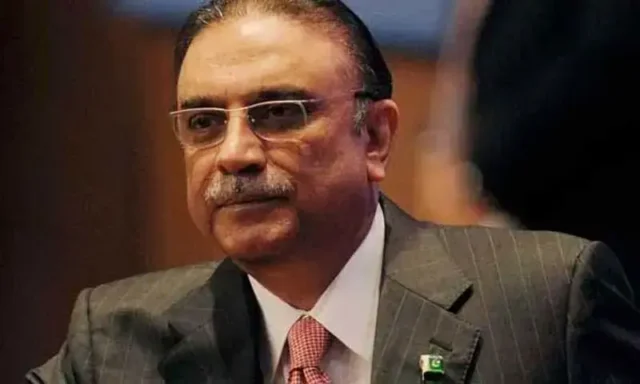
President Zardari gives assent to finance bill outlining Rs18.8tr budget for FY2026-27

0


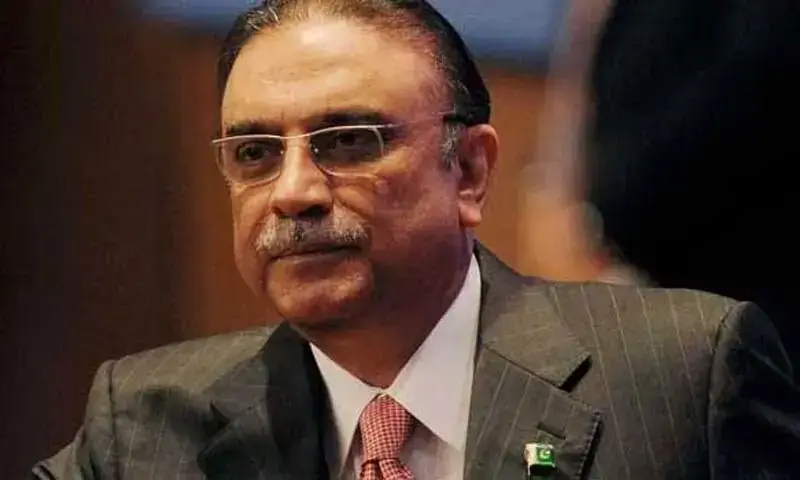
President Asif Ali Zardari gave his assent on Friday to the Finance Bill, 2026, which outlines the budget for the upcoming fiscal year with an outlay of Rs17.5718.8 trillion.

“President Asif Ali Zardari has assented to the Finance Bill, 2026, relating to the federal budget for fiscal year 2026-27,” a post on the Presidency’s X account said.

Finance Minister Muhammad Aurangzeb presented the FY2026-27 budget in the National Assembly (NA) on June 12, offering relief to higher-income salaried individuals and businesses by rationalising income tax, sales tax, and customs duties, while promoting documentation, digital compliance, and investment.

The NA passed the budget on Tuesday after the opposition staged a walkout. The House approved the budget after all seven amendments moved by opposition members were rejected by a majority vote. However, the finance bill included amendments suggested by the National Assembly Standing Committee on Finance.

Some of the key changes made to the bill since its introduction in parliament included the abolition of duties on mineral water or hydration drinks, sales tax exemption for local airlines on the import or lease of aircrafts, and an amendment to the duties imposed on electric cars or SUVs imported into the country.

The government did away with the proposed 20 per cent Federal Excise Duty (FED) on mineral waters, aerated waters, hydration drinks or electrolyte beverages with artificial sweetener or sugar content below 5g/100 ml.

Previously, all kinds of mineral waters, aerated waters, hydration drinks or electrolyte beverages were subjected to 20pc FED, irrespective of the artificial sweetener or sugar content.

The budget draft also included permission for all airlines operating in the country to avail sales tax exemption on the import or lease of aircrafts and their parts from July 1, 2027, which was only granted to PIA in the original bill.

It also showed that excise duty on imported electric cars would be calculated based on their values, to be calculated US dollars.

No FED will be applicable on electric cars and electric SUVs, imported in Completely Built-Up (CBU) condition with a value not exceeding $75,000, as determined under section 25 of the Customs Act, 1969.

Meanwhile, 30pc excise duty would be applicable on electric cars and electric SUVs valued between $75,000 and $110,000, while those whose value exceeds $110,000 would face 40pc excise duty.

Meanwhile, the Device Identification, Regist­ration and Blocking System (DIRBS) tax on imported phones will now be paid in instalments, but all instalments have to be paid before the end of the financial year in which the import is made.

The legislation approved also revealed that persons having turnover up to Rs200 million may opt out of the fixed tax regime, subject to a final and irrevocable certificate filed with the Tax Commissioner before filing their returns for the tax year 2027.

The minimum rate of value addition tax shall be one per cent in the case of import of coal, subject to the conditions that such imported coal is exclusively and directly supplied to Independent Power Producers.

Under the new budget, income tax exemptions wou­ld be available on any income derived by a private equity and venture capital fund registered under Private Funds Regulations, 2015.

This will be applicable where not less than 90pc of the accounting income of that year, as reduced by accumulated losses and unrealised capital gains, is distributed by the private equity and venture capital fund to its unit or certificate holders or shareholders.

This exemption will not be available if the private equity and venture capital fund is established to acquire a public listed company, whose status has not been changed to pri­­vate limited company on the acquisition.

In addition, the legislation says that for steel melters, re-rollers and composite units, tax will be collected on the basis of per unit electricity consumed, including use of electricity produced by a captive power plant or through any other alternative source of energy at the rate or rates as prescribed by FBR.

The tax so collected shall be an adjustable input tax, to be claimed in the return of the month in which such payment is made. The per unit sales tax shall be determined by the FBR on the basis of minimum notified price and the industrial benchmarks of consumption of electricity against per ton production of steel products.

Metro, speedo, e-buses to remain off the road today

0


LAHORE – Metro bus service, electric buses, speedo bus service will remain closed on 9th and 10th Muharram across Punja. According to Punjab Mass Transit Authority, metro, electric and speedo bus services have been closed due to security concerns. Services will remain suspended in Lahore, Multan and Rawalpindi. Meanwhile, City Traffic Police Lahore (CTPL) has issued a traffic advisory for the 9th Muharram mourning procession scheduled to proceed from Islam Pura to Khaima-e-Sadaat via Pando Street. Chief Traffic Officer (CTO) Syed Abdul Raheem Shirazi said that all necessary arrangements had been completed to ensure smooth traffic flow and facilitate mourners during the procession. He said SP City Maqsood Lone would supervise the traffic arrangements, while special measures had been taken to keep routes clear for emergency vehicles throughout the procession. The CTO said traffic diversions would remain temporary and roads would be reopened immediately after the passage of the procession. “Traffic at diversion points would only be stopped for a short time and restored as soon as the procession moves forward,” he added. According to the traffic advisory, traffic coming from Chowk Civil Secretariat towards Islam Pura would not be allowed, while all kinds of traffic from Sanda Road towards Pando Street will remain restricted. Similarly, traffic from Chowk Sanda Khurd via Haider Road towards Neeli Bar, as well as traffic approaching from Last Bus Stop and Sanda Road towards Noori Building, would not be permitted during the procession. Restrictions would also remain in place from Neeli Bar Turn towards Neeli Bar Chowk, Chowk Tollinton Market towards Old Anarkali, Baba Mauj Darya towards Khaima-e-Sadaat, and from Jain Mandar Chowk towards Edward Road and Khaima-e-Sadaat. Traffic from Farid Kot Road towards Jain Mandar and Khaima-e-Sadaat, as well as from Jain Mandar Chowk towards Old Anarkali, would also be diverted. The CTO said alternative routes had been designated to minimise inconvenience to commuters. Traffic from Last Bus Stop would be diverted through Sanda, Firdous Cinema, Sanda Road and MAO College, while vehicles from MAO College and Sanda Road would be able to access Sanda through Last Bus Stop. Traffic coming from Azadi Flyover would be diverted at District Courts Chowk towards the G.C. College roundabout, while heavy traffic from Ferozepur Road would be diverted from LOS Chowk towards Ganda Nala. Likewise, traffic approaching from Multan Road would be diverted from Samanabad Mor towards Double Roads and Ring Road. Shirazi urged citizens to cooperate with traffic wardens, follow the advisory and use alternative routes to avoid inconvenience. He said no diversion would remain permanent and traffic would be managed according to the movement of the procession. The restricted areas include Pando Street Islam Pura, Block Sadaan Islam Pura, Main Bazaar, Chishtia High School Road, Haider Road, Civil Secretariat Chowk, Nabha Road, Church Road, Edward Road, Khaima-e-Sadaat, Jain Mandar Chowk, McLeod Road and Old Anarkali.

SPAL ensures extensive cleanliness arrangements

0


LAHORE – The Suthra Punjab Agency Lahore (SPAL) deployed its sanitation operational teams across the city on the 9th Muharram-ul-Haram to ensure cleanliness at religious gatherings and along procession routes. According to a press release issued here on Thursday special cleaning measures were undertaken on the routes of the Ashura procession originating from Nisar Haveli, where sanitation workers and machinery remained active to maintain a clean environment for mourners and visitors. SPAL also carried out extensive cleanliness operations during the 983rd annual Ghusl ceremony of Hazrat Data Ganj Bakhsh Ali Hajveri (RA). More than 150 workers participated in the cleanliness operation around Data Darbar, supported by 2 washer vehicles, 3 compactors, 1 mechanical sweeper and 2 loader dumpers. Six supervisors, 2 zonal officers and the town manager personally monitored the operation in the field. Mechanical sweeping was conducted on roads and streets surrounding the Darbar, while pathways leading to the Data Darbar were washed and sprayed with a mixture of phenyl and rose water to maintain hygiene and improve the environment for devotees. On the instructions of Suthra Punjab Authority DG Babar Sahib Din, 10 additional waste containers were installed around the Darbar. Roads, markets and adjoining streets were cleaned and washed, while lime was also sprinkled on routes leading to the Darbar. As part of the Muharram sanitation plan, workers were engaged in manual sweeping and waste clearance in ‘Lakri Mandi’ and Main Bazaar Mochi Gate, while cleanliness measures were also ensured in Mughal Haveli, Taveela Nawab Sahib and Mohalla Shian. 
Waste containers placed along all procession routes were cleared regularly to facilitate mourners and residents. 
DG Babar Sahib Din said all available resources had been utilised to provide a clean and hygienic environment for visitors and devotees. He also thanked citizens for cooperating with Suthra Punjab teams and disposing of waste in designated bins.

How a Jet Fuel Refinery Is Scrambling After the Iran War Oil Shock

0


For a mega-refinery in Ulsan, South Korea, a top exporter of jet fuel to the West Coast of the United States and other places, weaning off Middle Eastern oil is no small feat.

Zelensky Steps Up Threats Against Belarus for Aiding Drone Attacks

0


Ukrainian officials say their northern neighbor is allowing its radio relay stations to be used to guide Russian attack drones more precisely.

Mourners observe Ashura amid elaborate security arrangements

0


Elaborate security arrangements have been made countrywide today as scores of mourners take out Muharram 10 processions in observance of Yaum-i-Ashura.

Yaum-i-Ashura is observed every year with mourning processions and religious gatherings to commemorate the martyrdom of Imam Husain (RA) and his companions in the Battle of Karbala in 680AD.

The central procession in Karachi departed from Nishtar Park at around 9:30am. It will conclude at Imambargah Hussainia Iranian after passing through its traditional routes.

In Hyderabad, the central procession emerged from Qadam Gah Maula Ali off Station Road and will culimate at Karbala Dadan Shah.

Meanwhile, 12 processions are planned for Peshawar. Among them, the first one departed Imambargah Agha Syed Ali Shah near Meena Bazaar at around 11am. The remaining are schedule to depart from various locations at varying times between 12pm and 3pm.

No procession would be taken out in Islamabad, but the main procession in Rawalpindi was planned to be taken out from Imambargah Ashiq Hussain in Taili Mohallah and culminate at Imambargah Qadeemi.

In Lahore, the central procession emerged from Nisar Haveli.

Meanwhile, commuters in various cities have been advised to take alternative routes, in line with traffic plans devised in view of closure of roads while the processions are held. Elaborate security arrangements are also in place to ensure mourners’ security.

Karachi

Karachi police chief Azad Khan said on Thursday that mobile phone and internet services would likely be suspended along the route of the main procession today. He said around 6,500 policemen would be deployed to secure the main procession, while the overall deployment across the city would stand at 20,000 personnel.

Earlier, traffic police shared a plan for alternative routes for commuters. “Due to security reasons, M.A. Jinnah Road will be closed to traffic from Gurumandir to Tower,” the traffic police’s statement said.

Sindh CM Murad Ali Shah joined a mourning procession on Friday, where he said while speaking to the media that 60,000 police and Rangers personnel had been deployed for the processions’ security in Sindh, where over 1,600 processions are taken out in Muharram.

Rawalpindi

Security arrangements have also been put in place in Rawalpindi, with the deployment of five Army companies, seven Rangers companies and thousands of police personnel.

On the recommendation of intelligence agencies, the Punjab government has suspended the Metro Bus Service between Rawalpindi and Islamabad as officials said the mourning procession would pass along Murree Road from Bhabra Bazaar to Committee Chowk beneath the metro track, giving rise to security concerns.

Two video monitoring control rooms, one at the Punjab Safe Cities Authority and another at the Rawalpindi Municipal Corporation, will monitor the processions, gatherings and sensitive locations.

Section 144 has also been imposed in the Rawalpindi district, and Rawalpindi police said more than 8,000 personnel would perform security duties during Muharram, including 5,500 deployed for the main Ashura procession.

According to a police spokesman, roads and streets along procession routes have been sealed, snipers have been deployed on rooftops, and participants would undergo body searches before entering processions.

More than 2,000 Safe City and other CCTV cameras are monitoring the city, with surveillance continuing from Safe City and the central control room. Special pickets have also been established at entry and exit points of the city.

Police have also developed a mobile application for the identification and scanning of identity cards at pickets and bus terminals.

A total of 475 processions and 2,201 majalis are scheduled to be held across the Rawalpindi district during Muharram.

Punjab

In Punjab, medical and emergency services, including Rescue 1122, Civil Defence personnel, mobile health units, field hospitals and volunteers, have been deployed to assist mourners, officials said,

Sanitation workers have also been assigned to ensure cleanliness along procession routes and around religious sites.

A three-tier security plan has been implemented province-wide, under which more than 125,000 police personnel have been deployed while 61 companies of the Pakistan Army and 76 companies of Rangers have been requisitioned to support security arrangements.

In addition, over 30,000 trained volunteers are assisting law-enforcement agencies.

The authorities are using modern surveillance technologies, including artificial intelligence-based monitoring systems, CCTV cameras, body-worn cameras and geo-tagged video monitoring.

The Provincial Intelligence Centre is also conducting round-the-clock monitoring of processions and majalis through a digital surveillance wall.

Over 5,600 CCTV cameras are operational for Muharram monitoring, while more than 1,000 4G event cameras have been installed at sensitive locations.

A statement issued by the Punjab Home Department said mobile phone services would be partially suspended in 24 districts of Punjab, namely Rawalpindi, Attock, Chakwal, Sargodha, Khushab, Bhakkar, Hafizabad, Gujrat, Narowal, Faisalabad, Toba Tek Singh, Jhang, Chiniot, Multan, Sahiwal, Okara, Pakpattan, Dera Ghazi Khan, Rajanpur, Muzaffargarh, Layyah, Kot Addu, Bahawalnagar and Rahimyar Khan.

The service would remain suspended at the locations of religious gatherings until 10pm, the statement said.

KP

In Peshawar, police had chalked out a plan to deploy 12,000 personnel in the city for security during Muharram processions.

A statement by police said that personnel from the city police, rapid response force, quick response force, ladies traffic police and bomb disposal units were to be deployed for security in Muharram.

It added that three-layered security would be provided to all mourning processions, while marksmen would be set up at high-rise buildings along the procession routes. In addition to this, 1,000 traffic personnel were also to be deployed to ensure the smooth flow of traffic across the city.

Similarly, bomb disposal units and sniffer dogs were to be deployed to sweep imambargahs, majalis and procession routes, the statement said, adding that personnel in plain clothes had also been deployed at sensitive locations and places of worship across the city.

Last week, KP IG Zulfiqar Hameed directed police officials to enhance daily coordination with district administrations and peace committees at the district level to prevent any unpleasant incident during Muharram.

Separately, a police statement said Muharram processions and religious gatherings on Ashura would be monitored through the Safe City camera network in Peshawar.

It further stated that 43,317 police personnel would be deployed across the province to perform security duties during Muharram, and Section 144 had been enforced in various districts of KP.

The statement said that out of 614 imambargahs across the province, 127 had been declared highly sensitive, 262 sensitive and 225 normal and that a total of 907 Muharram processions were expected to be taken out across the province, with 286 being highly sensitive, 190 sensitive and 431 normal.

Balochistan

The Balochistan government also finalised stringent security arrangements for Muharram 10, deploying more than 32,000 security personnel to ensure the safety of Ashura processions.

The main procession routes are to be monitored continuously through aerial surveillance and a comprehensive network of CCTV cameras while all shops, markets, plazas, and commercial centres along the procession routes have been sealed.

According to official sources, more than 17,000 personnel have been deployed exclusively in Quetta. These forces will guard the main procession routes, key public spaces, and all entry and exit points of the city. The deployment includes personnel from the District Police, Balochistan Constabulary, Rapid Response Force (RRF), Anti-Terrorist Force (ATF), Frontier Corps (FC), and the Anti-Riot Force.

As part of the security protocol, mobile phone services and internet connectivity have been suspended across Quetta and other sensitive areas of Balochistan while the procession is taken out.

Zayn Malik faces fresh challenges amid career comeback

0


LONDON: Singer Zayn Malik is reportedly facing new challenges in his career comeback after claims emerged that he has parted ways with his management, adding to a series of recent setbacks.

The Sun reported, citing a source, that the former One Direction star has split from Zenkai Management, the agency that had managed his career since 2022. The reported departure comes after last year’s alleged fallout involving former bandmate Louis Tomlinson.

According to the report, Zayn isn’t the easiest character to work with and his team stood by him through in all circumstances. However, things reached a point where his management felt they couldn’t do anything else, and they recently resigned. Now Zain is looking for the third manager of his career.

Neither Malik nor Zenkai Management has publicly commented on the reports.

Dispute with Louis Tomlinson

Earlier reports claimed that Zayn Malik and Louis Tomlinson clashed while filming a proposed travel series in 2025.

According to those reports, the show would have followed the former One Direction bandmates on a journey across the United States, where they planned to reflect on their careers, personal lives, and memories from their time in the globally successful boy band.

Perrie Edwards marries Alex Oxlade-Chamberlain in Portugal

The reports alleged that tensions escalated during filming after Malik reportedly became difficult to work with, leading to a heated argument. It was further claimed that Malik remarked on Tomlinson’s late mother, Johannah Deakin, who died of leukaemia in 2016 at the age of 43.

Following the reported dispute, two of Tomlinson’s sisters, Phoebe and Lottie, unfollowed Malik on Instagram.

The reports also alleged that the confrontation turned physical, with sources claiming Malik punched Tomlinson, causing a head injury. However, these allegations have not been independently verified.

Popular Posts

My Favorites

Punjab rolls out digital monitoring plan for Muharram

0
LAHORE  - The Punjab government has finalised an extensive province-wide security and facilitation plan for Muharram-ul-Haram, deploying more than 125,000 police personnel, launching...