







Bills

Home Bills Page 150

Curfew imposed in Mastung’s Khud Kocha after bus attack, bridge blast
0


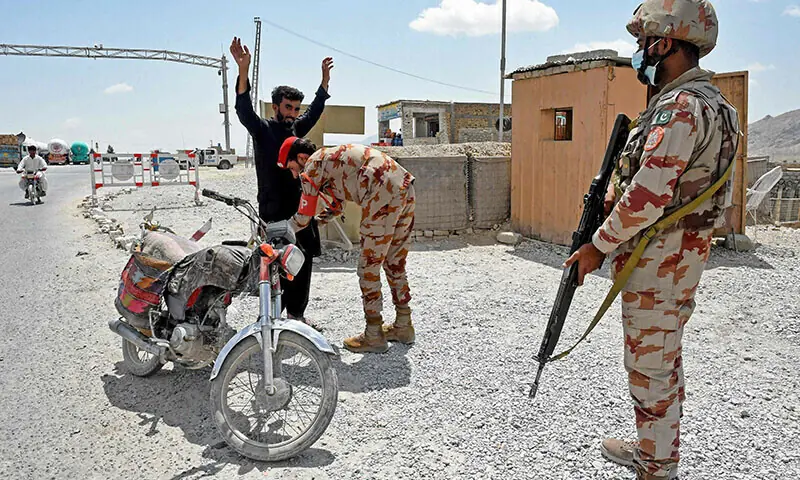
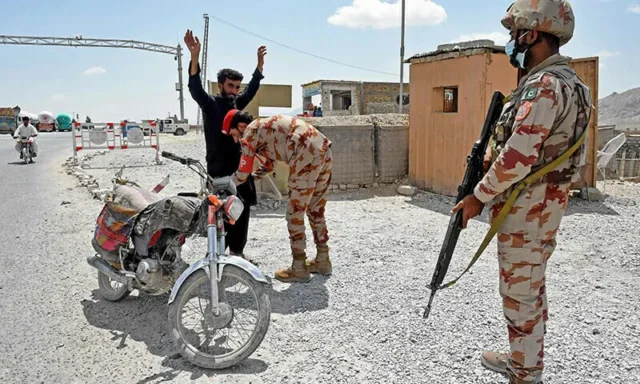
Authorities imposed an indefinite curfew in the Khud Kocha sub-tehsil of Mastung district on Wednesday after three people were killed and five others injured in a gun attack on a Karachi-bound passenger bus, while a bridge on the National Highway was damaged in an explosion in the area.

Citing the deteriorating security situation, the Balochistan Home Department imposed an indefinite curfew in the sub-tehsil from 9pm on Wednesday.

Babar Yousafzai, spokesperson for the Home Department, said the curfew would remain in force until further orders to maintain peace and public safety. Residents were not allowed to leave their homes, and all unnecessary movement was prohibited.

“Strict legal action will be taken against anyone found violating the curfew orders,” Yousafzai said, urging citizens to avoid unnecessary travel and cooperate with authorities until normal conditions were restored.

The gun and bomb attacks were reported at a time when security forces killed 10 terrorists and arrested two female suicide bombers, along with their facilitator, during intelligence-based operations in Mastung and Surab districts over the past 48 hours, according to the military’s media wing.

Police said a passenger coach operated by a private transport company was travelling from Quetta to Karachi when it came under indiscriminate fire in the Garo area of Khud Kocha tehsil.

Armed men positioned on nearby mountains opened fire on the bus, killing three passengers and injuring five others.

Security forces and rescue personnel rushed to the scene and shifted the bodies and the injured to the District Headquarters (DHQ) Hospital in Mastung.

The bodies were handed over to the victims’ families after legal formalities were completed, while authorities launched an investigation into the attack and began searching for those responsible.

Bridge damaged

Traffic between Quetta and Karachi remained suspended for several hours after a bridge on the Quetta-Karachi National Highway in the Khud Kocha area of Mastung district was damaged.

A police official confirmed that terrorists had planted explosives under the bridge in the Anjari area of Khud Kocha and detonated them in the early hours of Wednesday.

“The bridge was badly damaged in the explosion, suspending all kinds of traffic on the Quetta-Karachi National Highway. However, no casualties were reported in the blast,” the police official said.

Long queues of buses, goods trucks and other vehicles were seen on both sides of the highway following the blast.

Later in the evening, authorities allowed small vehicles to travel after making alternative arrangements. Security forces reached the area soon after the explosion and launched a search operation to trace those involved in the attack.

Earlier this month, security forces and law enforcement personnel jointly launched Operation Shaban in Balochistan in retaliation for a deadly attack on a police post at the Mangi Dam pumping station in Ziarat on July 6. During that assault, armed attackers kidnapped and killed 27 police officers.

A monthly security assessment released in early June by the Pakistan Institute for Conflict and Security Studies (PICSS) said that after two consecutive months of improvement, Pakistan’s security situation deteriorated sharply in May, driven primarily by escalating terrorist violence in Khyber Pakhtunkhwa and Balochistan.

The report said Balochistan emerged as the most affected province during the month. The province recorded 71 terrorist attacks, compared with 34 in April, representing a 109pc increase.

The deteriorating security situation was further reflected in a surge in kidnappings, it said. Of the 54 abductions reported nationwide during May, 52 occurred in Balochistan alone, highlighting the growing operational reach and confidence of terrorist groups in the province, it said.

On July 9, Prime Minister Shehbaz Sharif said that the country’s civil and military leadership had taken a “mutual and singular decision” to end terrorism after multiple major terrorist incidents in Balochistan.

He made the remarks at a meeting in Quetta of the Provincial Apex Committee on the National Action Plan, with Chief of Defence Forces (CDF) and Chief of the Army Staff Field Marshal Asim Munir also present.

PM Shehbaz’s statement came a day after the military Inter-Services Public Relations (ISPR) Director General Lt Gen Ahmed Sharif Chaudhry addressed a press conference, pointing the finger squarely at India and Afghanistan for being behind recent attacks in Balochistan.

He specifically mentioned “three major terrorist incidents” in recent days — an armed attack on the outskirts of Quetta on July 5, an assault on a police post in Ziarat on July 6, and an ambush of an army convoy in Bela on July 7.
US treasury secretary welcomes Pakistan’s economic reforms, return to capital markets

0


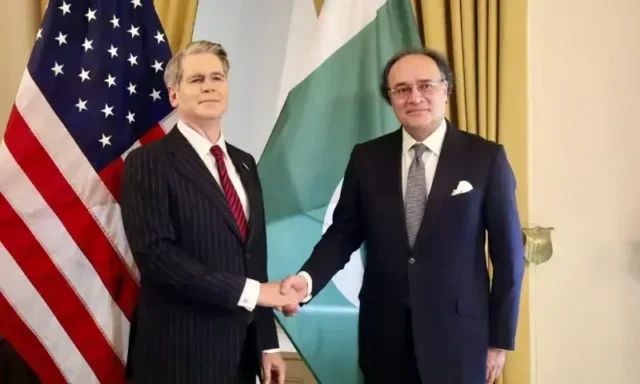
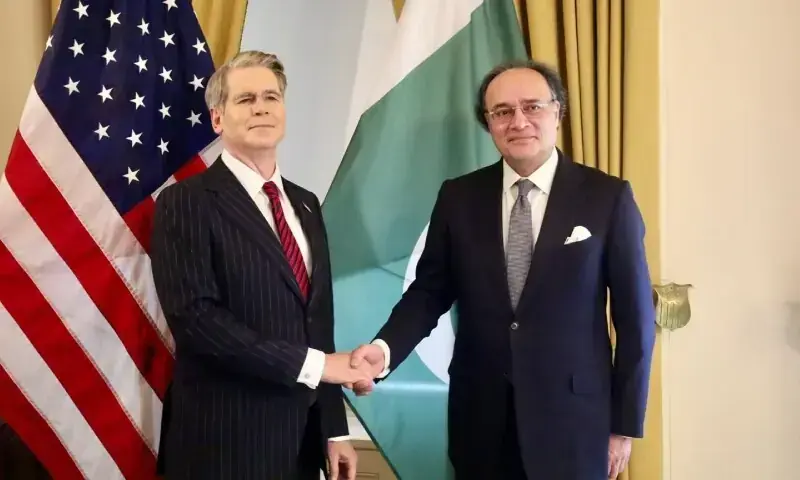
US Treasury Secretary Scott Bessent met Finance Minister Muhammad Aurangzeb a day earlier and welcomed Pakistan’s progress in implementing economic reforms and laying the groundwork for a return to international capital markets, the Treasury said in a statement on Wednesday.

According to a statement, Bessent emphasised the “importance of Pakistan’s work to continue its reforms, become more economically self-reliant, boost growth and strengthen its economic resilience”.

“Secretary Bessent welcomed the progress Pakistan has made in restoring macroeconomic stability and advancing fiscal consolidation, recognising the government’s efforts to implement significant economic reforms,” Treasury said.

The statement added that Bessent also expressed support for Pakistan’s efforts to build greater economic self-reliance and commended the government’s commitment to creating the conditions for a successful return to international capital markets.

The statement, however, did not address Pakistan’s request for a $10 billion exchange stabilisation facility.

Meanwhile, a statement issued by Pakistan’s Ministry of Finance on Tuesday said that Aurangzeb highlighted Pakistan’s journey from macroeconomic stabilisation to sustainable, export-led growth, while noting the economy’s vulnerability to regional geopolitical developments.

The statement added that Senator Aurangzeb sought greater US support for Pakistan’s path to the market, underpinned by improved access to international capital markets, higher foreign exchange reserves and enhanced sovereign credit ratings.

It said both sides reaffirmed their commitment to deepening bilateral economic cooperation, promoting greater US investment and advancing strategic projects.

The proposed $10 billion exchange stabilisation facility would be a financial mechanism under which the US government, through the Treasury’s Exchange Stabilisation Fund, would provide loans or other backstop facilities to Pakistan to bolster its foreign exchange reserves, ease debt pressures, and help stabilise the economy.

Such facilities are primarily used to prevent currency instability and, where necessary, support a partner country’s currency through intervention in foreign exchange markets.

Additional input from Reuters

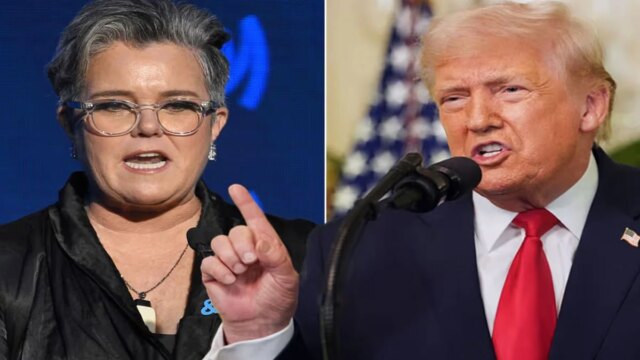
Rosie O’Donnell explains why she fled to Ireland to escape Trump

0


Back in 2006, Rosie O’Donnell took a potshot at Donald Trump during her show The View.

The reality star at the time hit back at the talk show. But apparently, the Republican politician still remembered the slight.

Then a decade later, Trump famously quipped, “Only Rosie O’Donnell” when the host Meghan Kelly asked him about his past derogatory remarks about women.

So, when he was elected for second-time presidency, O’Donnell packed her bags and left for Ireland.

After months of living there, the comedian said that, with no attacks from Trump, she felt “softer” given that both of them shared publicly contentious history.

“It used to be when our president would say things about me, it would be like, whoa,” she told People.

O’Donnell joked, “First of all, if you had written this as a movie, a stand-up comic makes fun of a reality show host who is a bloviating idiot and he ends up being the president.”

“And then he doesn’t shut up about her for 20 years, it would be unbelievable — and the fact that it’s my life is very trippy.”

In Ireland, O’Donnell said it is a relief to escape a stream of Trump-related headlines.

“I am softer I think as a result of being there, of the welcome that we got, and as a result of me not being constantly bombarded by news about the current president,” she continued.

“It’s like a post-traumatic stress disorder for me, considering it’s been 20 years of him using me as a punchline.”

“So I think that has allowed me to reclaim myself, who I was before all that went down, even though it’s very strange to have supposedly the most powerful man in the word be your arch nemesis,” the actress concluded.

Daniel Siad, Model Scout Who Connected Women to Epstein, Is Found Dead in France

0


Daniel Siad, who was found dead on Monday, repeatedly introduced Jeffrey Epstein to young women, according to messages he exchanged with Mr. Epstein. Mr. Siad had denied wrongdoing.

1,700 H.I.V. Treatment Sites Closed After Trump Aid Cuts, a Study Finds

0


New research also shows that children and high-risk adult populations have been particularly affected.

Govt increases petrol price by Rs6.39, diesel by Rs7.83 per litre

0


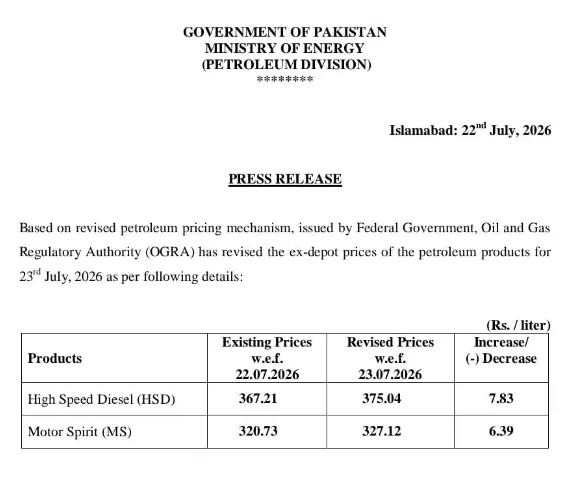
The government on Wednesday increased the price of petrol by Rs6.39 and that of high-speed diesel (HSD) by Rs7.83 per litre to pass on the impact of fluctuating global prices following renewed regional hostilities in the Persian Gulf.

Following the changes, the price of petrol stands at Rs327.12 per litre and that of HSD at Rs375.04.

The Petroleum Division’s notification said the new prices would be applicable on July 23 (Thursday).

Earlier today, the All Pakistan Petroleum Pump Owners Association (APPPOA) deferred its nationwide strike call for two weeks after negotiations with the petroleum minister.

A day earlier, the association announced a nationwide strike after negotiations with the government over daily petroleum pricing failed.

The diesel price has come down from a peak of Rs520.35 recorded on April 3. Its price had started rising from Rs281 per litre after the US-Iran war broke out on February 28.

The petrol price had peaked at Rs458.41 on April 3 after beginning its upward trajectory from Rs266 in the first week of March.

Earlier, Petroleum Minister Ali Pervaiz Malik announced that fuel prices would now be fixed on a daily basis due to fluctuations in international market prices following renewed hostilities between Iran and the US.

The government had been announcing weekly revisions to fuel prices since early March, alongside measures for the conservation of fuel amid possible oil supply disruptions due to the ongoing conflict in the Middle East. The federal government in April also announced targeted relief measures to provide subsidised fuel.

The petroleum minister stated that the cabinet and the prime minister had decided to give the Oil and Gas Regulatory Authority (Ogra) the responsibility of deciding fuel prices on a daily basis based on international market trends.

The daily pricing decision was rejected by the All Pakistan Dealers Association, which said it would consider a protest plan this week.

Petrol is mainly used in private transport, small vehicles, rickshaws and two-wheelers, and changes in its price affect the middle and lower-middle classes.

Similarly, changes in diesel prices also impact the public at large, as it is mainly used in the heavy transport sector, power plants and large generators.

Petrol and high-speed diesel (HSD) are the major revenue earners, with monthly sales of about 700,000 to 800,000 tonnes, compared to just 10,000 tonnes of monthly demand for kerosene.

Islamabad condemns Houthis' threats to Riyadh, warns against targeting Pakistani maritime interests

0


Pakistan on Wednesday condemned the Houthis’ recent threats to Saudi Arabia and to trading with the kingdom via the Red Sea, warning that it had the right to self-defence if its “maritime interests” were targeted in “any hostile act”.

Islamabad’s statement comes after Yemen’s Houthi rebels, aligned with Iran, announced an immediate maritime embargo on Saudi Arabia, opening a new front in the Middle East conflict.

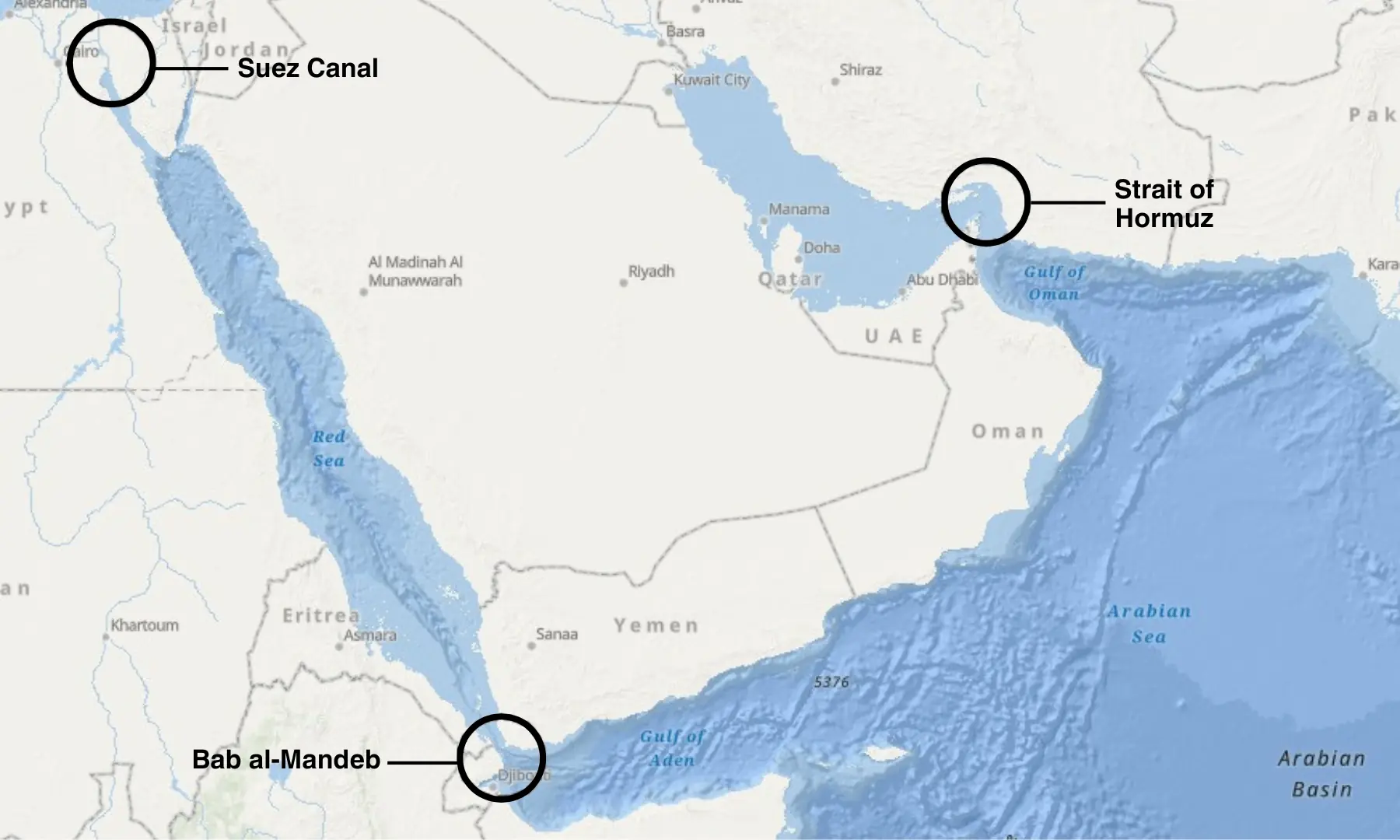
The naval blockade, if enforced, could cut off access to Saudi Arabia’s Red Sea ports, which have been vital for oil exports as renewed US-Iran fighting limits passage through the Strait of Hormuz.

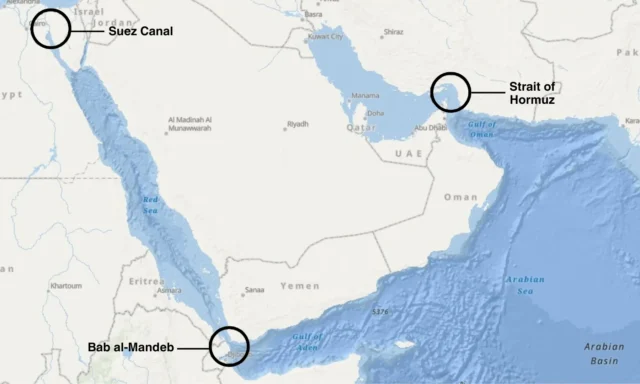
 A map showing the locations of the Bab al-Mandeb strait, Strait of Hormuz and Suez Canal. — made using ArcGIS
A map showing the locations of the Bab al-Mandeb strait, Strait of Hormuz and Suez Canal. — made using ArcGIS

“Threats against commercial shipping and trading with the Kingdom of Saudi Arabia are unacceptable and violate established principles of international law,” the Foreign Office (FO) said in a statement on Wednesday, denouncing the “continued threats” by Houthis.

Islamabad said it was “particularly concerned by reports of threats directed against vessels engaged in lawful commercial trade” with Saudi Arabia.

“Such actions threaten regional security, undermine freedom of navigation, challenge the rules-based maritime order and jeopardise uninterrupted flow of global commerce,” the FO highlighted.

Furthermore, it declared that “any hostile act against Pakistani-flagged vessels or Pakistani maritime interests will be regarded as a grave threat to Pakistan’s national security and sovereign interests”.

The FO warned that Pakistan reserved its right to “take all necessary measures, including lawful use of force, in the exercise of self-defence to protect its maritime assets and national interests”, consistent with the United Nations Charter and international law.

Pakistan also said it was “deeply concerned over attempts to drag” Saudi Arabia into the Middle East conflict, as fighting continues between the United States and Iran, which in turn has targeted American military sites in some Gulf countries.

Islamabad reiterated its “unwavering support for the security, sovereignty, territorial integrity and prosperity of the brotherly Kingdom of Saudi Arabia”.

“While remaining steadfast in its commitment to dialogue, diplomacy and regional de-escalation, Pakistan calls upon all parties to respect international law and ensure the safety and security of international maritime shipping,” the FO statement affirmed.

The FO also shared an Arabic version of the statement on its X account.

Houthis’ Monday announcement came after the group and Saudi Arabia traded fire last week for the first time in years, threatening a 2022 truce that has held despite expiring.

After Houthi fired missiles at Saudi Arabia on July 13, Prime Minister Shehbaz Sharif had expressed Pakistan’s strong condemnation of the “blatant attacks” against the kingdom, without further specifying the attacks.

Islamabad had also backed Riyadh at an emergency UN Security Council briefing on Yemen, calling for all parties concerned to resolve differences through dialogue and diplomacy.

Under a “Strategic Mutual Defence Agreement” signed between the two in September 2025, Pakistan and Saudi Arabia are to treat any attack on either nation as an act of aggression against both.

Pakistan and Saudi Arabia have maintained close defence and security ties for decades, and their cooperation has remained an important element of Islamabad’s regional diplomacy.

Pakistan had invoked the defence pact through diplomatic intervention in early March to help deter heavier Iranian strikes against Saudi Arabia.

Ships change course in Red Sea

While it remains unclear how the Houthis would enforce such a blockade, their threats have raised concerns about maritime security and energy shipping in the Red Sea.

Four tankers changed their navigational course in the Red Sea on Wednesday, with two signalling the Suez Canal as their new destination, Reuters reports, citing ship tracking data.

The vessels all changed their direction, with the other two signalling their destination as open waters in the Red Sea, according to LSEG and MarineTraffic ship tracking data and analysis from British maritime risk management group Vanguard.

A fifth ship, a vehicle carrier, appeared to have turned away in the Gulf of Aden on Wednesday after signalling the Saudi port of Jeddah as its next destination, according to shipping data.

On Tuesday, three oil tankers loaded with Saudi crude for China and India made U-turns in the Red Sea, heading towards the Suez Canal rather than ‌braving the Yemeni coast at the sea’s mouth, Reuters reported.

The Houthis have previously tried to cut off shipping through the Red Sea, leveraging the Bab al-Mandeb strait, a chok­epoint at its southern tip which vessels must navigate when travelling to or from the Suez Canal and the Mediterranean.

Saudi Arabia’s Red Sea port of Yanbu has been crucial for exporting oil, bypassing Iran’s effective closure of the Strait of Hormuz during its war with the United States.

Crude oil exports from Saudi Arabia fell for a third straight month in May to a record low, data ​from the Joint Organisations Data Initiative (JODI) showed on Tuesday, with the ‌US-Iran conflict disrupting shipments across the Gulf.

Exports fell to about 3.434 million barrels per day in May, from 3.986m bpd in April.

US President Donald Trump said on Tuesday that his country would “take care of” the Houthis if they followed through on the threat to blockade Saudi Arabia’s ports.

Laredo’s Future Rides on Trump’s Next Trade Move

0


The economy of Laredo, Texas, has boomed under the president’s global tariffs. Now, his demands may threaten its success.

Ukraine’s New Military Chief Faces a Monumental Test

0


Maj. Gen. Mykhailo Drapatyi faces a balancing act between asserting the independence favored by military reformers and accommodating political input on battlefield strategy.

S&P Global Ratings upgrades Pakistan's sovereign credit rating to 'B'

0


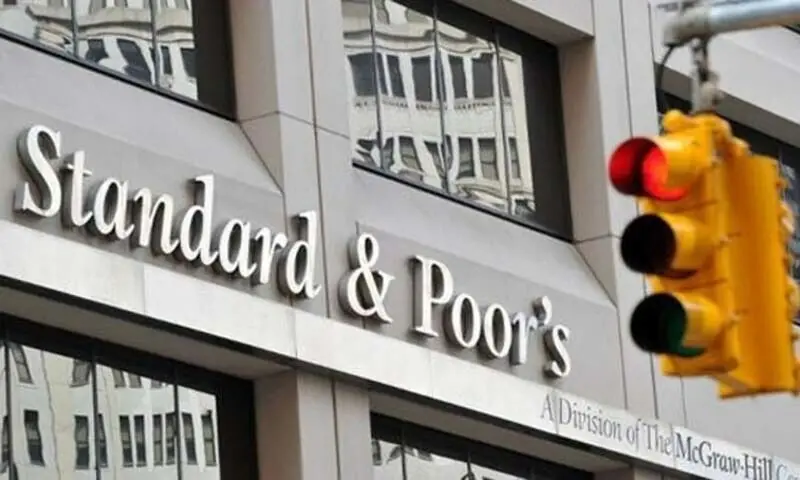
S&P Global Ratings on Wednesday upgraded Pakistan’s long-term sovereign credit rating to ‘B’ from ‘B-’, citing an improving external position and gradual macroeconomic stabilisation, while assigning a stable outlook.

The agency also affirmed the country’s short-term sovereign credit rating at ‘B’ and raised its transfer and convertibility assessment to ‘B’ from ‘B-’.


More to follow

Popular Posts

My Favorites

Indian authorities arrest staff accused of theft from temple built on...

0
Indian police have arrested eight people over allegations of theft and misappropriation of offerings at a temple that has been at the centre of...